
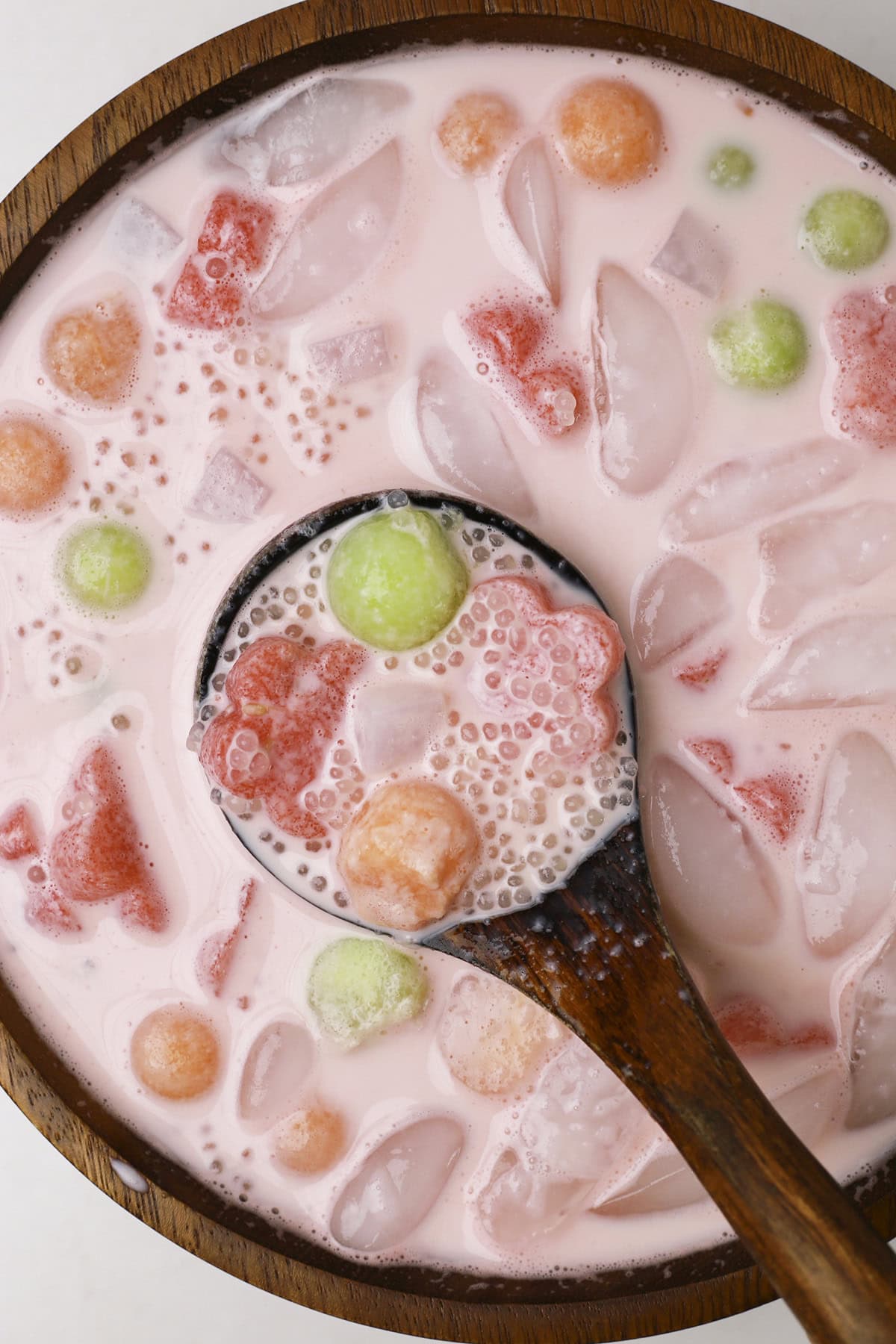
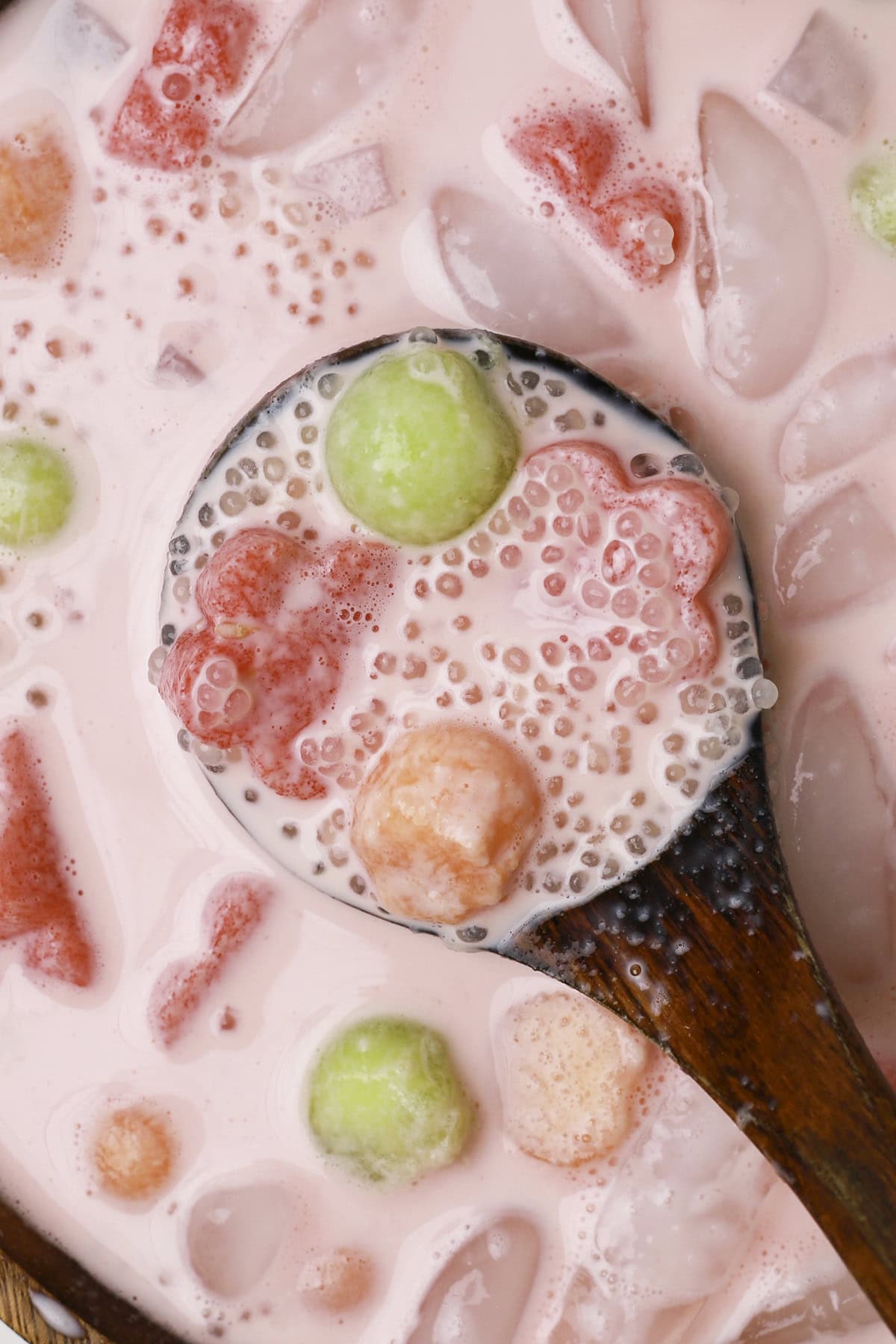
If you liked our classic mango sago, you'll love this refreshing, summer variation! This summer sago is filled with chewy, bouncy sago pearls, coconut gel, three melons - watermelon, honeydew, and cantaloupe- and a refreshing base made of watermelon juice, evaporated milk, and condensed milk. For more ways to enjoy sago in the summer, also try our mango pomelo sago drink.
Jump to:
Ingredients needed and substitutions
Please scroll down to the recipe card for the ingredient quantities!
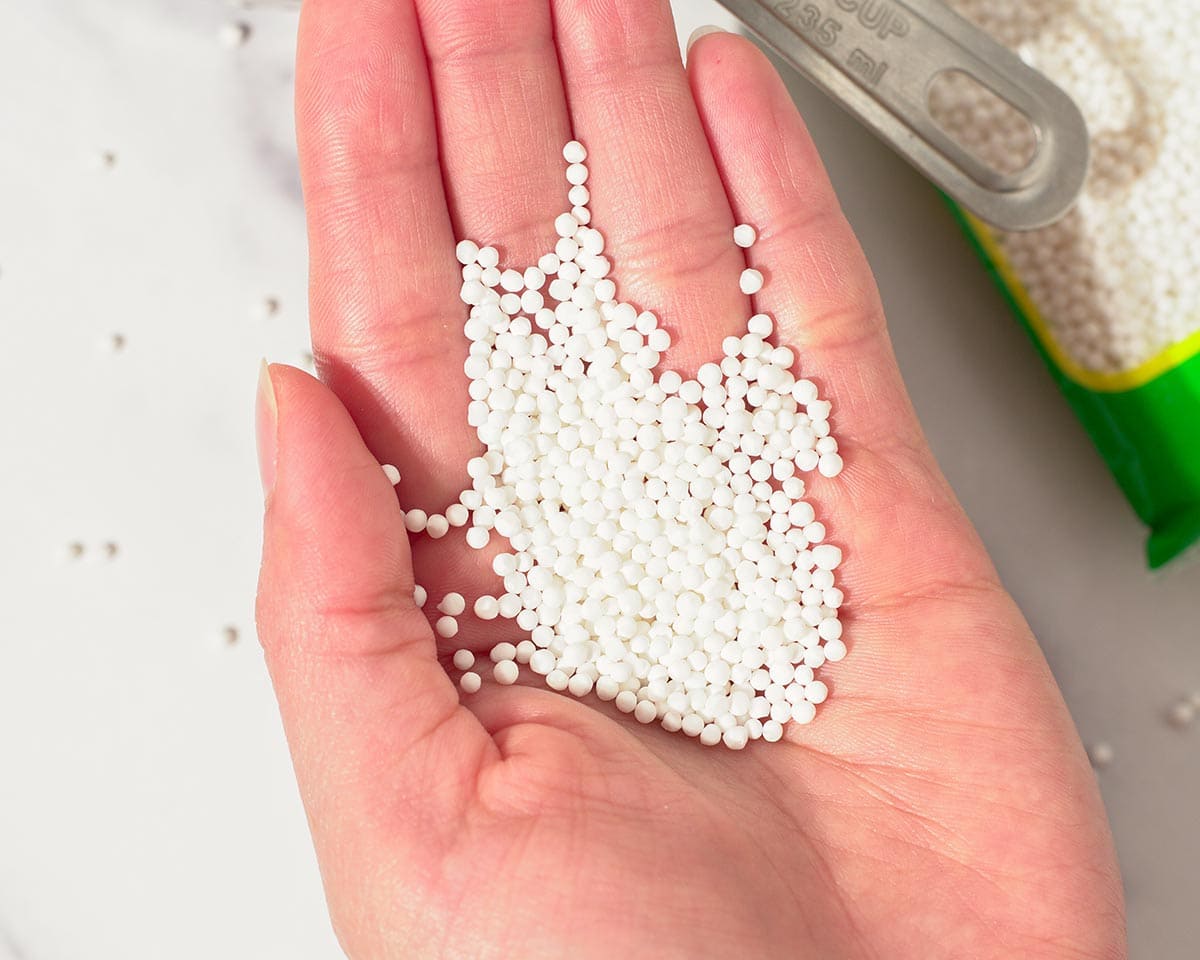
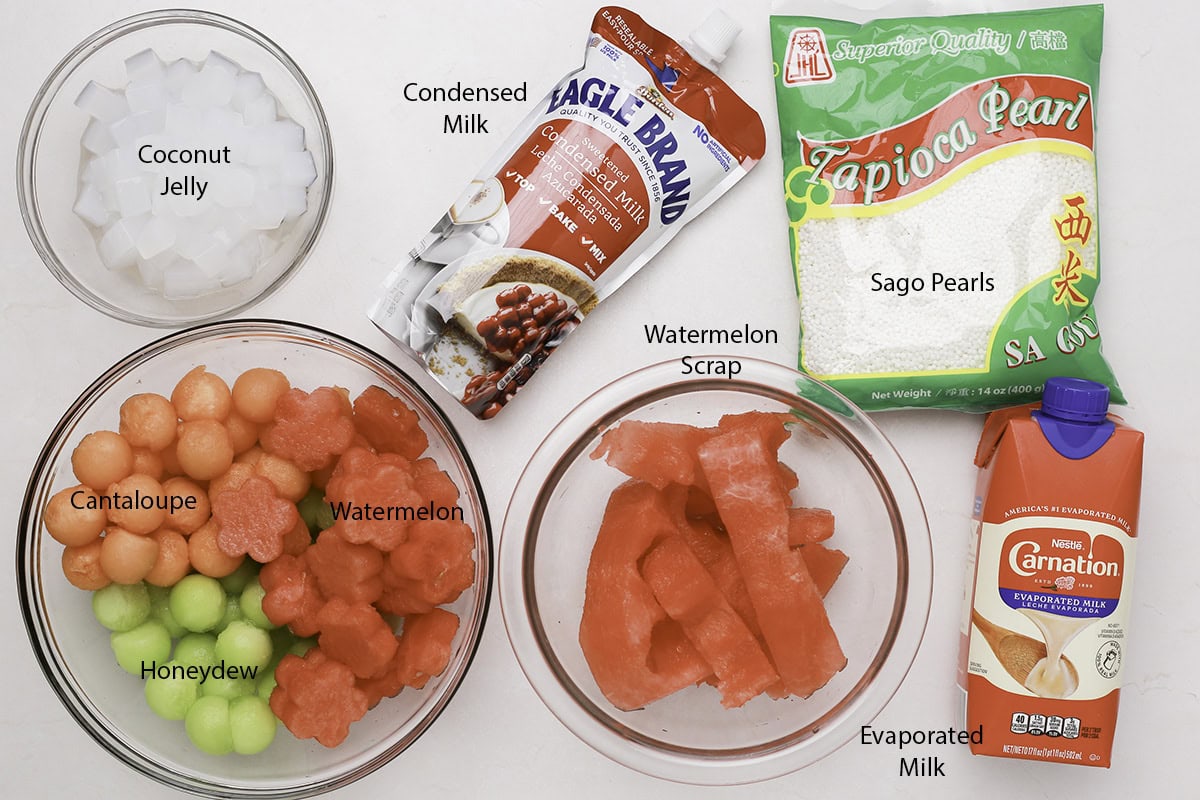
- Sago (tapioca) pearls (西米 - xīmǐ)- These pearls are typically made of tapioca (cassava) starch and when cooked, becomes clear, bouncy, and slightly chewy. They come in a few different varieties, but for this recipe, look for these tiny white pearls. You can find them at most Asian markets in the dry aisles or online.
- Evaporated milk - This will be the base for this dessert, which gives it a more concentrated, creamy flavor. If you need a dairy-free option, you can substitute it for a full fat coconut milk.
- Sweetened condensed milk - Condensed milk is our sweetener of choice because it adds a bit of a thick, creamy consistency to the whole dessert. Alternatively, you can sweetened the sago with sweetened coconut condensed milk if you need a dairy-free option.
- Watermelon - Of the three melons in this summer sago, watermelon, in our opinion, is the most important one because some of the watermelon is blended into juice to add to the base, which makes this sago refreshing and perfect for summer. We also recommend getting a seedless watermelon for convenience and peace of mind.
- Honeydew melon and cantaloupe - These two melons adds a lovely but subtle melon flavor to the whole mix. Plus, they add color and a different pop of flavor and texture.
- Coconut gel - This are also known as nata de coco and is optional for this sago recipe. However, they do add a nice, fun texture. You can find them at most Asian markets, either in jars or pouches. We like the ones from Jubes because they come in different flavors.
- Ice - For cooling everything down.
How to pick the best melons for this sago dessert
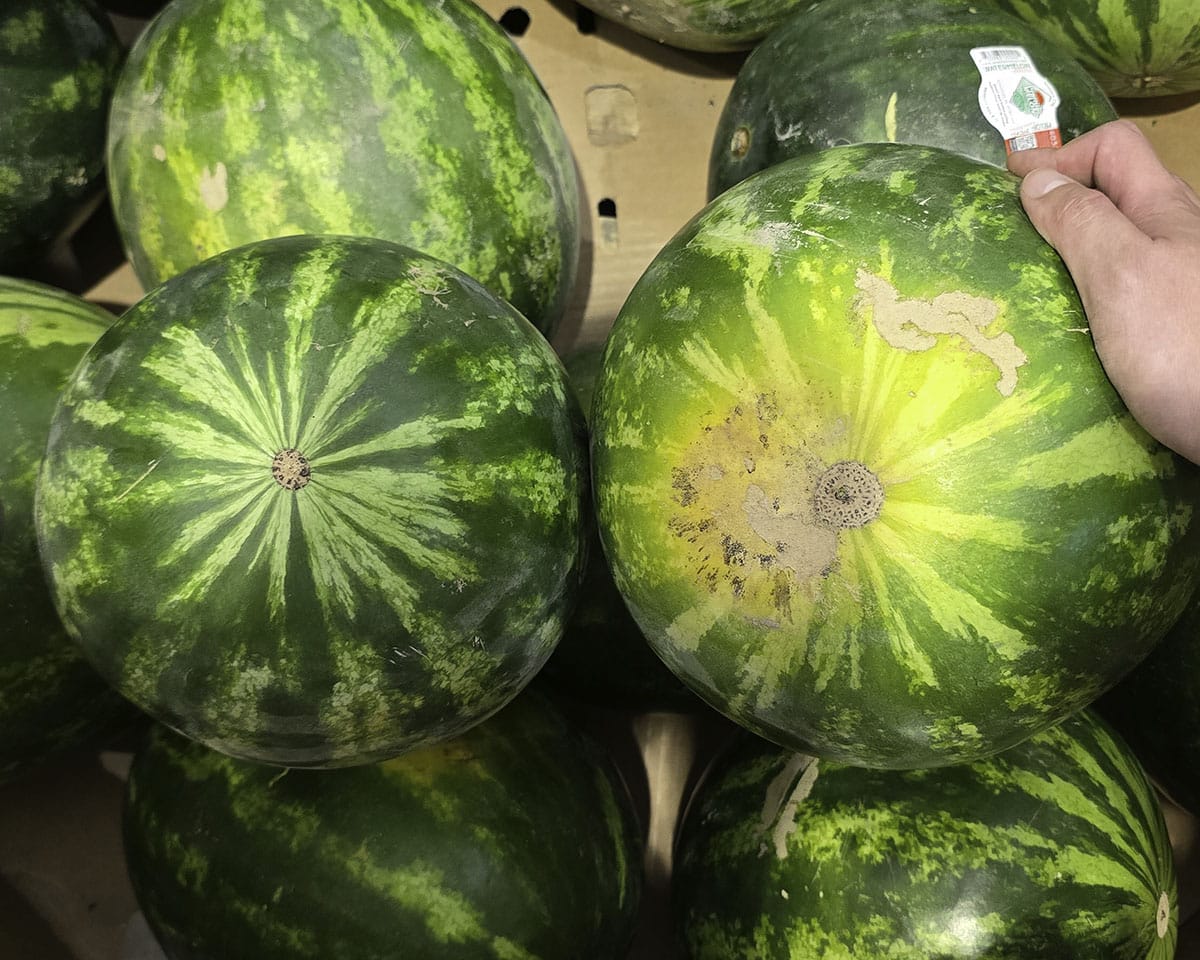
Watermelon
Here are a few things to look for when picking your watermelons:
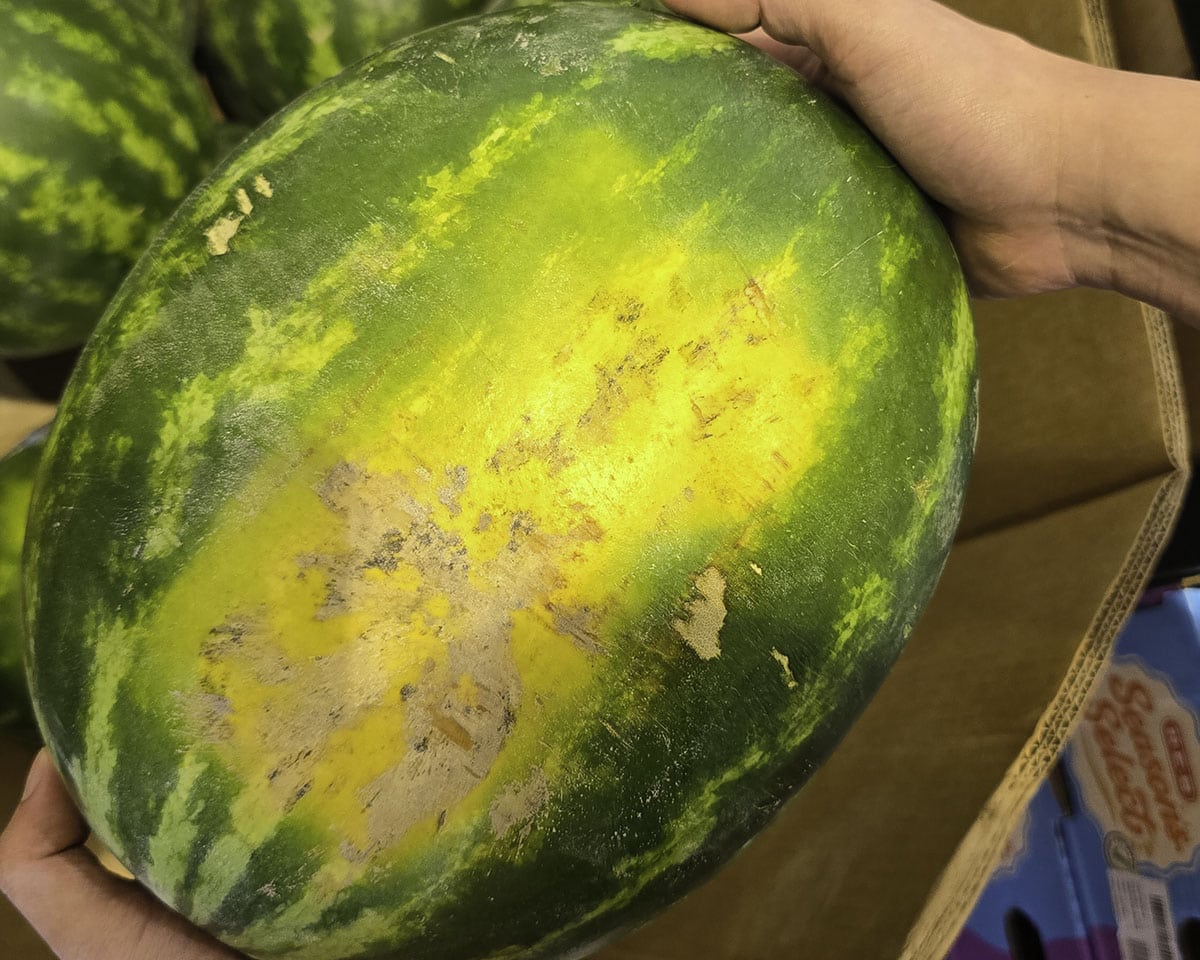
- Color - Look for watermelons that are darker in color with more distinct stripe patterns. This indicates sufficient ripening under the sun.
- Sound - When you tap a watermelon when your hand or knuckle, it should more like a higher-pitch, hollow thud, which indicates the watermelon is juicy. A lower-pitch thud usually indicates that the watermelon is more fleshy and less juicy.
- Yellow spot - Also known as the field spot, aka where the watermelon rests on the field. The darker yellow the field spot usually suggests the watermelon has had more time to ripen on the vine.
- Belly button - Look for the tiniest "belly button", which is the opposite end of the stem. A small "belly button" usually indicates proper ripening, meaning sweeter watermelon.
Cantaloupe and honeydew
For cantaloupes, look for ones that have started to smell fruity, has a yellow/warmer tint and avoid the ones that look greenish, and feels heavy for it's size, which suggests that it'll be juicy.
For honeydew melons, also look for ones that look more yellowish/warmer tint than green and feels heavy for its size. The skin should also feel slightly velvety rather than shiny. Honeydews don't usually have a scent until they are very ripe.
If either of these melons are not quite ripe enough, you can leave them at room temperature for a few days until they start to smell fruity.
How to make this refreshing summer sago
Please scroll down to the recipe card for the full recipe and instructions!
1. Prepare the sago. Bring a pot of water to a boil and add the sago pearls while stirring the water. Cook according to the package instructions or until most of the pearls are clear and only some have a tiny white dot in the center. Drain using a mesh strainer and rinse well with cold water until completely cooled.
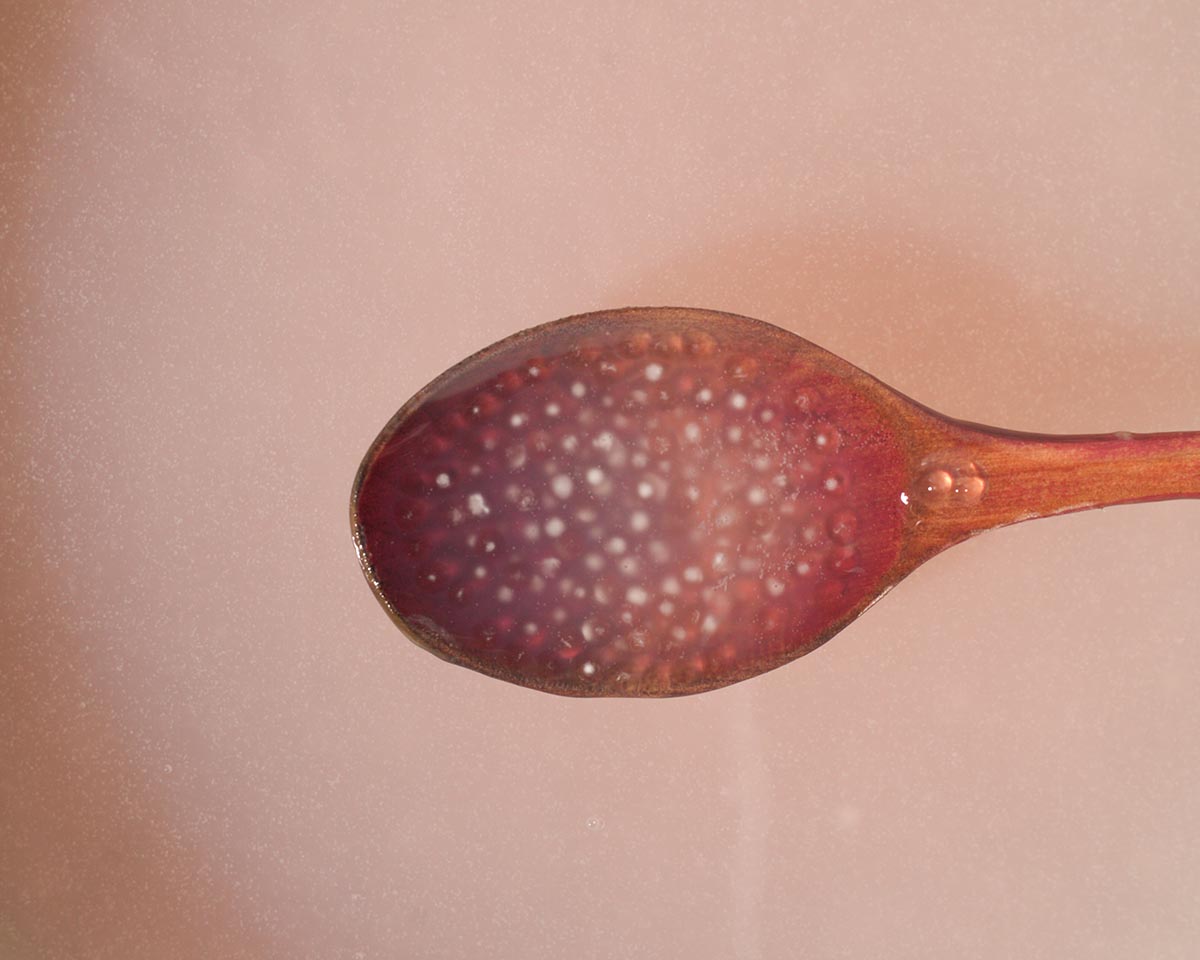
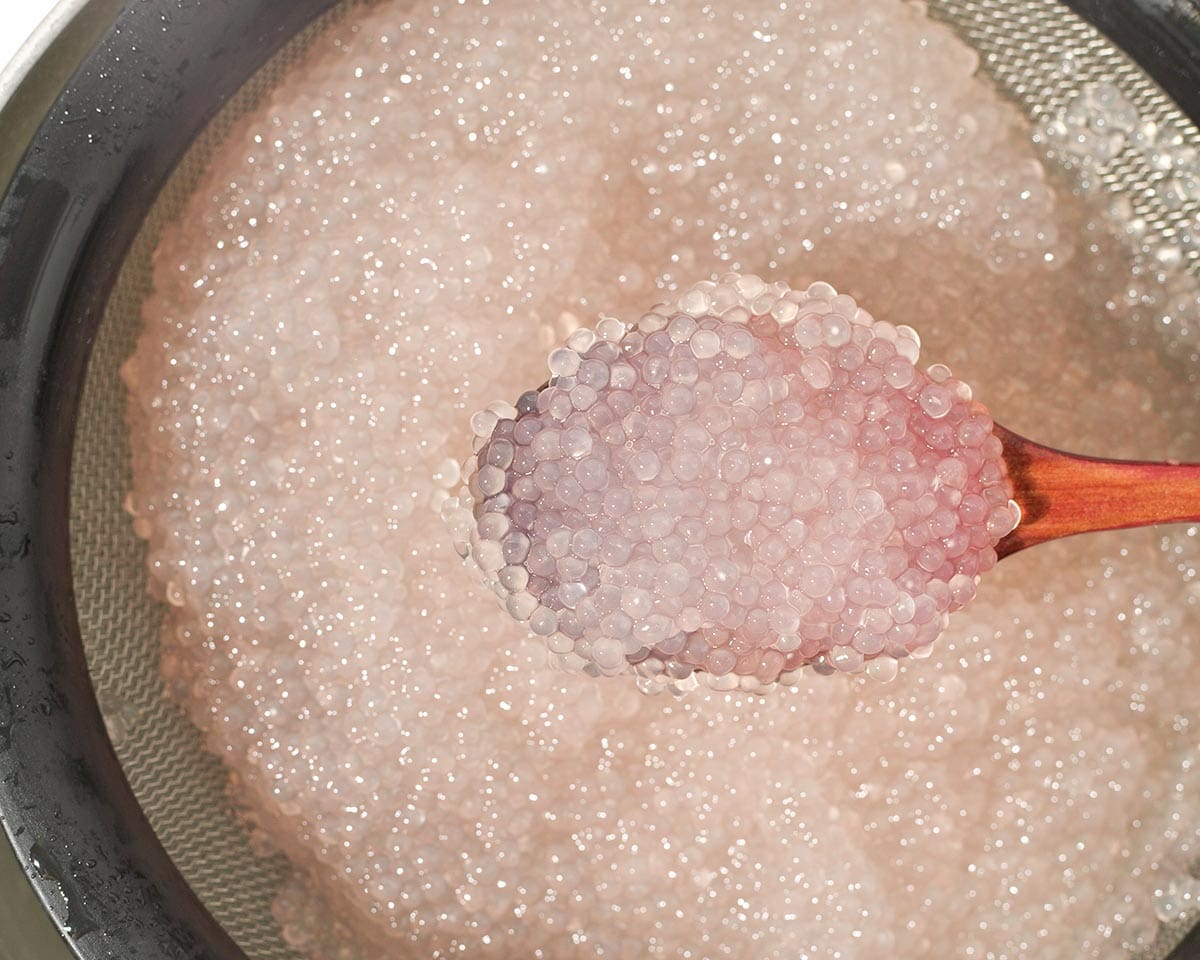
2. Prepare the watermelon. Trim and remove the rind and cut the watermelon into bite size pieces or into your desired shape with a cookie cutter. If cutting with a cookie cutter, cut the watermelon into ½ to 1 inch discs first. Reserve 2-3 cups of the watermelon (or scraps) to make juice. Place the reserved watermelon (or scraps) into a blender and blend until smooth. You'll need about 10 fluid ounces (about 300ml).
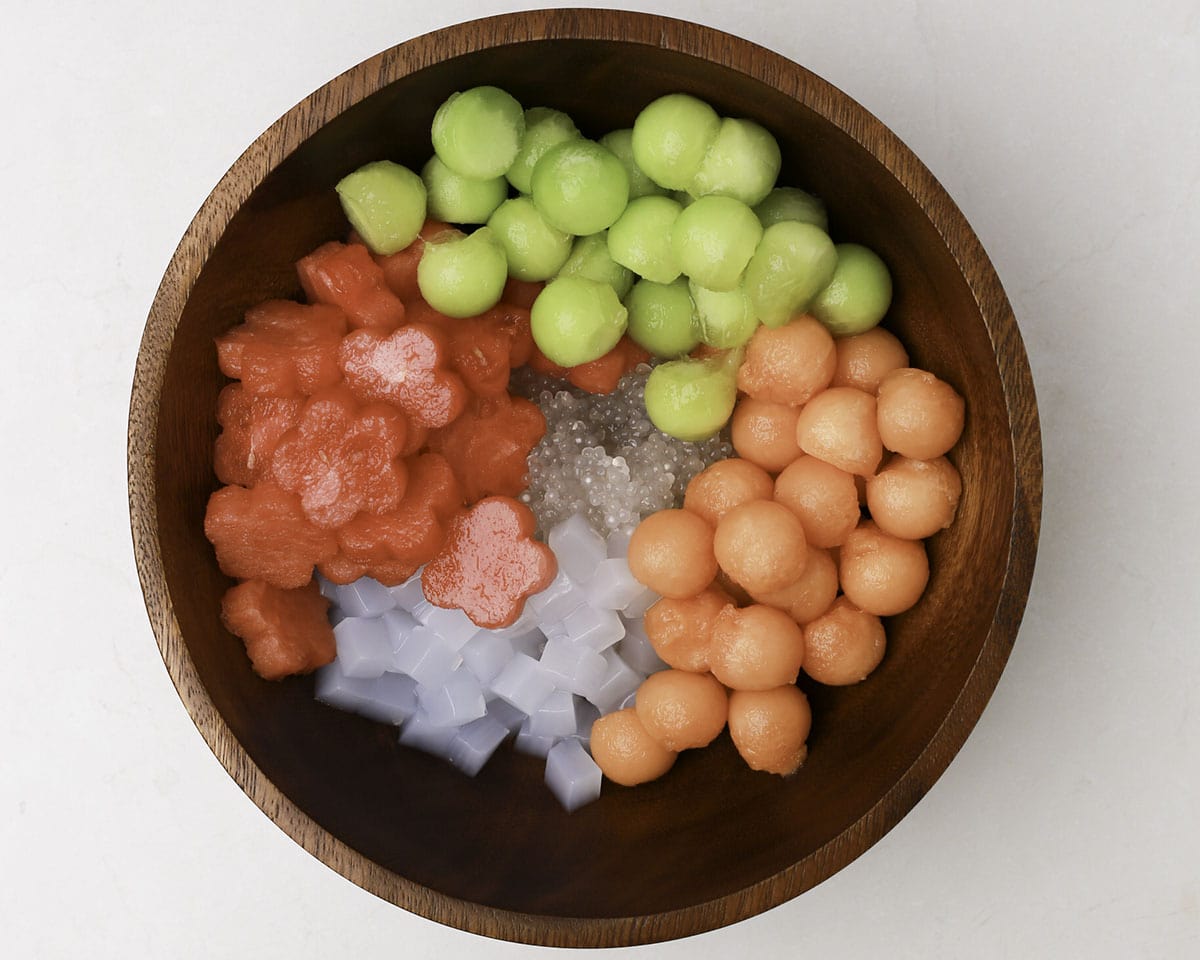
3. Cut the melons. Trim and remove the melon rinds and cut the melons into bite size pieces. You can also cut the melons in half and scoop them out with a melon baller.
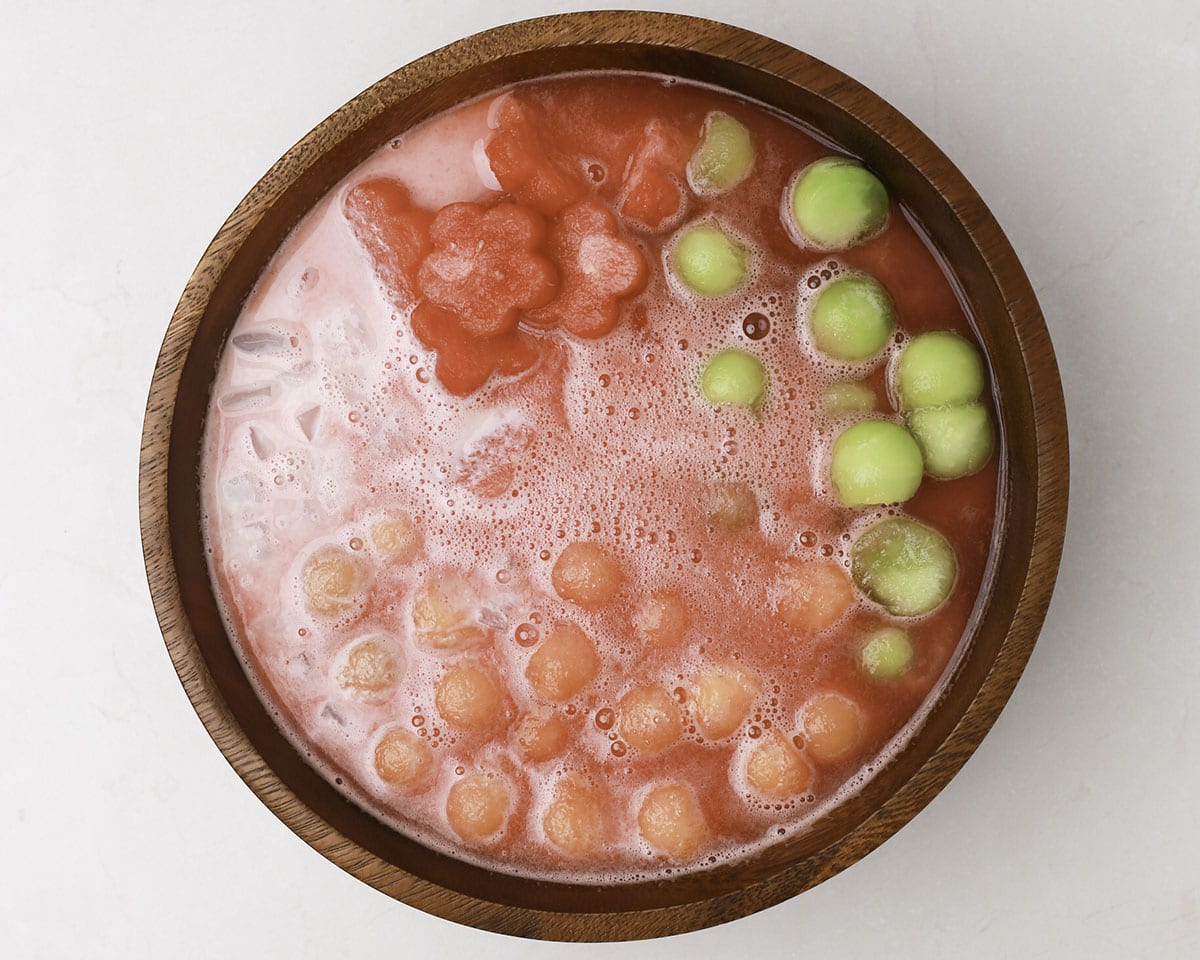
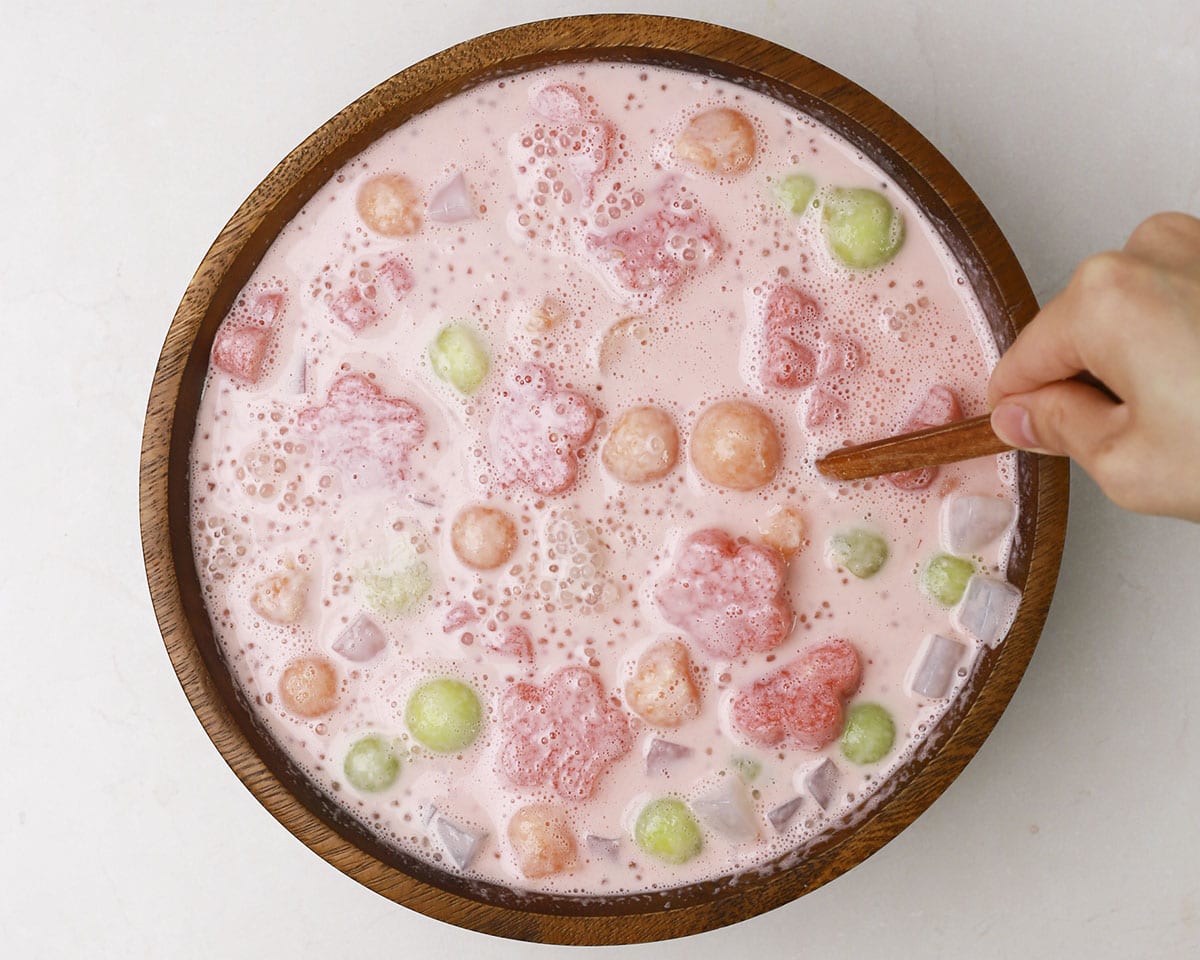
4. Assemble and serve. Into a larger serving bowl (like a punch bowl), add the sago, all three melons, the coconut gel, watermelon juice, evaporated milk, condensed milk, and ice. Stir until well combined and enjoy while it's cold.
Tips from our kitchen
- Chill all ingredients ahead of time (the melons, evaporated and condensed milk, coconut gel, etc.) so that the ice doesn't melt as fast and so your sago doesn't become watered down so fast.
- To make this dairy-free, substitute the evaporated and condensed milk for full fat coconut milk and sweetened coconut condensed milk.
- Use melon ballers and cookie cutters to give your melons different shapes and make your summer sago more fun!
- If you prefer using only one melon, we recommend turning this summer sago into a watermelon sago! Follow the recipe as is, but substitute the other melons for only watermelon.
- We highly recommend picking a seedless watermelon for this recipe to save you from having to be on seeds removing duty and to give you a peace of mind while you enjoy your sago dessert.
Storage
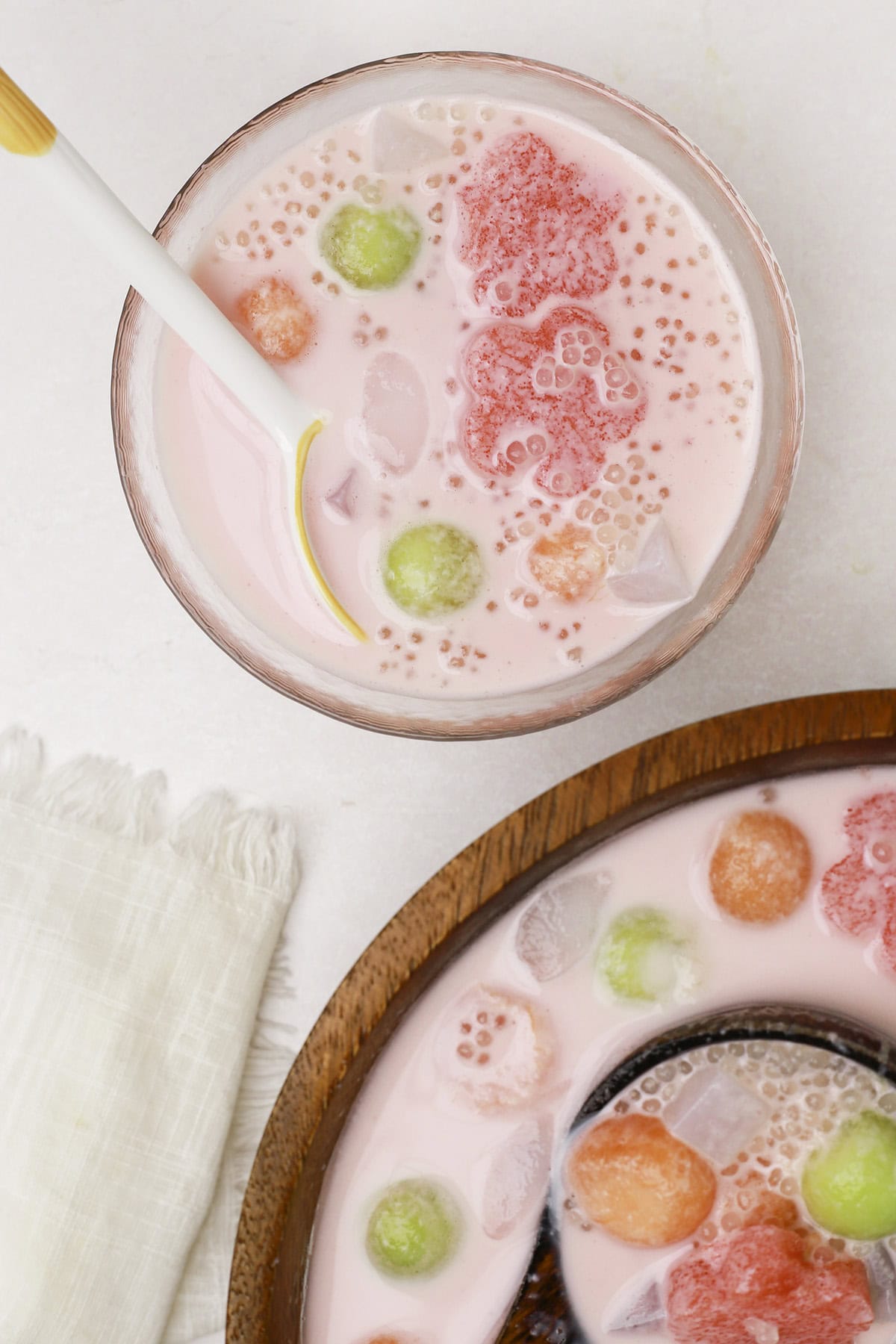
This sago dessert is best freshly made because as the sago pearls sit, they absorb the liquid it's in and expands, which will eventually turn the sago into a pudding consistency. If you don't mind the change in consistency, the summer sago can be kept refrigerated for 2 to 3 days.
📖 Recipe
Summer Sago
Ingredients
- 1 cup sago pearls
- 5 pounds seedless watermelon
- 3 pounds honeydew melon
- 2 pounds cantaloupe
- 7 ounces coconut gel drained (optional; also known as nata de coco)
- 1 can evaporated milk (usually 1 can is 12 fl. oz)
- ¼ cup sweetened condensed milk more or less to your sweetness preference
- 2 cups Ice cubes
Instructions
- Prepare the sago:Bring a pot of water to a boil and add the sago pearls while stirring the water. Reduce the heat so that the water at a gentle boil and cook the sago according to the package instructions or until most of the pearls are clear and only some still have a small white dot in the center, about 10-15 minutes. Make sure to stir occasionally. Once the sago pearls are cooked, drain with a mesh strainer and rinse well with cold water until the pearls are completely cooled. Set aside until needed.Please use a large enough pot as the sago will expand as they cook and the water will become quite thick and starchy. We recommend about using at least 4 times the amount of water to sago.
- Prepare the watermelon:For the watermelon, trim and discard the rind then carefully cut the watermelon into ½ -1 inch discs. Cut out the watermelon with your cookie cutter and set them aside. Alternatively, just cut the watermelon into bite size chunks. With either method, save the scraps (about 2-3 cups of watermelon) and transfer it to the blender. Blend the watermelon scraps until smooth. You'll need 10 fluid ounces (about 300ml) of watermelon juice. Cover both the cut watermelon and the watermelon juice and keep them refrigerated until needed.
- Prepare the honeydew and cantaloupe:For the honeydew melon and cantaloupe, cut the melons in half, scoop out and discard the seeds, and use a melon baller to make melon balls or just trim away the rind and cut the flesh into smaller bite size chunks. Set aside until needed or cover and keep refrigerated.
- Assembly:In a large serving bowl, add the prepared sago, the coconut gel, all three melons, the watermelon juice, evaporated milk, condensed milk, and ice. Stir until well combined and enjoy!
Notes
- Nutrition facts calculation does not include coconut gel (nato de coco)
- Feel free to substitute more of one melon for another or only use one melon. If so, we highly recommend choosing watermelon because the watermelon juice really makes the sago extra refreshing.
Equipments Recommended
Nutrition

Comments
No Comments