
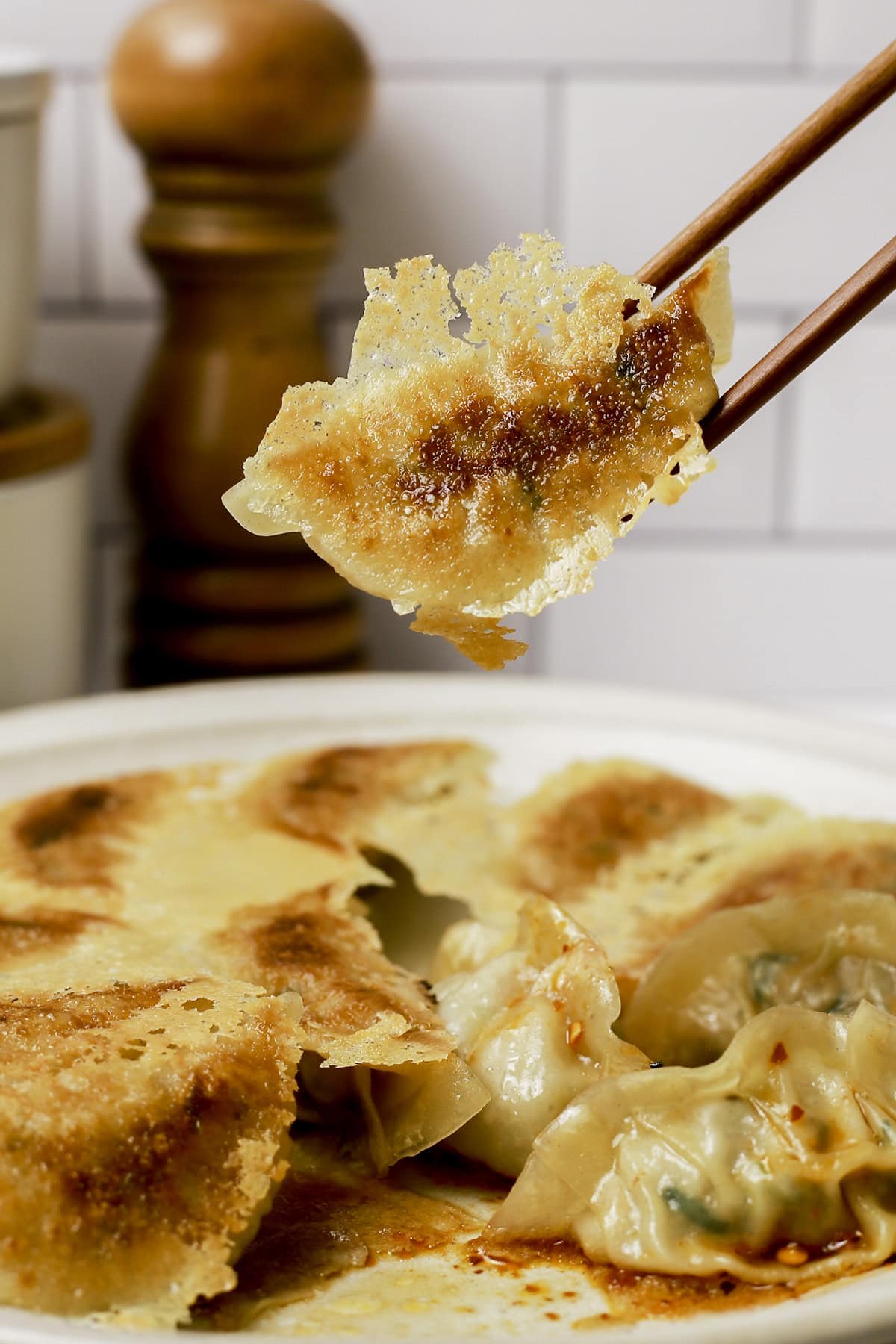
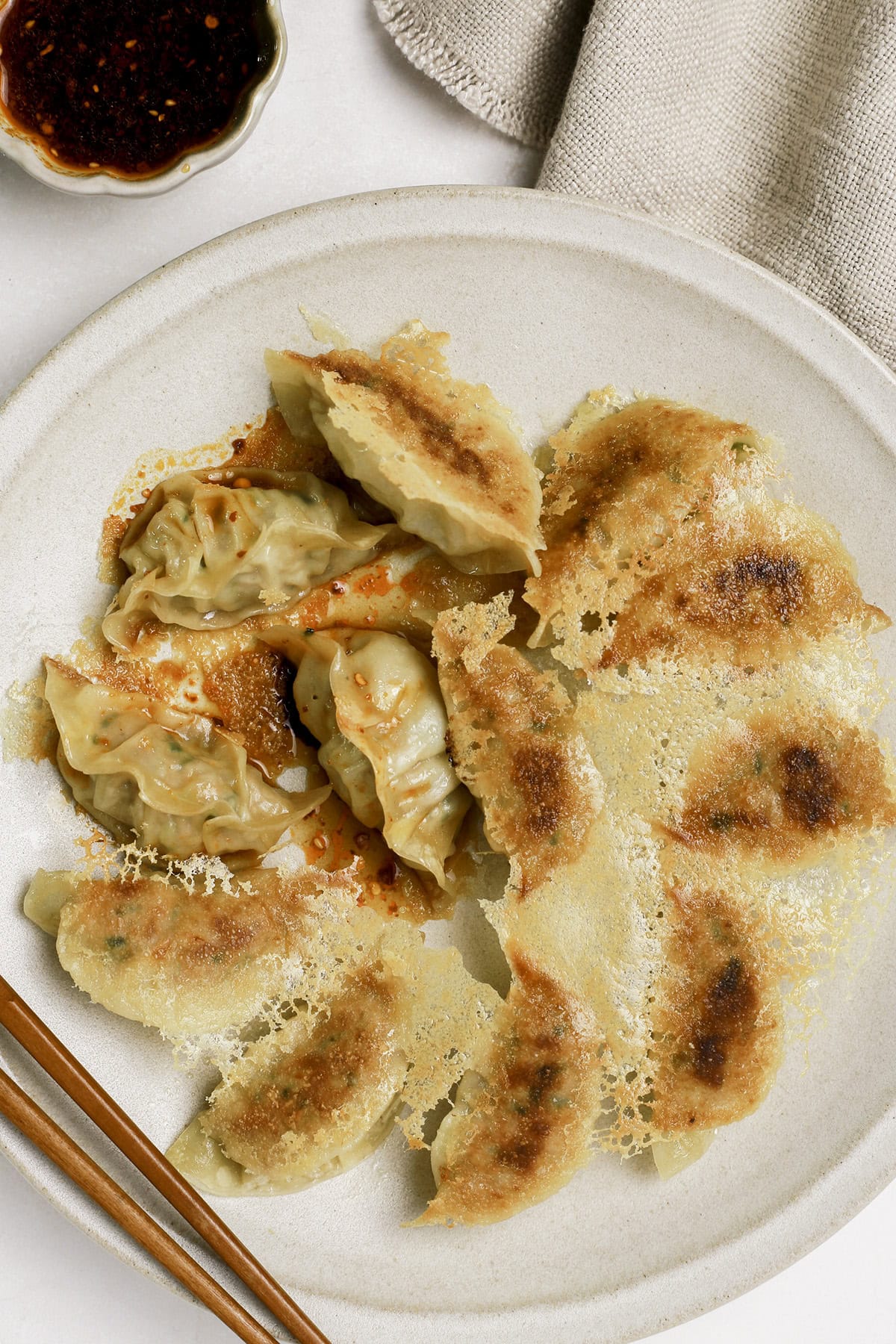
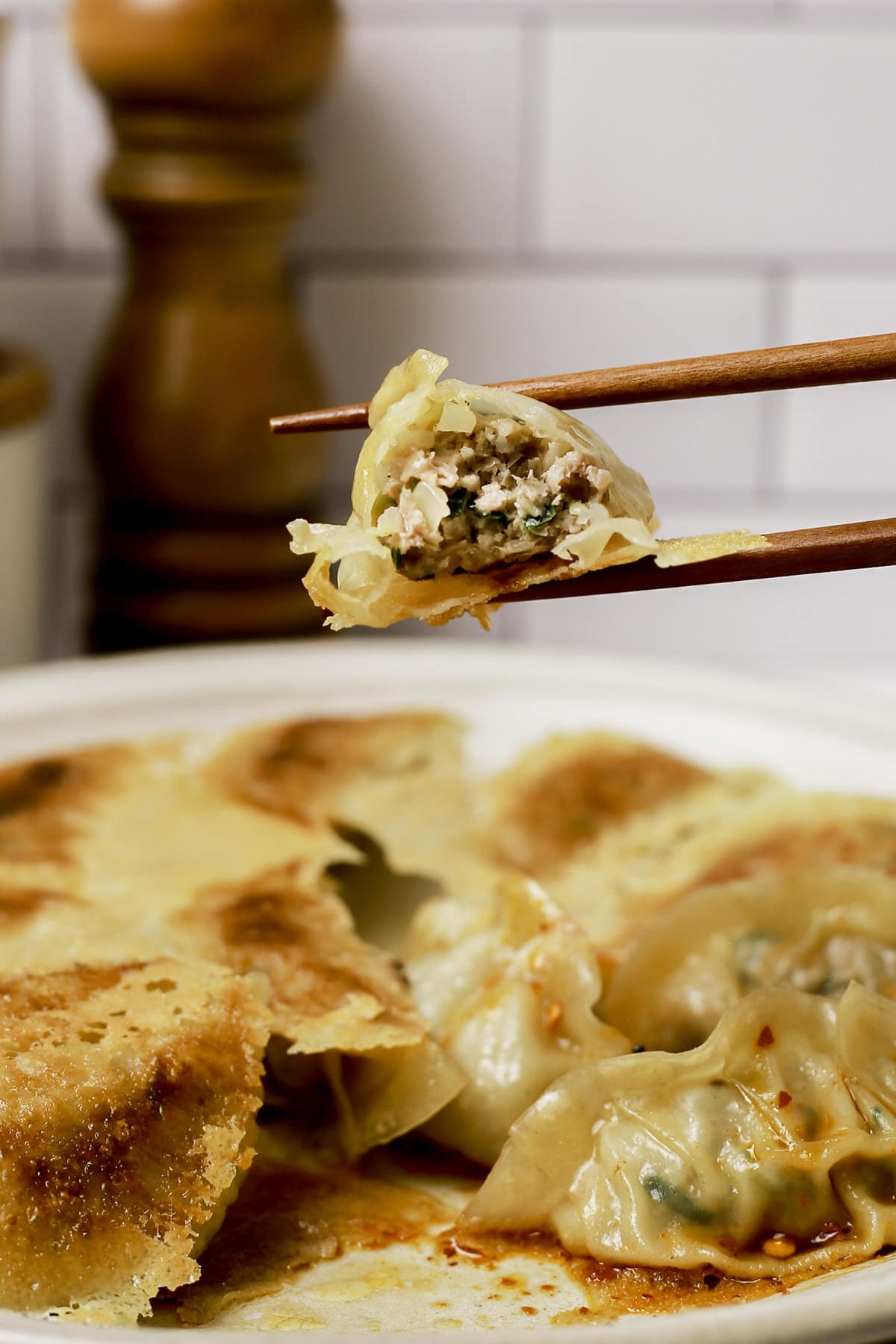
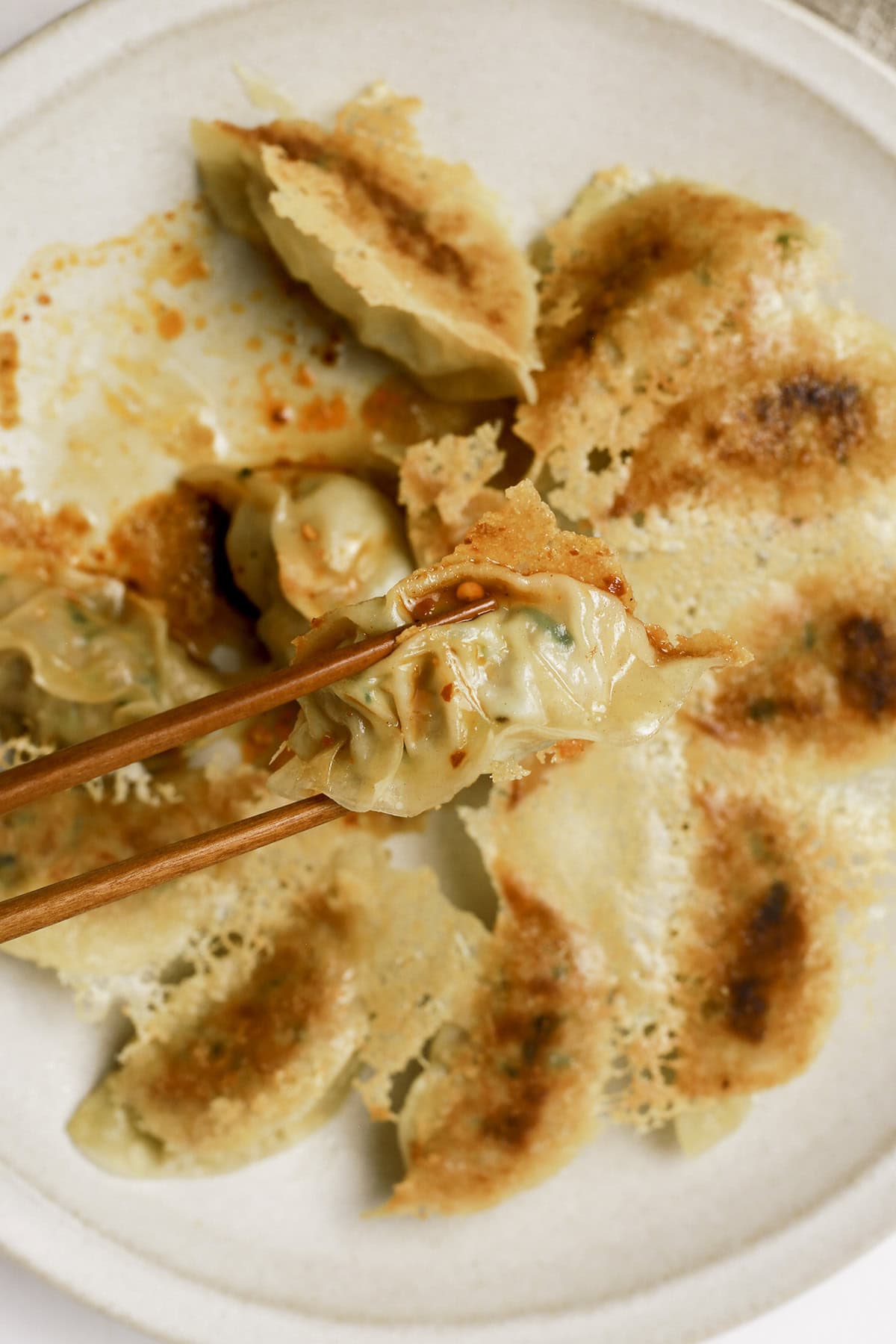
This pork gyoza recipe makes incredibly delicious gyoza with juicy, flavorful filling on the inside with Asian chive and cabbage for extra flavor and texture. The outside of the gyoza is laced with a beautiful, golden brown and crispy skirt that really brings the whole experience to another level - no wonder Sui and Uncle Fel went for second servings! Although this recipe is a recreation of a dish from an anime, Campfire Cooking in Another World, it's a solid, straight forward gyoza recipe that is absolutely worth trying.
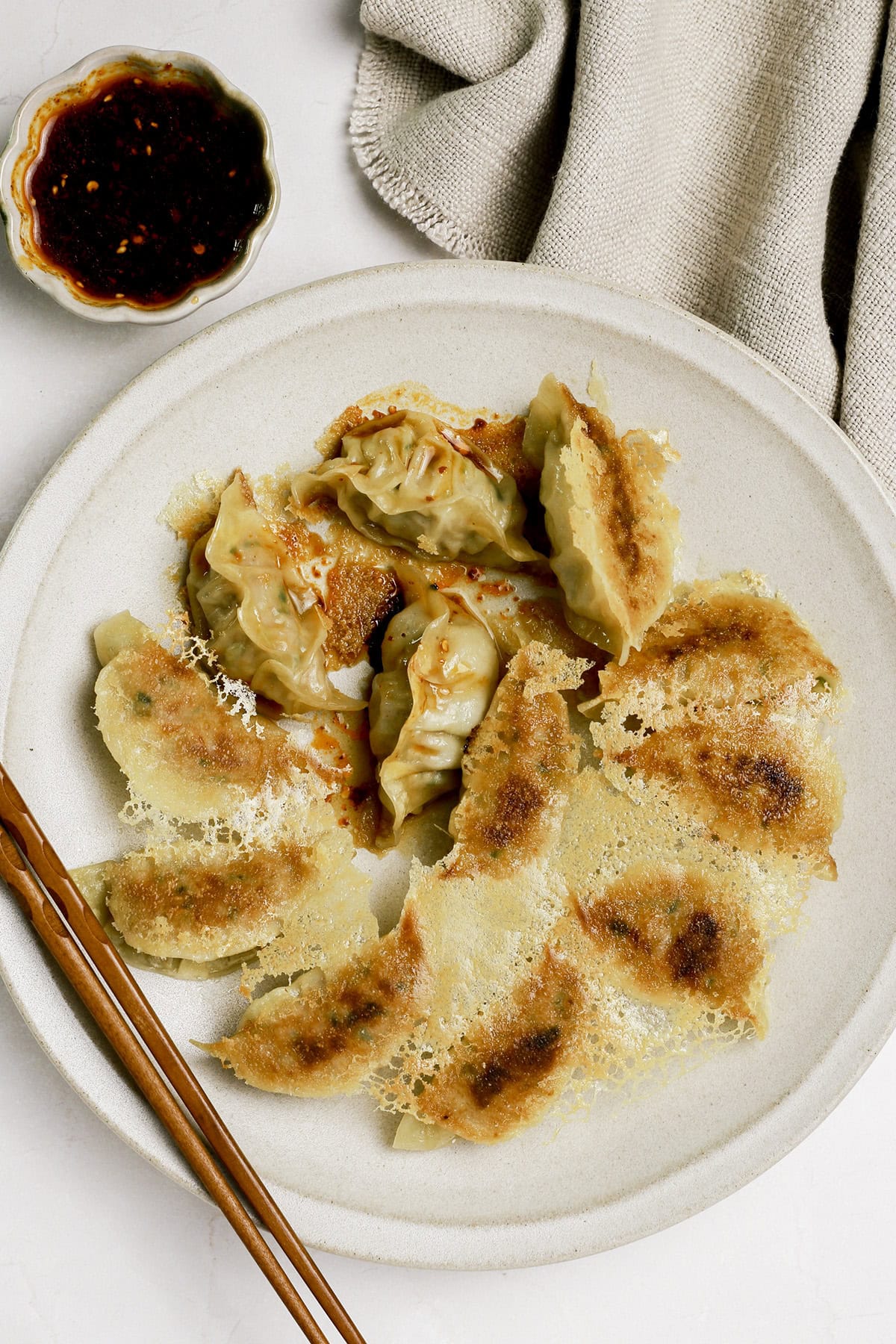
If you have not watched Campfire Cooking in Another World, it's a good paced, chill anime that's heavily focused on food, and Mukoda's food really makes you drool in every episode. Definitely recommend a watch if you enjoy anime food!
Also, if you haven't yet, check out our Captain Marine's Curry from One Piece and Ratatouille from Pixar's Ratatouille!
Jump to:
Ingredients needed and substitutions
Please scroll down to the recipe card for the ingredient quantities!
For the pork gyoza
- Ground pork - We prefer a 70/30 ratio ground pork for best flavor and juiciness.
- Cabbage - Green cabbage is our preferred because it's super accessible, affordable, and maintains its texture well, but savoy cabbage is great too.
- Asian chives - You can find this at most Asian markets. The bottom inch (2.5cm) of the stems are usually woody. You can cut and discard them. If you can't find Asian chives in your area, you can substitute with green onions.
- Ginger and garlic - Freshly minced ginger and garlic is perfect. If you want to follow the anime, you can use ginger and garlic paste.
- Sake - This is added to get rid of any unwanted "pork-y" smell and taste. You can also substitute with Shaoxing rice wine or omit the alcohol all together.
- Soy sauce, chicken bouillon powder, salt, and pepper - These are the seasonings for the filling.
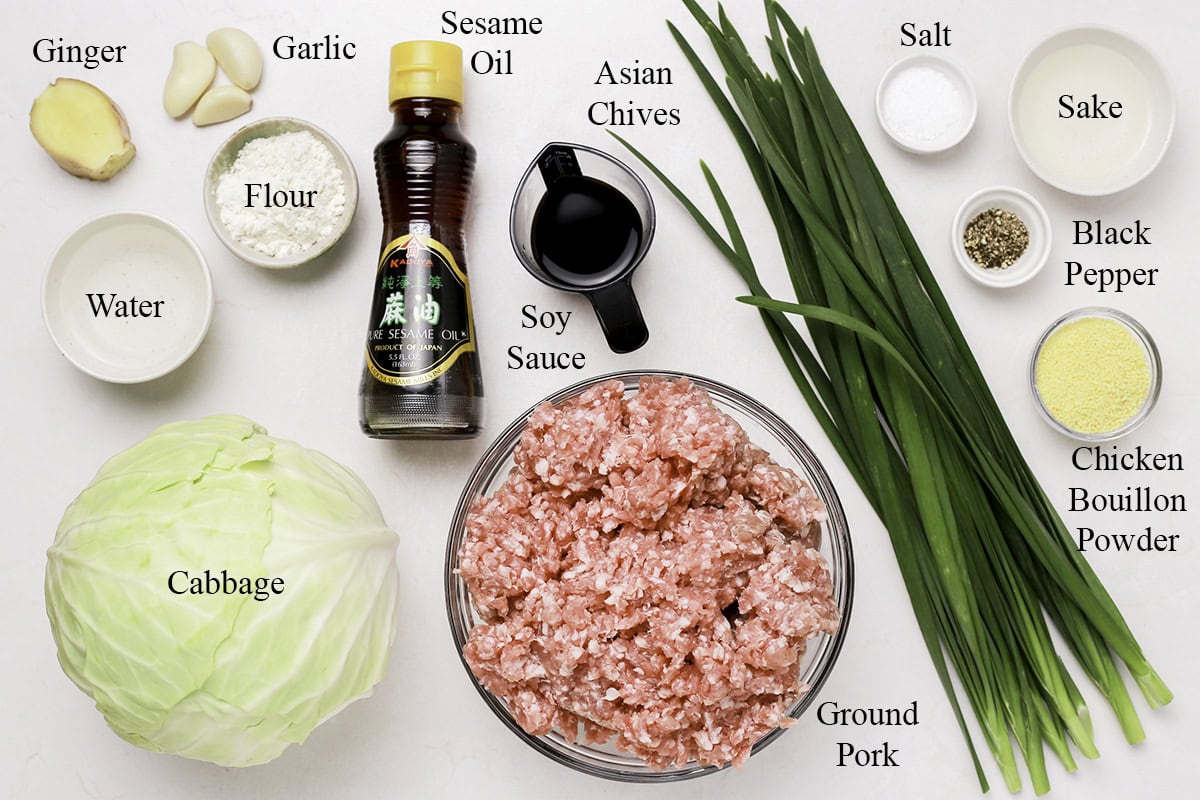
- Toasted sesame oil - Sesame helps lock in the moisture in the filling and adds a lovely nutty flavor.
- Flour and water - This is for making a slurry, which is added during pan-frying, to give the gyoza crispy dumpling skirts.
- Optional gyoza sauce - All you need are some soy sauce, vinegar, water, sugar, and some chili oil if you want a mild kick.
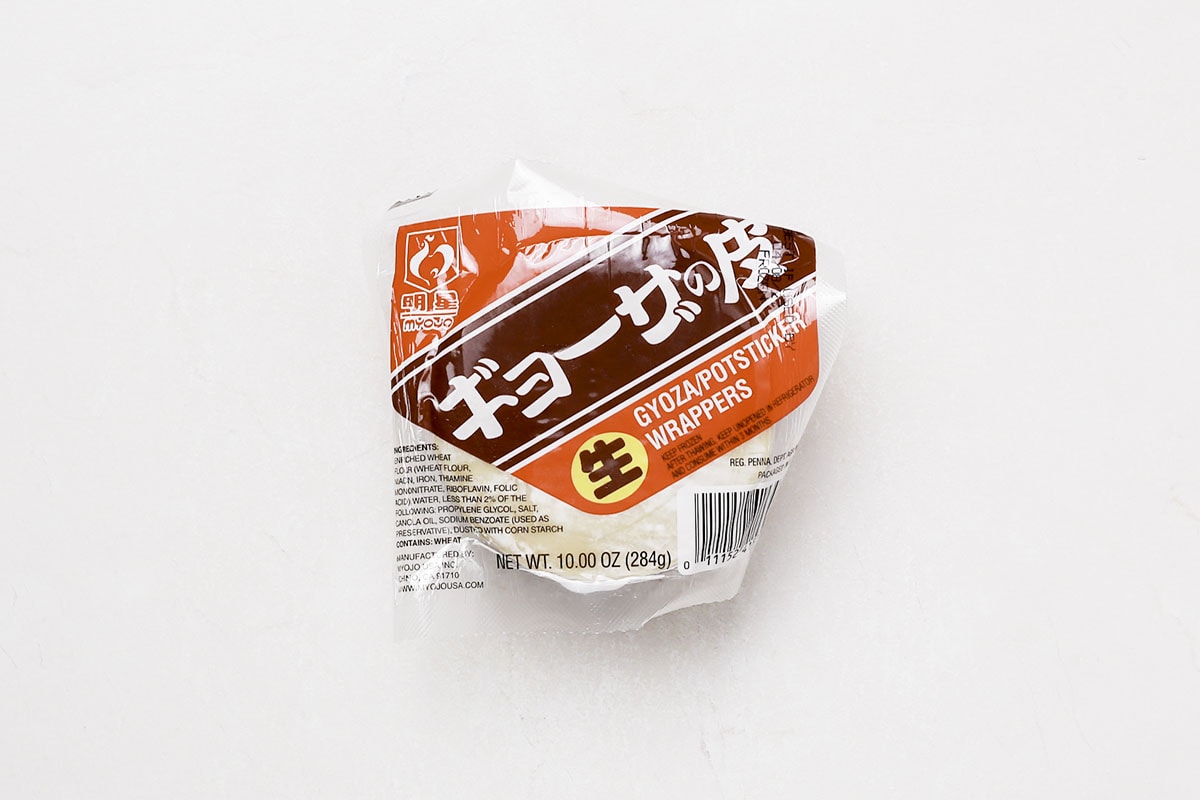
- Gyoza wrappers - Any gyoza wrappers are fine. You can even use dumpling wrappers, but make sure to look for ones labeled "potstickers" because those are better suited for pan-frying.
How to make pork gyoza
Please scroll down to the recipe card for the full recipe and instructions!
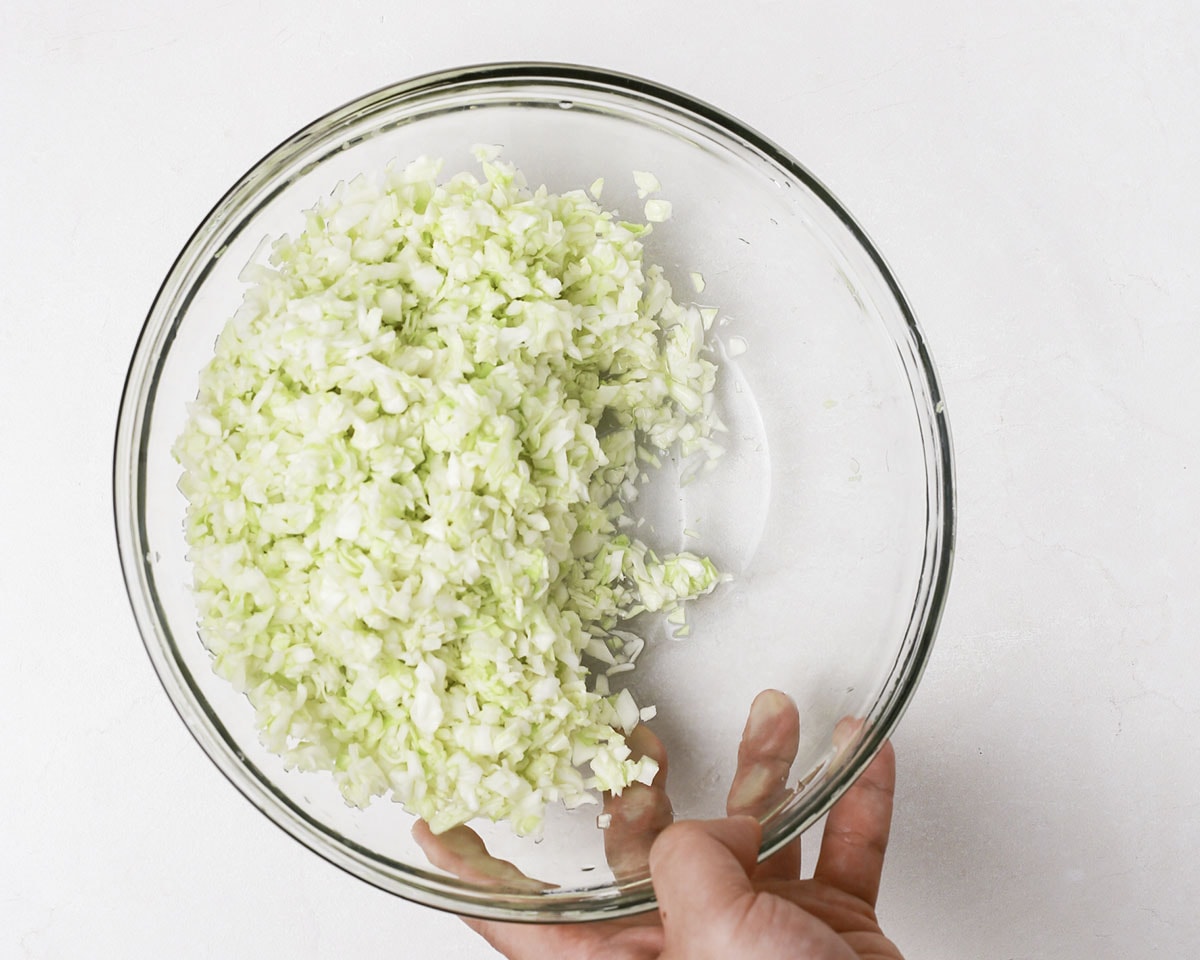
Salt the cabbage
Salt the cabbage. Place the cabbage a bowl and season with salt. Mix well and set aside to let the cabbage salt until needed. Drain the liquid at the bottom of the bowl before use.
Make the filling
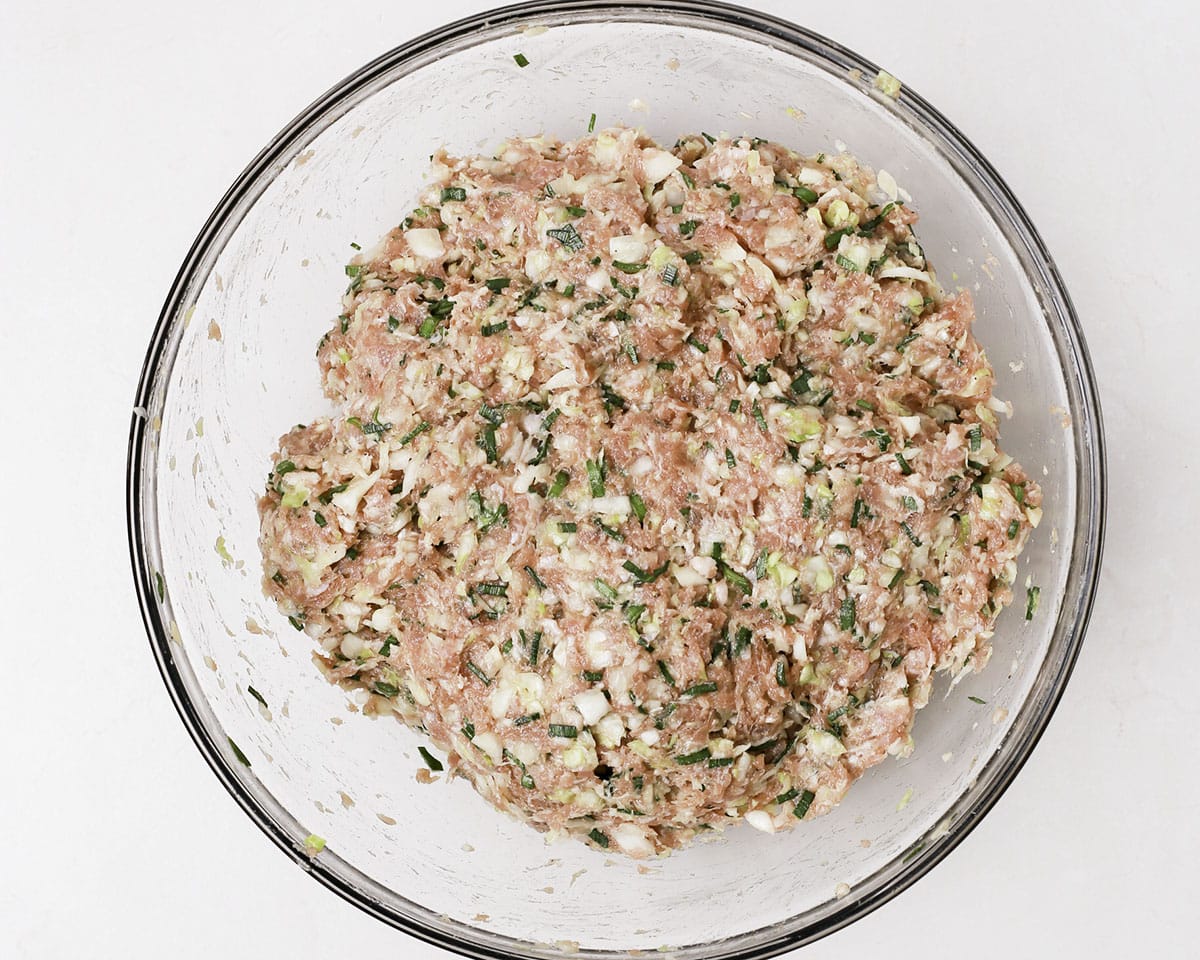
In a large bowl, add the ground pork, garlic, ginger, sake, soy sauce, sesame oil, bouillon powder, salt, and black pepper. Mix until well combined then mix vigorously in a circular motion until the filling is paste-like.
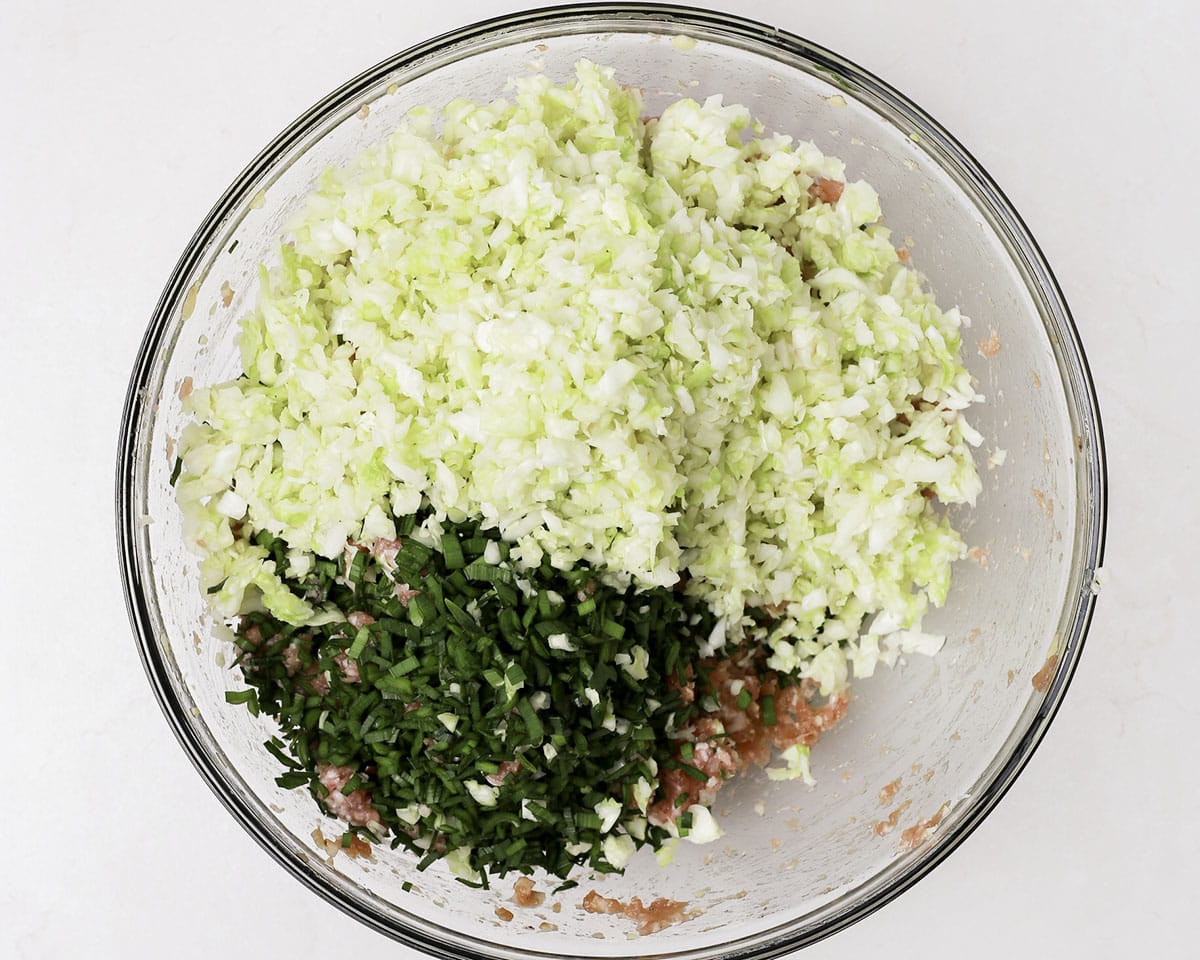
Add the Asian chives and the salted cabbage and mix until well combined.
Assemble the gyoza
Prepare your gyoza wrapping station and let's get wrapping!
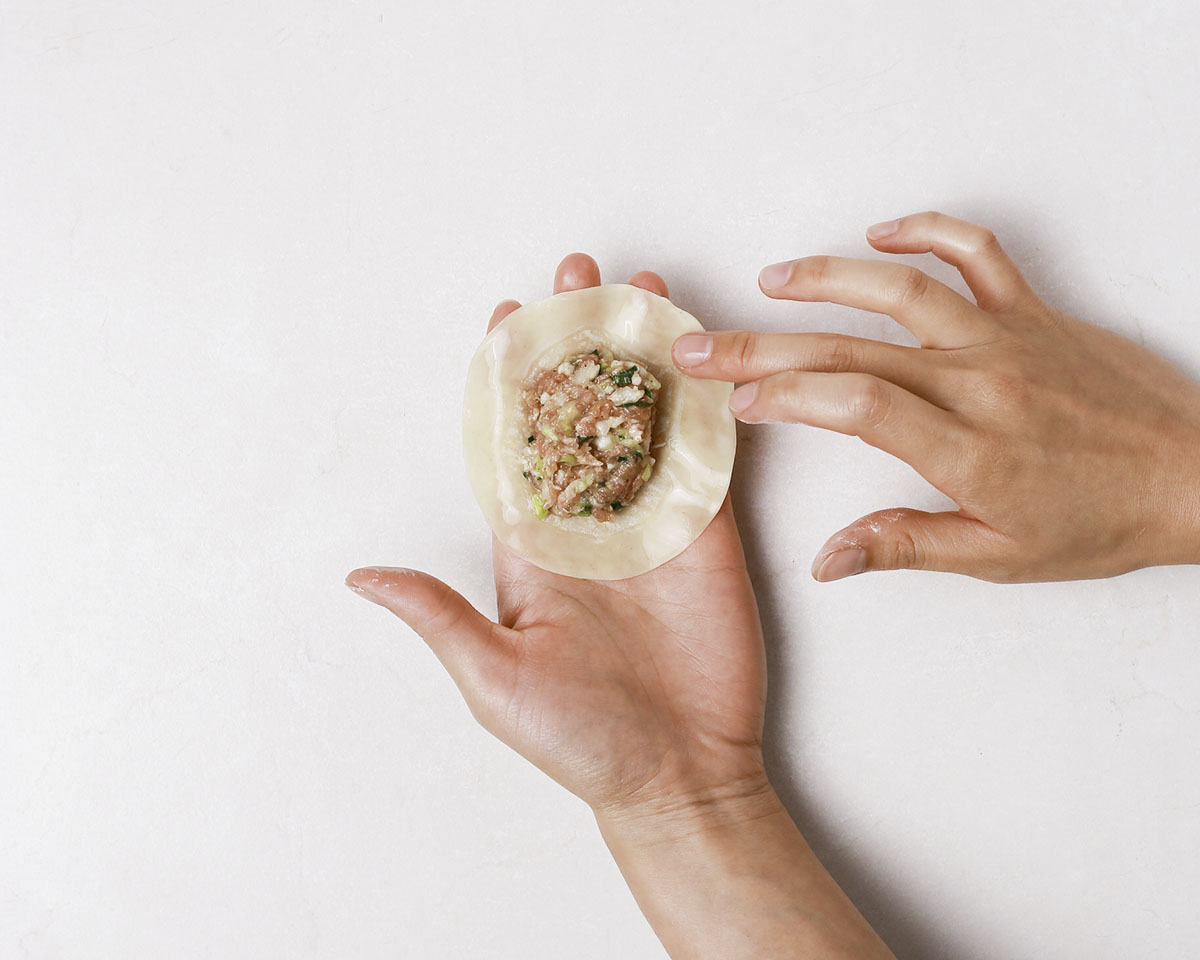
- Place about a tablespoon of filling at the center and brush the edges of the wrapper with water.
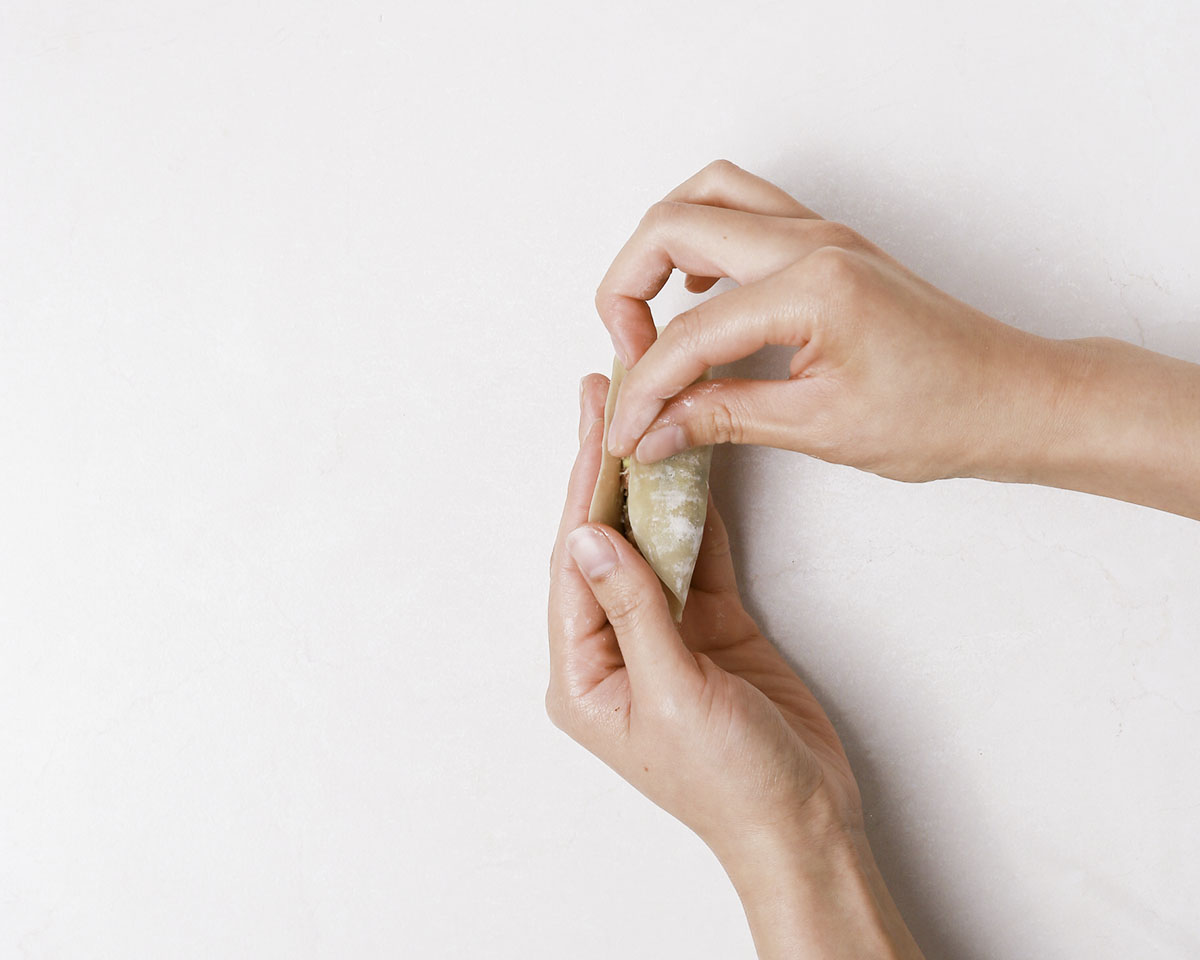
- Fold the wrapper in half, like a half-moon.
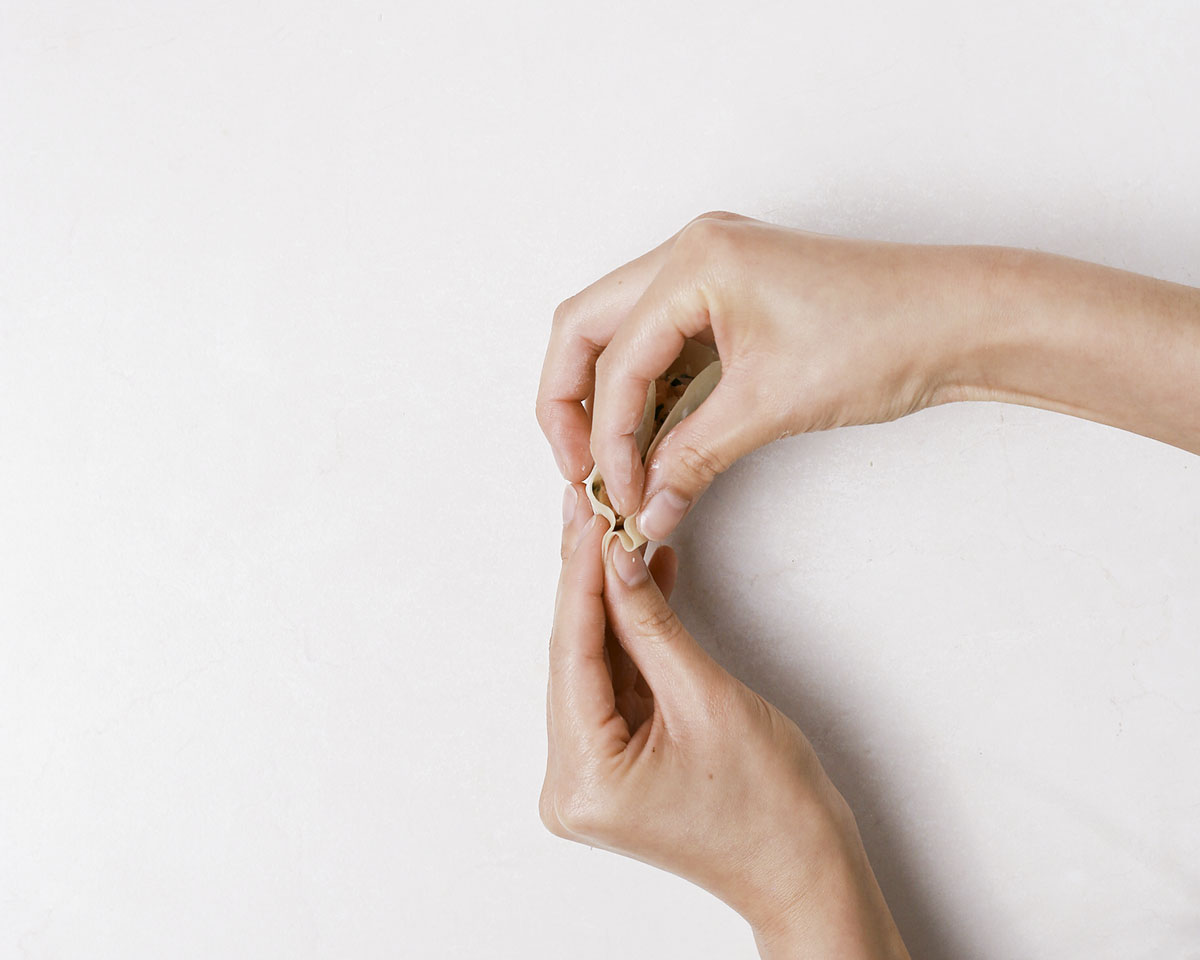
- Starting at one end of the half-moon, pinch the end of the wrapper together. Here in the photo, we started on the left. Then overlap the wrapper (closest to you) to the left so it looks like a backwards "S". Pinch the overlapped wrapper to make your first pleat and repeat all the way to the end.
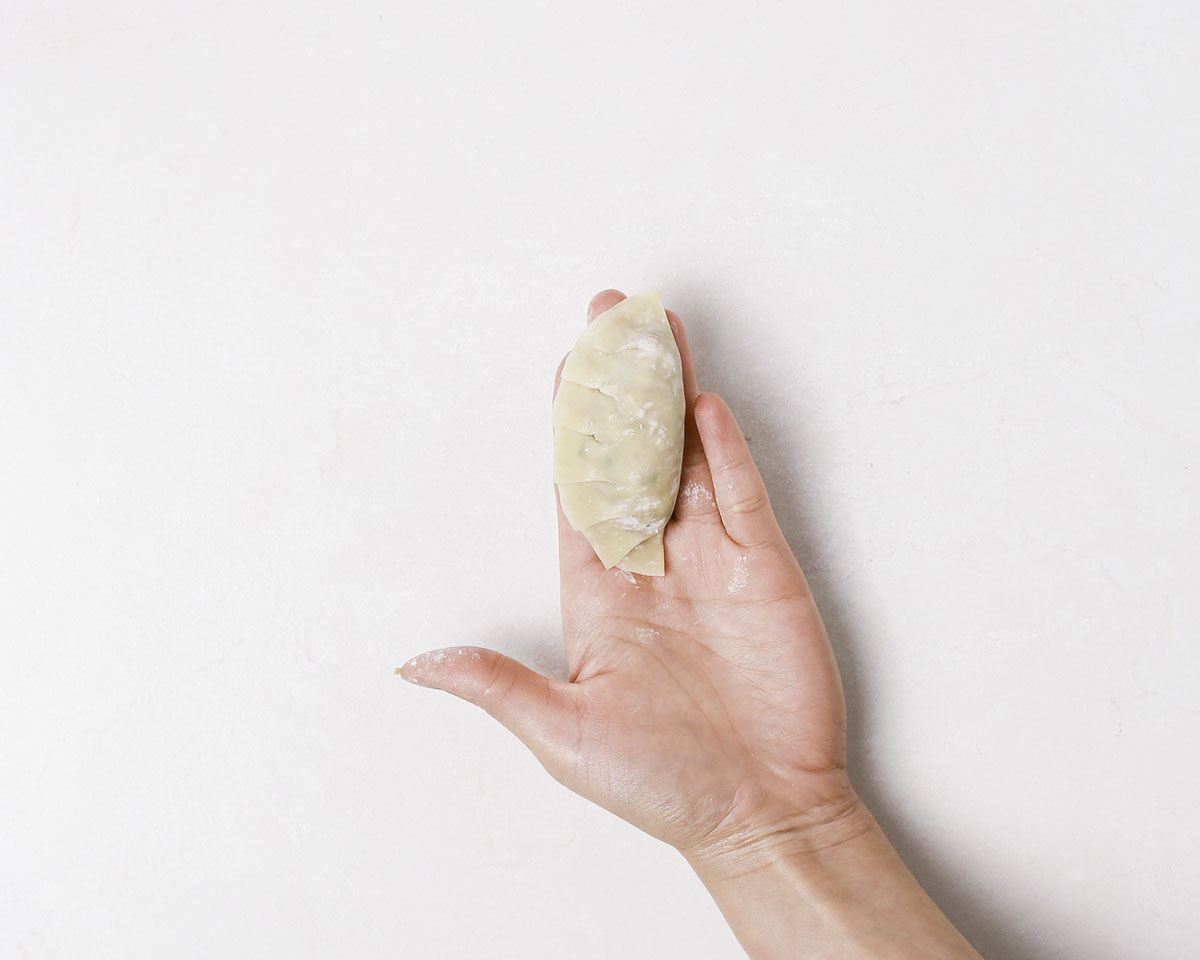
- And voila! You've got a pleated gyoza! Repeat with the remaining wrappers and filling and make sure to keep your gyoza covered while working to prevent the wrappers from drying out.
How to pan fry the gyoza with crispy dumpling skirts
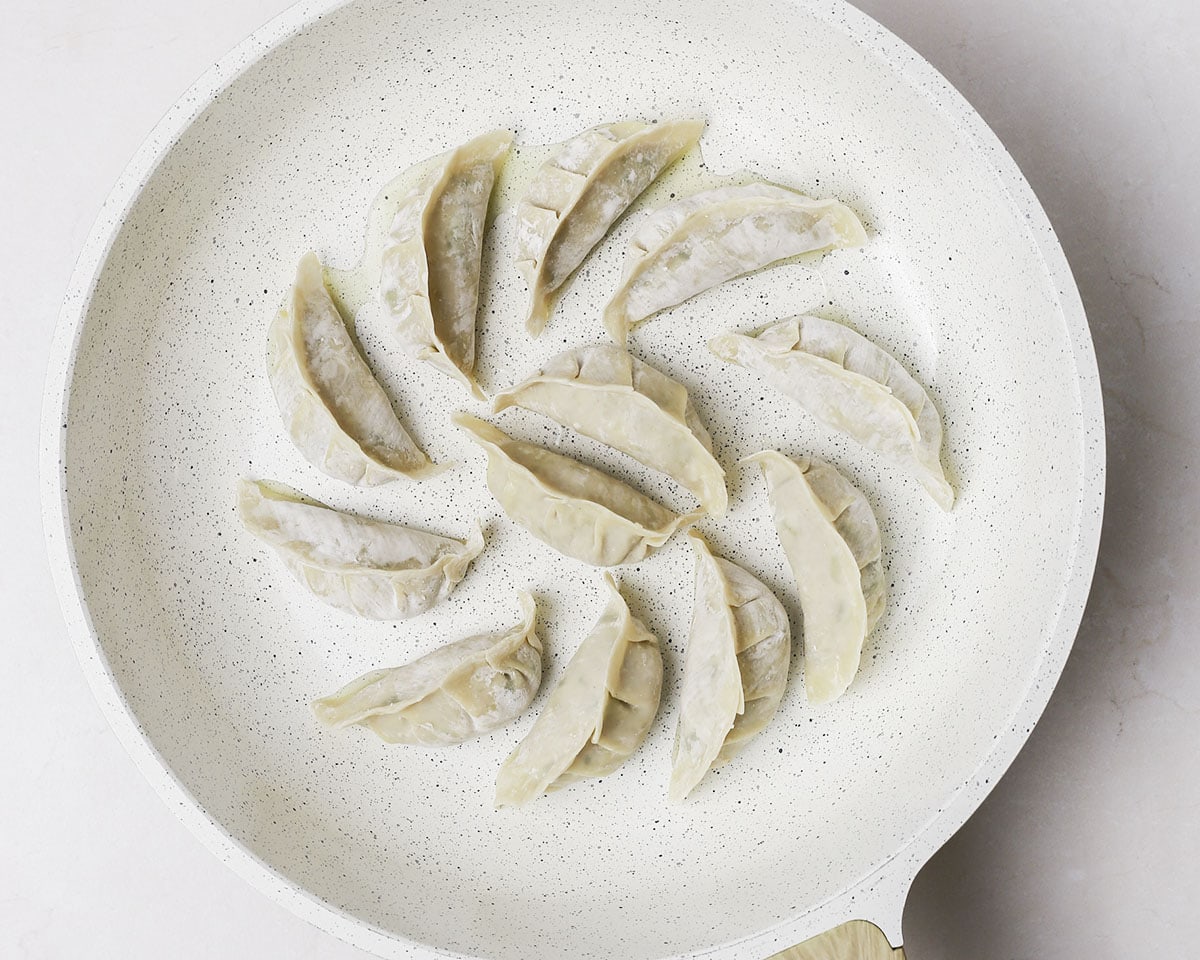
- Add a couple tablespoons of oil in the pan and arrange the about 12-14 gyozas in the pan.
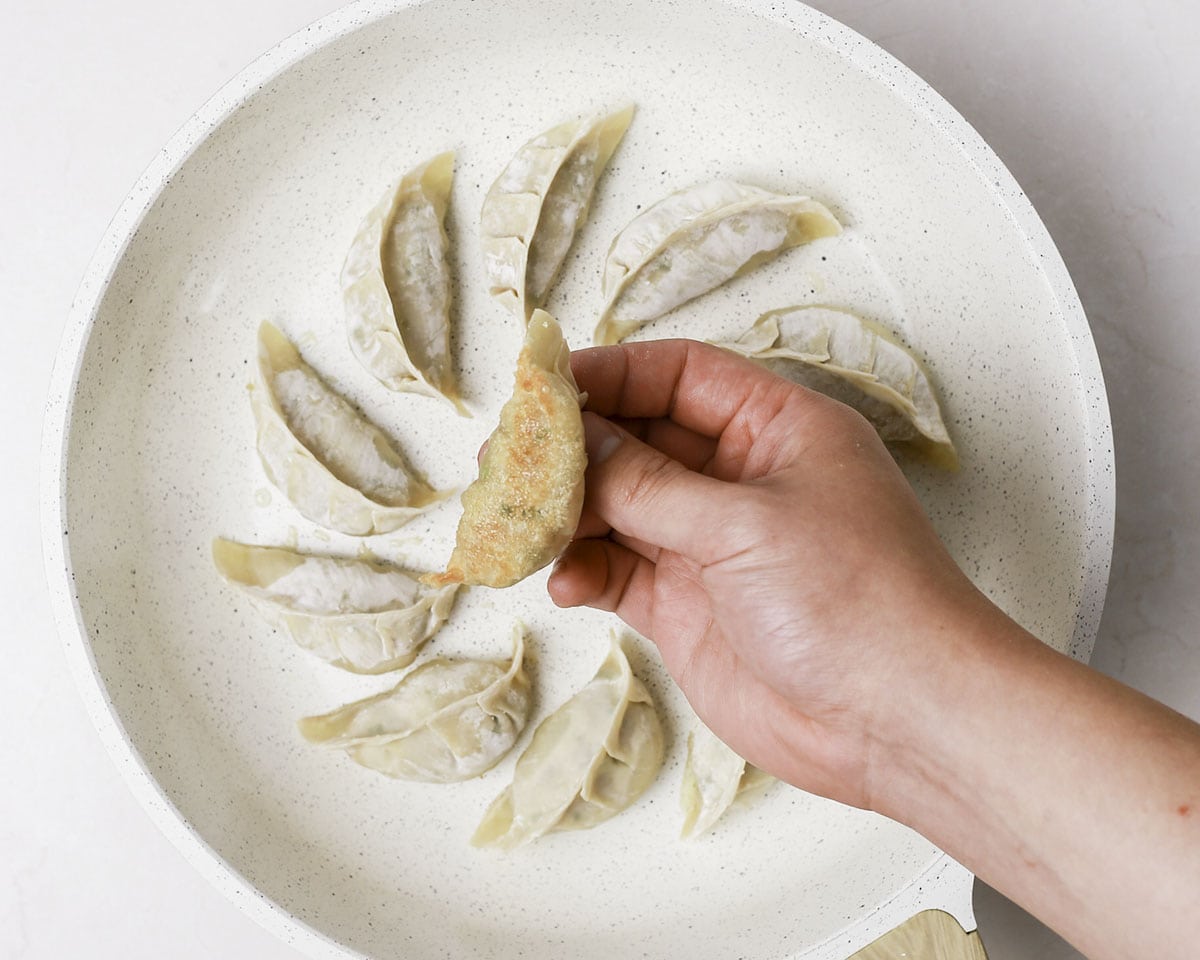
- Place the pan over medium heat and pan-fry until the gyoza starts to turns golden brown.
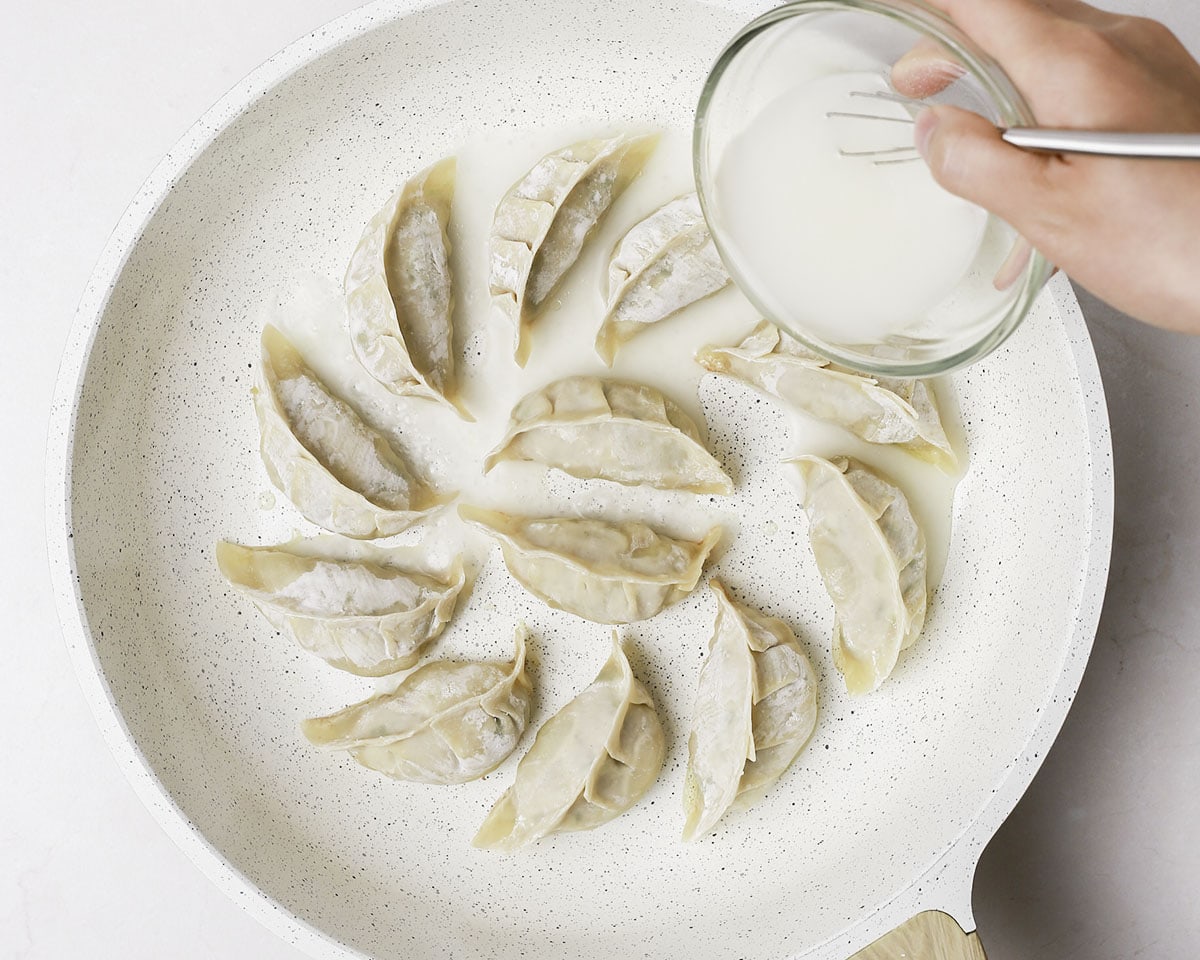
- Pour the flour slurry over the gyoza and cover with a lid. If you want plain gyoza without the skirt, just use water and skip the flour.
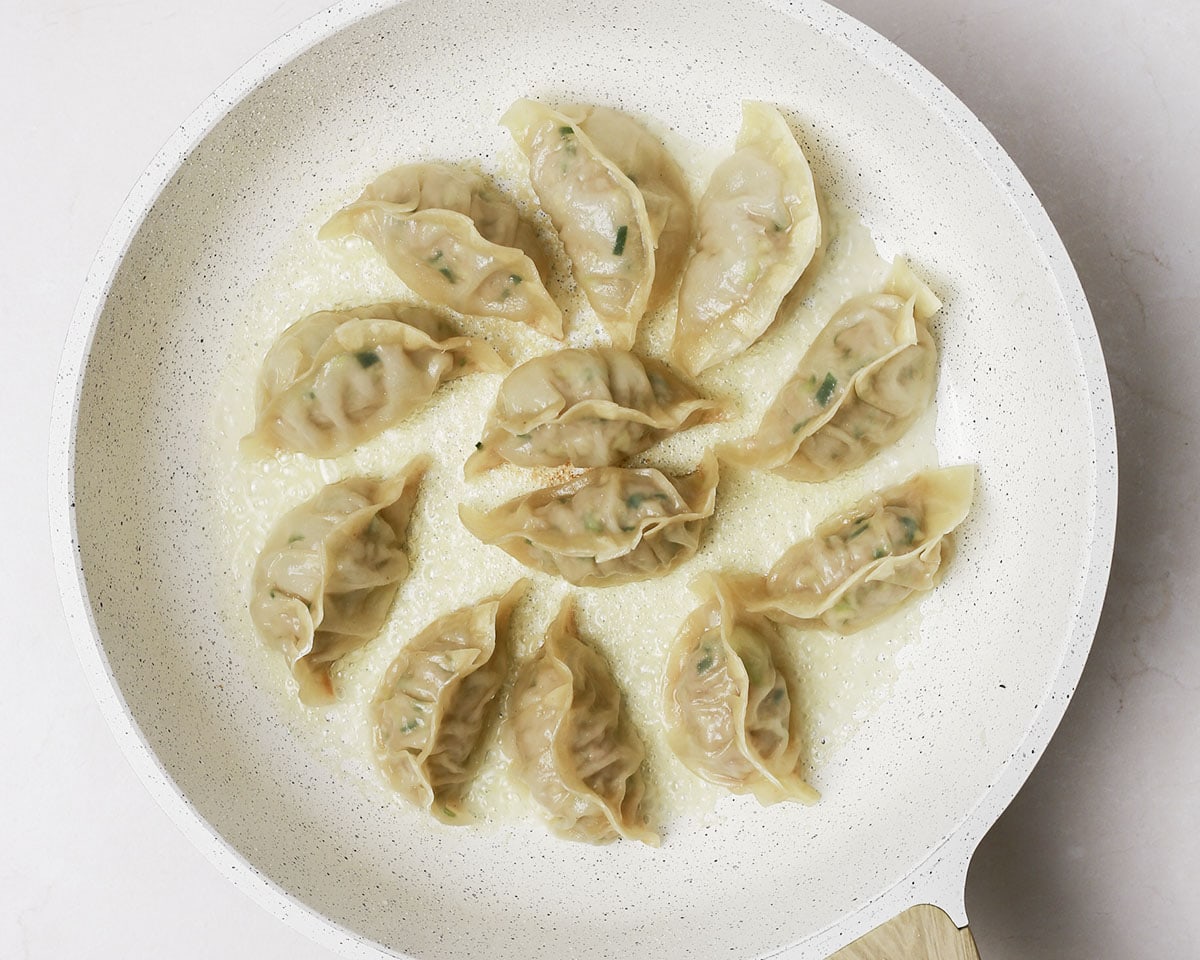
- After 3-4 minutes, when the gyoza are nearly cooked through, remove the lid and let the remaining water evaporate and the skirt crisp up.
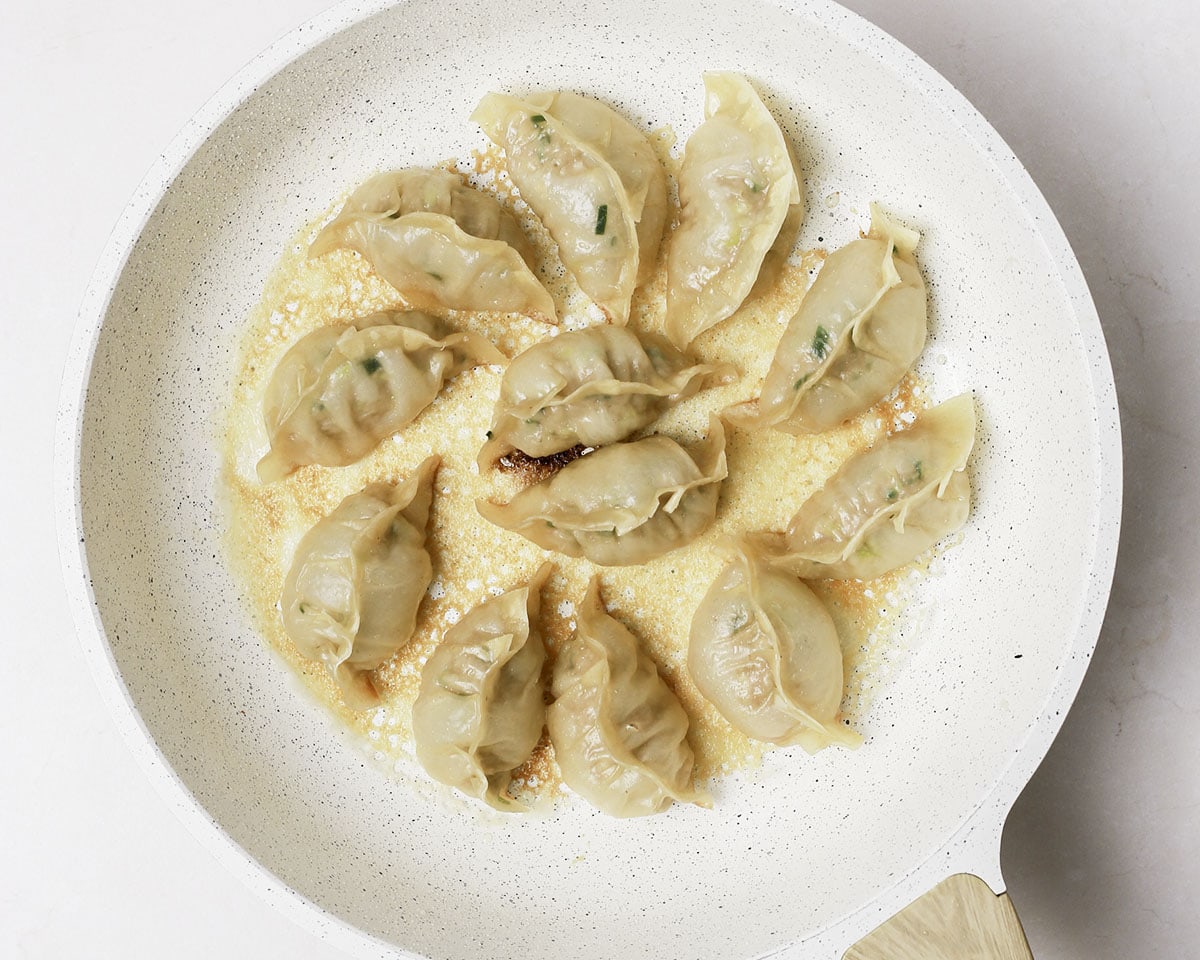
Pro tip
The perfect lacy dumpling skirt
Make sure to use enough oil! The oil fries the flour slurry, which makes it bubble while the slurry is wet, and when the slurry dries, it becomes lacy and crispy.
If you have a hot spot on a your pan or a slightly tilted stovetop that's giving you uneven colors on the skirt, feel free to tilt and shift the pan to concentrate on the paler spots.
Storage
These gyoza make great emergency meals. We usually make a double batches so we have lots of extras for later.
To store, keep the gyoza in the lined sheet pan or plate and place them in the freezer. Let them freeze for at least 2-4 hours or overnight, then transfer them into airtight containers or a resealable bag. They can be kept frozen for 2-3 months.
Leftover cooked gyoza can be stored in an airtight container and refrigerated for up to 4 days.
Reheating
Refrigerated, cooked gyoza can be reheat in the microwave until hot or on the stovetop.
To reheat on the stovetop, heat the pan over medium heat and very lightly oil the pan. Once hot, arrange the gyoza in the pan and drizzle about 1-2 tablespoons of water. Cover with a lid and steam for 2-3minutes, then remove the lid and allow the excess water to evaporate. This method best for gyoza without dumpling skirts.
For frozen gyoza, pan-fry as instructed for fresh gyoza, just use an addition tablespoon (15ml) of water to the pan for each batch of gyoza and keep the gyoza covered for an additional minute or two.
📖 Recipe
Pork Gyoza (Campfire Cooking in Another World)
Ingredients
Pork gyoza
- 8 ounces green cabbage finely diced
- ½ teaspoon salt (for the cabbage)
- 1 pound ground pork
- 1 tablespoon minced garlic *see notes
- 1 tablespoon minced ginger *see notes
- 1 tablespoon sake
- 1 tablespoon regular soy sauce
- 1½ tablespoons toasted sesame oil
- 1 teaspoon chicken bouillon powder
- ½ teaspoon cracked black pepper
- ¼ teaspoon salt (for the filling)
- 1½ ounces Asian chives cut into ¼ inch (½ cm) pieces; discard the last inch (2.5cm) of the woody stems
- 60 sheets round gyoza wrapper or dumpling wrappers
- Oil as needed for cooking
Optional for dumpling skirt (per 12-14 gyoza)
- ¼ cup water
- 1 tablespoon all-purpose flour
Optional gyoza dipping sauce
- 2 tablespoons regular soy sauce
- 2 tablespoons white vinegar
- 1 tablespoon water
- 1 teaspoon granulated sugar
- Chinese chili oil optional for some extra flavor and spice
Instructions
Make the gyoza:
- Place the diced cabbage a bowl and season with salt. Mix well and set aside to let the cabbage salt until needed. Drain the liquid at the bottom of the bowl before use.8 ounces green cabbage, ½ teaspoon salt
- In a large bowl, add the ground pork, garlic, ginger, sake, soy sauce, sesame oil, bouillon powder, salt, and black pepper. Mix until well combined then mix vigorously in a circular motion until the filling is paste-like. Add the Asian chives and the salted cabbage and mix until well combined.1 pound ground pork, 1 tablespoon minced garlic, 1 tablespoon minced ginger, 1 tablespoon sake, 1 tablespoon regular soy sauce, 1½ tablespoons toasted sesame oil, 1 teaspoon chicken bouillon powder, ½ teaspoon cracked black pepper, 1½ ounces Asian chives, ¼ teaspoon salt
- Prepare your gyoza wrapping station with a sheet pan or plates lined with plastic wrap, damp paper towels for covering the gyoza, a spoon to scoop the filling, a bowl of water to wet the wrapper, and the gyoza wrappers.60 sheets round gyoza wrapper
- Working with a sheet of wrapper at a time, place about a tablespoon of filling at the center of the wrapper and brush some water on the entire edge of the wrapper. Fold the wrapper up and seal the gyoza by pinching the edges together or pleat the wrapper. See the post for pleating photo reference.
- Place the finished gyoza on the prepared sheet pan (or plate) and repeat with remaining filling and wrappers. Make sure to cover the finished gyoza with the damp towel to prevent them from drying out during the process.
Pan-fry the gyoza:
- If making dumpling skirts: mix together the water and flour in a bowl until well combined. Give the flour slurry a mix before use.If making plain gyoza: omit the flour and only prepare the water.¼ cup water, 1 tablespoon all-purpose flour
- In a 12 inch (30cm) pan, add a couple tablespoons of oil. Arrange 12-14 gyoza in the pan then place the pan over medium heat. Let the gyoza cook until they start to turn golden brown on the bottom, about 1-2 minutes. Then pour the prepared water and flour slurry (or just water) over the gyoza and cover with a lid. Let the gyoza cook for 3-4 minutes, until the gyoza is nearly cooked through, then uncover and cook until the water has completely evaporated and the dumpling skirt is golden brown and crispy.Oil
- When the gyoza is done (and the dumpling skirt is golden brown and crispy), place a heatproof plate upside down over the gyoza. Hold the plate and flip the pan upside down to reveal your gyoza. Be careful here as there might be excess oil. It will be very hot!
- Enjoy the gyoza while they are hot. They are great as they are, but they are also great dipped in some gyoza sauce or drizzled with some chili oil.
(Optional) Make the gyoza sauce:
- In a bowl, mix together all the ingredients for the sauce until the sugar has dissolved. The sauce can be kept refrigerated for up to 2 weeks if unused.2 tablespoons regular soy sauce, 2 tablespoons white vinegar, 1 tablespoon water, 1 teaspoon granulated sugar, Chinese chili oil
Notes
- Ginger and garlic - If you want to make it exactly like the anime, Mukoda used ginger and garlic paste. You can find the exact brand at Japanese markets like Mitsuwa.
- In the anime, Mukoda also drizzled a little toasted sesame oil around the pan once the dumpling skirt is golden brown and crispy. We did not include it in the steps, but if you'd like to, drizzle about a tablespoon (15ml) of sesame oil when the dumpling skirt is nearly done.
Equipments Recommended
Nutrition
Comments
No Comments