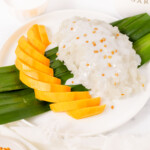
Mango Sticky Rice
Mango sticky rice is a traditional Southeast Asian dessert made with coconut sticky rice and served with fresh, sweet mangoes, salted coconut sauce, and garnished with crispy mung beans or sesame seeds. Just like mango sago, this is a great year-round dessert, but especially perfect for the summer!
Ingredients
For the coconut sticky rice:
- 2 cups long grain glutinous rice (also known as Thai sweet rice or Thai sticky rice)
- 13.5 fluid ounces coconut milk full fat and unsweetened (usually 1 can)
- ¾ cup granulated sugar
- ½ teaspoon salt
- 1 pandan leaf tied into a knot (optional)
Optional - salted coconut sauce:
- 1 cup coconut milk full fat and unsweetened
- 2 tablespoons granulated sugar
- ½ teaspoon salt
- 1 teaspoon cornstarch
For the rest of the dish:
- 3 ripe mangoes peeled and cut
- sweetened condensed milk or coconut condensed milk (optional alternative for salted coconut sauce)
- Toasted sesame seed (optional for garnish)
- Toasted peeled and split mung bean (optional for garnish)
- Banana leaf or pandan leaves (optional for plating)
Instructions
Option 1 - Steamed sticky rice (bamboo steam basket)
- Wash the rice 2 to 3 times or until the water looks clear. Then cover the rice with about 2 to 3 inches of water and allow the rice to soak for 4 hours or overnight in the fridge.
- Once the rice is soaked, line the steam basket with cheesecloth. Drain and transfer the rice into the prepare cheesecloth lined steam basket and roughly level out the rice. Drape the excess corner of the cheesecloth over the rice and cover the basket.
- Steam the rice over high simmering water for about 15 to 20 minutes, or until the rice is cooked and looks translucent. Remove the steam basket off of the heat.*You can check the doneness of the rice by taste testing. The rice should no longer be crunchy at all and will be chewy instead. Do be VERY careful! The steam will be very hot!*
Option 2 - Rice cooker method
- Wash the rice 2 to 3 times until the water looks clean. Drain the rice well using a sieve and transfer the washed rice into the rice cooker inner pot insert.
- Add 2 cups of water (for every 2 cups of rice) and level out the rice. Cook the sticky rice with the normal or white rice setting.
Make the coconut sticky rice:
- About 5 minutes before the sticky rice is done, prepare the sweetened coconut milk. Combine the coconut milk, sugar, salt, and pandan leaf in a saucepan. Heat the mixture over medium heat and stir constantly until the sugar has dissolved. No need to boil. Remove from heat.
- Once the sticky rice is cooked and hot, transfer it to a large, heatproof mixing bowl. Add the prepared sweetened coconut milk mixture and discard the pandan leaf. Mix until well combined. At this point, the rice will look quite loose and wet. Cover and set aside for 15 minutes.
- After 15 minutes, mix the rice again. Now the rice should have absorb some of the coconut milk mixture and look a bit thicker. Cover and set aside for another 15 to 30 minutes.
Assemble:
- Divide the coconut sticky rice into 6 even portions or to your desired portion size. Transfer the rice onto serving plates or banana leaves. You can also mold the rice by packing it into a bowl and flipping it upside down onto the serving plate.
- Top the coconut sticky rice with your desired amount of salted coconut sauce and serve with sliced or diced mango. Garnish with some toasted sesame seeds or toasted split mung beans. Enjoy!
Salted coconut sauce (optional):
- Combine the coconut milk, sugar, salt, and cornstarch in a saucepan. Mix until well combined.
- Cook the mixture over medium heat, stirring frequently until the mixture becomes thick and and bubbly. Transfer to a a bowl and set aide.
Toasted split mung bean garnish (optional):
- Add ¼ cup of split mung beans into a saucepan along with a couple cups of water. Bring the water to a boil and cook the mung beans for about a minute.
- Drain the mung beans well and transfer them to a dry, nonstick pan. Toast the mung beans over medium heat until dry and the beans start to turn golden brown.
Notes
Please refer to the post above for step by step photo reference, tips, storage, and FAQs!
- Different methods of cooking sticky rice yields slightly different texture.
- Steamer method - This yields slightly drier, chewier sticky rice that can absorb more coconut milk.
- Rice cooker sticky rice - This method will make slightly softer, wetter sticky rice. If you prefer it drier, you can use a little less water.
- If you need an overview of how to use a steam basket for steaming sticky rice, please refer to the post above - "2 ways to cook sticky rice".
- Salted coconut sauce - This is the classic sauce served with mango sticky rice. The saltiness adds a nice contrast to the sweetness of the dish. If you prefer, you can use condensed milk instead of making this sauce. If you are lactose intolerant or want a dairy free option, there's coconut condensed milk as well.
Nutrition
Calories: 608.5kcal | Carbohydrates: 98g | Protein: 7.2g | Fat: 23.1g | Saturated Fat: 19.9g | Polyunsaturated Fat: 0.4g | Monounsaturated Fat: 1.2g | Sodium: 406.8mg | Potassium: 451.3mg | Fiber: 3.4g | Sugar: 43.1g | Vitamin A: 1119.9IU | Vitamin C: 38.7mg | Calcium: 37.5mg | Iron: 4.6mg
Keywords: coconut sticky rice, easy recipe, mango desserts
Tried this recipe?Mention @two_plaid_aprons or tag #twoplaidaprons!