
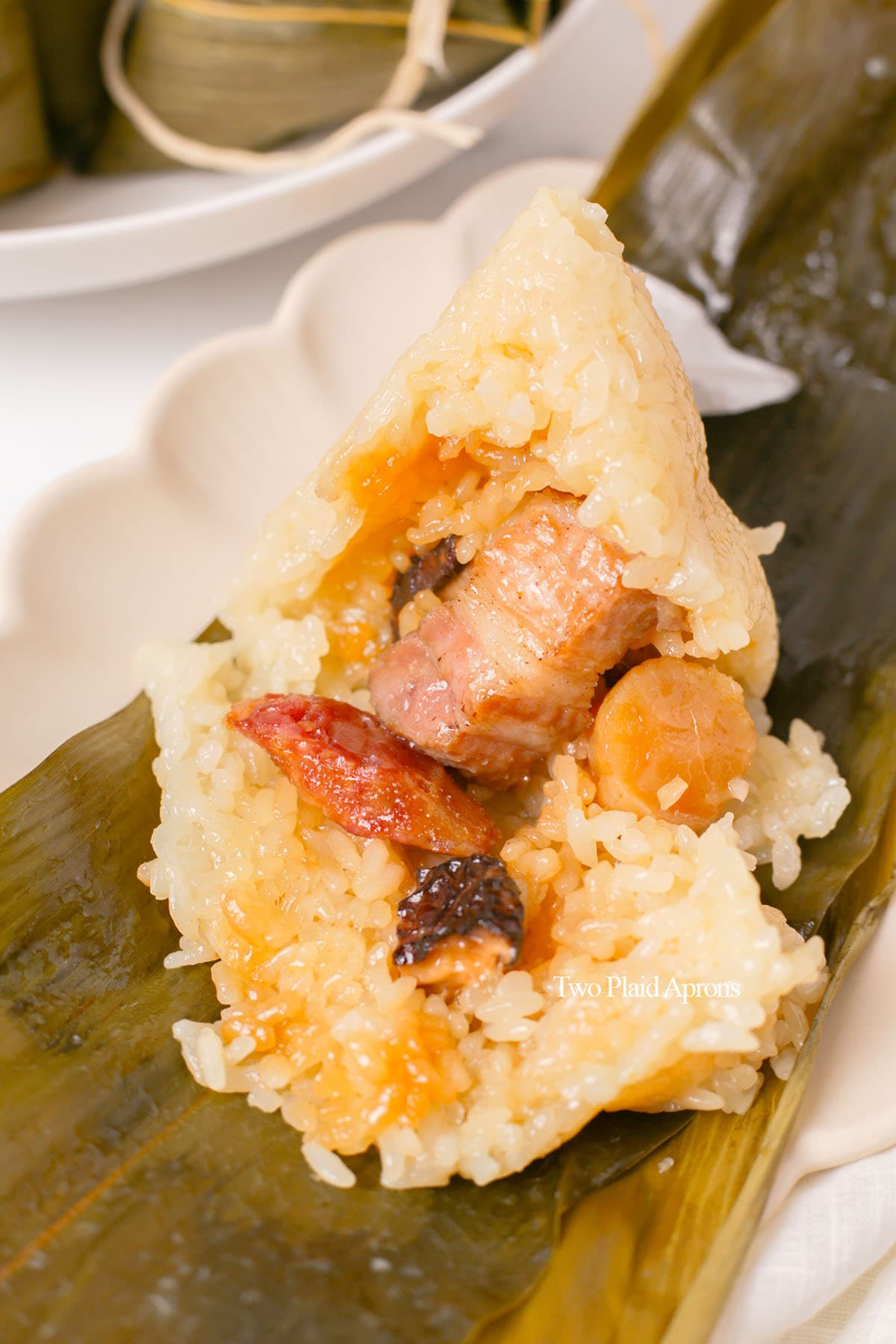
These savory zongzi are cantonese-style rice dumplings made and enjoyed during the Dragon Boat Festival. They are flavorful, packed with a variety of filling, and makes for great snacks and quick meals. If you want to pair this with a sweet rice dumpling, also try our red bean zongzi. They're delicious! Check out post below for help tips and step by step photo!
If you've made this recipe or any recipes from our blog, please tag us on Instagram using #twoplaidaprons! You can also tag us in your Instagram stories using @two_plaid_aprons. We would love to see your creations! It absolutely makes our day! 🥰
What is zongzi?
Zòngzi (粽子), also known as sticky rice dumplings or simply as rice dumpling, is a traditional Chinese dish made to celebrate Duān Wǔ Jié (端午节), also known as Dragon Boat Festival or Double Fifth Festival, which falls on the fifth day of the fifth month on the lunar calendar.
These rice dumplings can be either sweet or savory, but in general, they are made with glutinous rice and a variety of fillings, then wrapped in bamboo leaves.
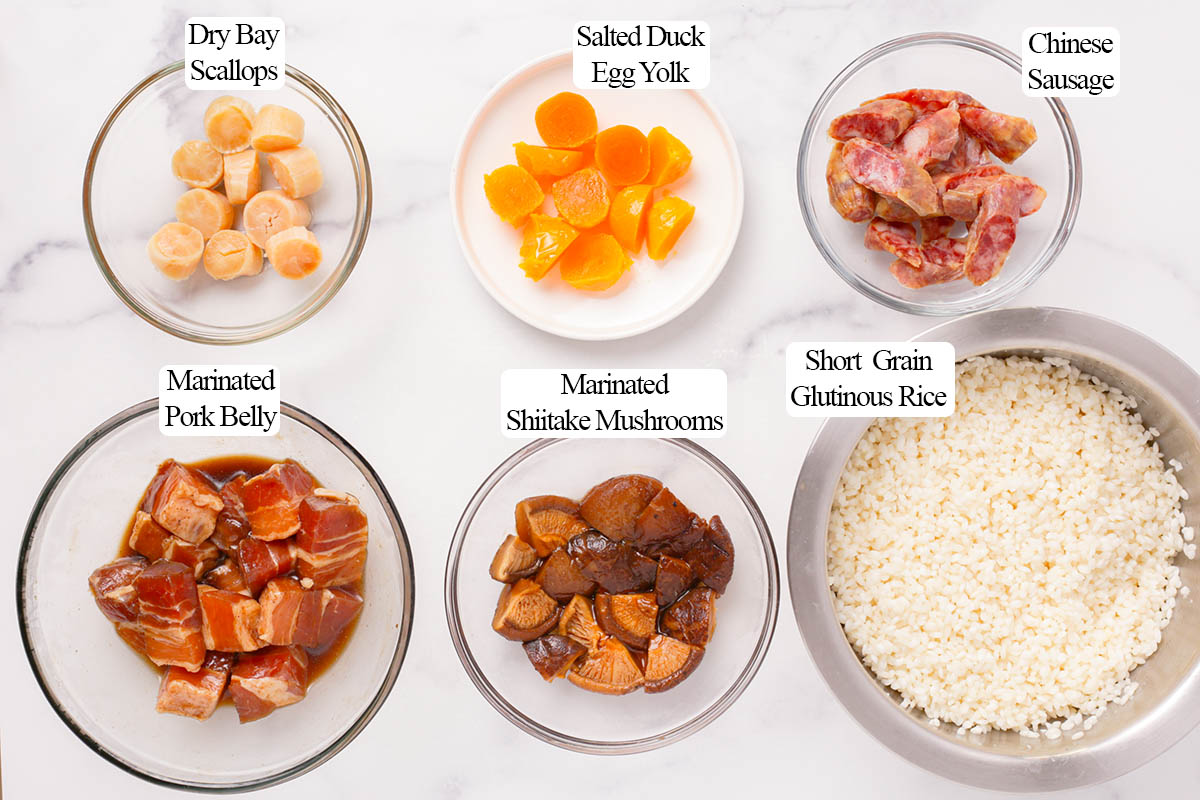
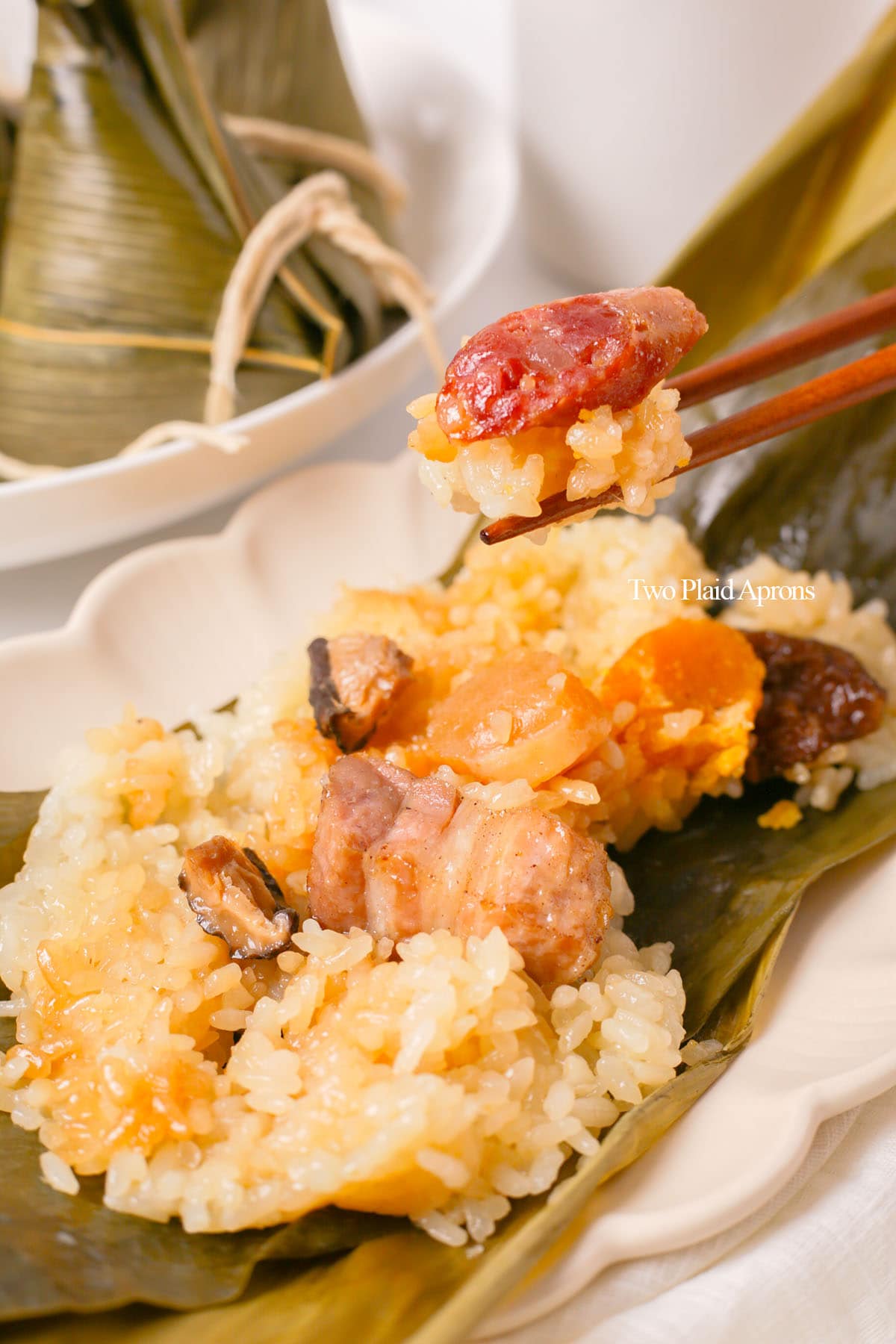
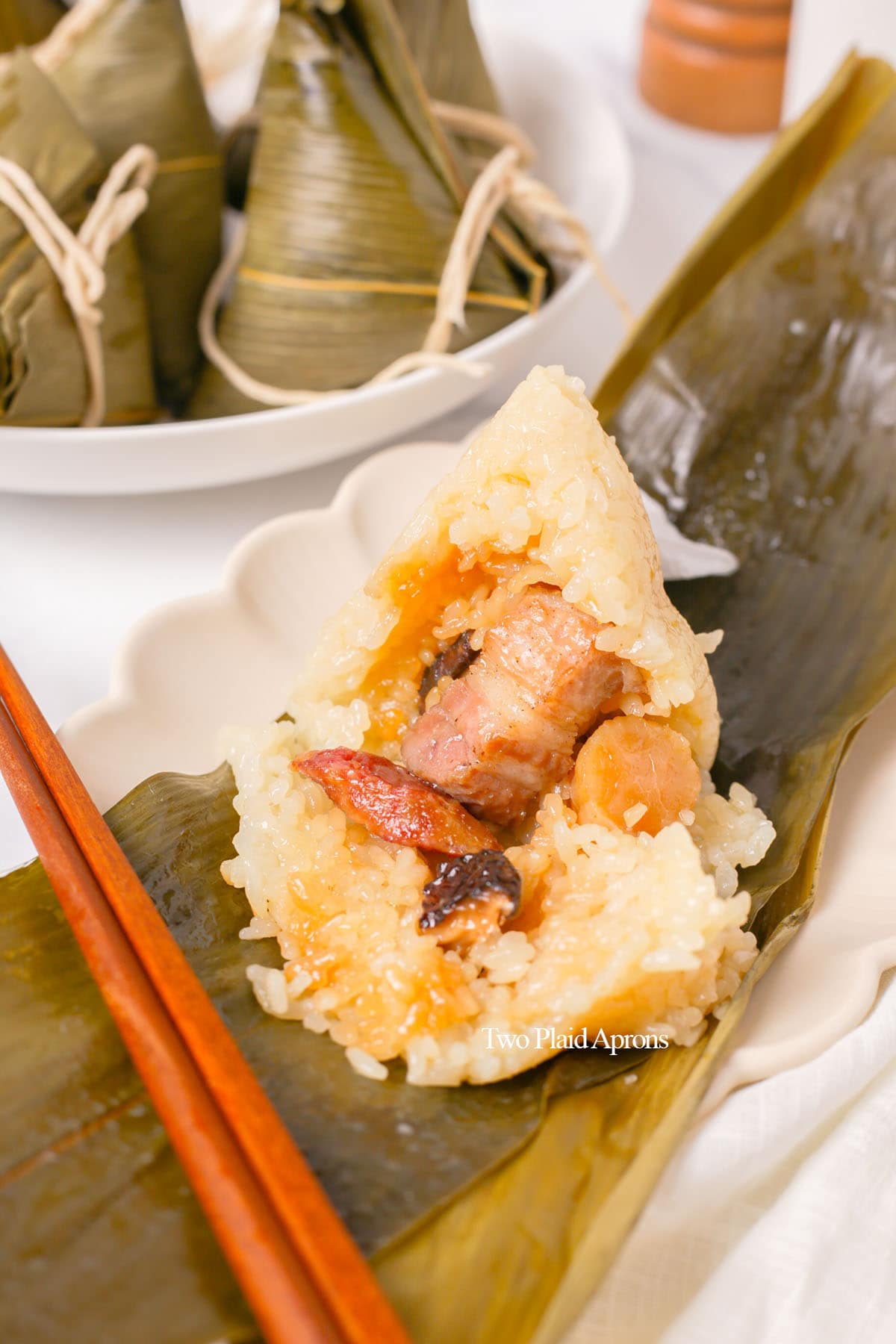
For this recipe, we are making a Cantonese-style savory zongzi filled with glutinous rice, marinated pork, marinated shiitake mushrooms, salted duck egg yolk, scallop, and lap cheong (aka Chinese sausage).
The types of zongzi
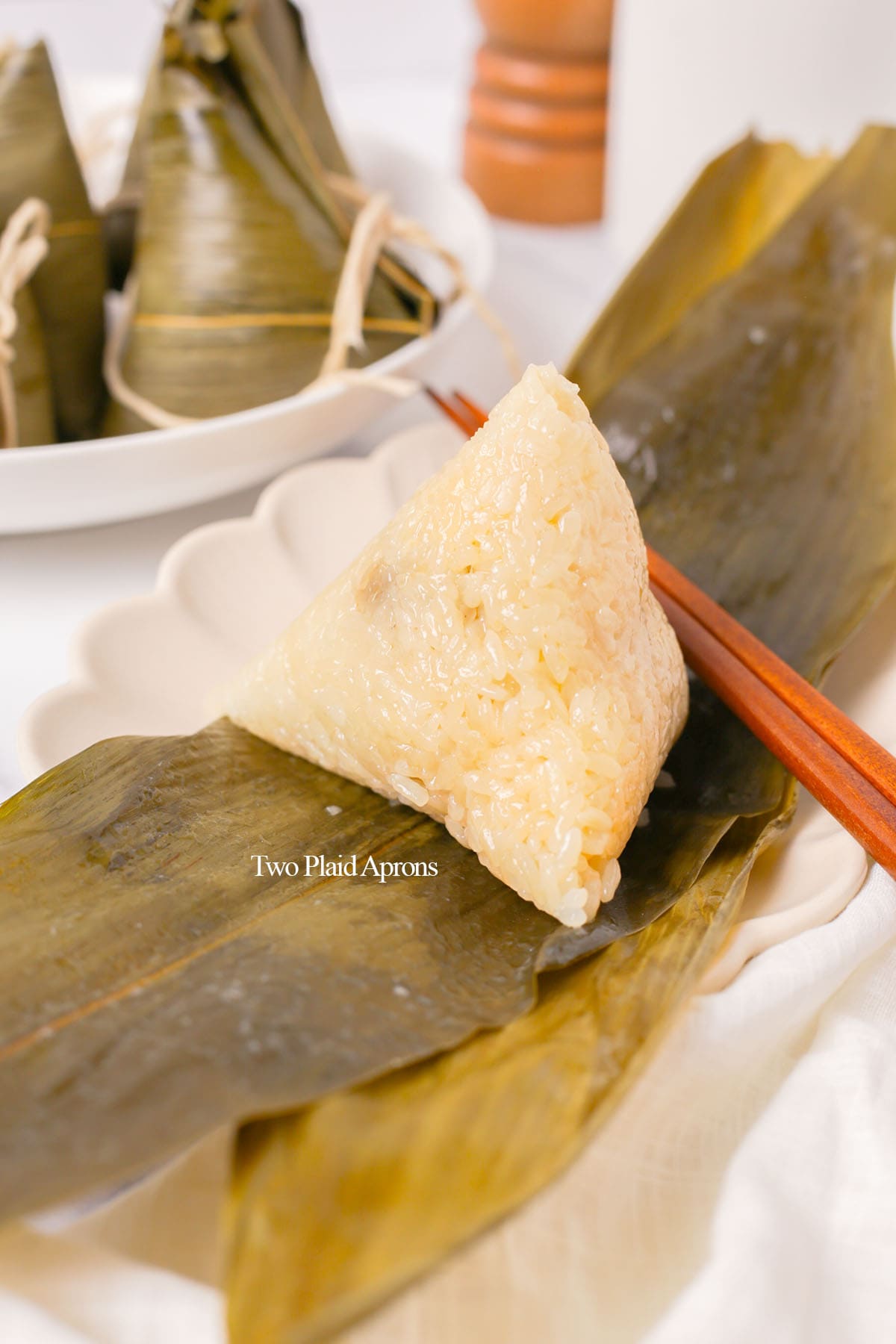
Each region of China offer their own variety of zongzi, from their fillings to how the rice dumplings are wrapped. To sum it up, there are 2 main categories - sweet and savory zongzi.
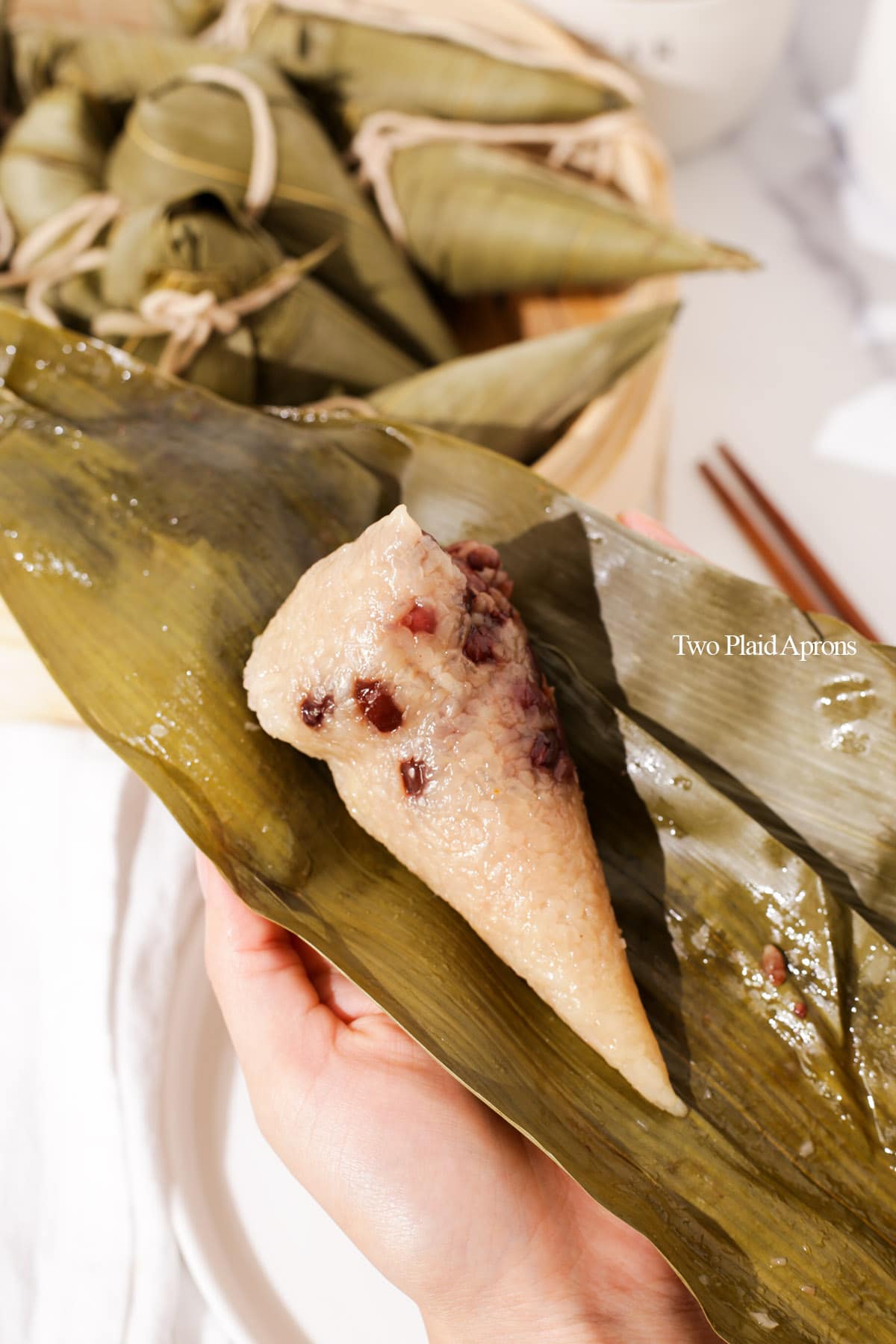
- Sweet - Usually filled with beans, nuts, black rice, red bean paste, and/or dates. Like the red bean zongzi below.
- Jianshui zongzi - This is a subcategory of sweet zongzi. The glutinous rice for these zongzi are mixed with a small amount of alkaline solultion to turn the rice yellow.
- Savory - The rice for these rice dumplings can either be seasoned just salt or with soy sauce, dark say, and some oil for color and flavor. The fillings are usually, marinated chicken or pork, shiitake mushrooms, salted egg yolk, Chinese sausage, and/or sometimes mung beans.
Ingredients for making savory zongzi
Please scroll down to the recipe card for the ingredient quantities!
- Bamboo leaves - You can usually find dry bamboo leaves at most Chinese markets and some general Asian markets. They are often sold near the dry herbs, spices, and dry noodle aisles. These leaves are used to wrap the rice dumplings, impart a fragrant flavor, make transporting and storage easy, and less messy to eat. Dry bamboo leaves will require soaking before use.

- Short grain glutinous rice - Sticky rice dumplings are known for their sticky nature, for both structure, flavor, and texture. This is possible all thanks to glutinous rice! But don't be deceived by the name! Glutinous rice is actually gluten free. "Glutinous" simply refers to the chewy texture of the rice.
- Marinated pork belly - We recommend using skinless pork belly. Some Shaoxing rice wine is used in the marinade to help remove any unwanted porky flavor and make the pork more fragrant. However, the rice wine can be omitted if you prefer.
- Marinated shiitake mushrooms - Dry shiitake mushrooms are best for this. Not only do they store well in the pantry, they soak up flavor really well.
- Dry bay scallop - These can often be found at most Asian markets either in the refrigerated or frozen aisles where dried seafood are found. Dry bay scallops add an extra layer of flavor to the whole rice dumpling. Also, pork and seafood is a classic combo in Asian cuisine.
- Cooked salted duck egg yolk - These are a classic filling in savory zongzi. They add color and additional flavor and saltiness.
- Chinese sausage - Also known as lap cheong. Chinese sausage is always a nice sweet and savory addition to Chinese cuisine that also adds lots of umami, like in our claypot chicken rice recipe. You can find them at most Asian markets and even Costco.
- Salt - For seasoning the glutinous rice.
How to make zongzi
Please scroll down to the recipe card for the full recipe and instructions!
Prepare the ingredients (day before):
1. Soak the bamboo leaves. Place the bamboo leaves into a large pot or bowl and cover with water. Allow the leaves to soak for at least 6 hours or over night.
🌟 Pro tip: Keep the leaves in a bundle and gently curl/fold the leaves so that they'll fit in the pot/bowl. Also, place a plate on top to prevent the leaves from floating up.
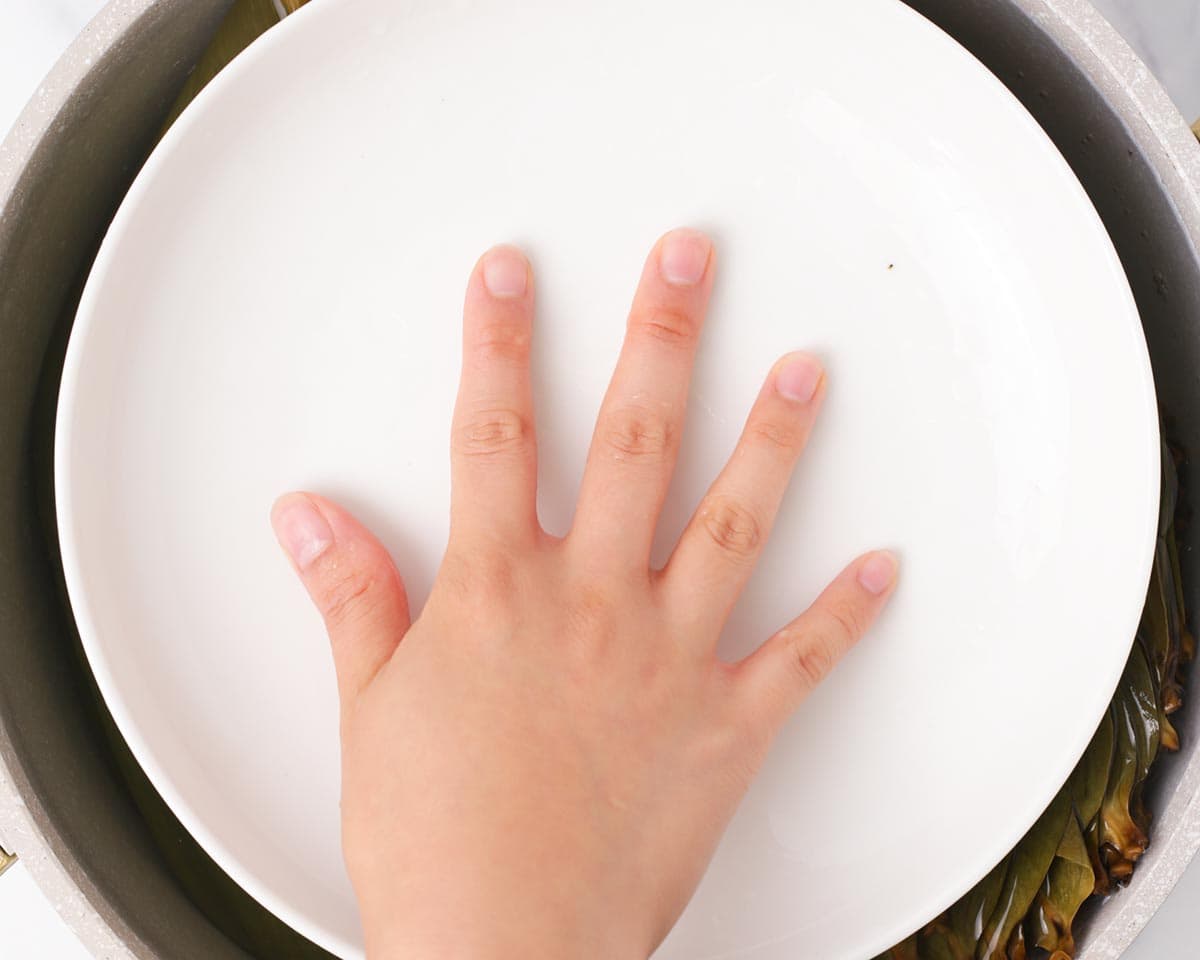
2. Soak the glutinous rice. Wash and rise the rice a few times until the water runs mostly clear. Cover the rice with about 1 to 2 inches of water and allow the rice to soak for at least 6 hours or overnight in the fridge.


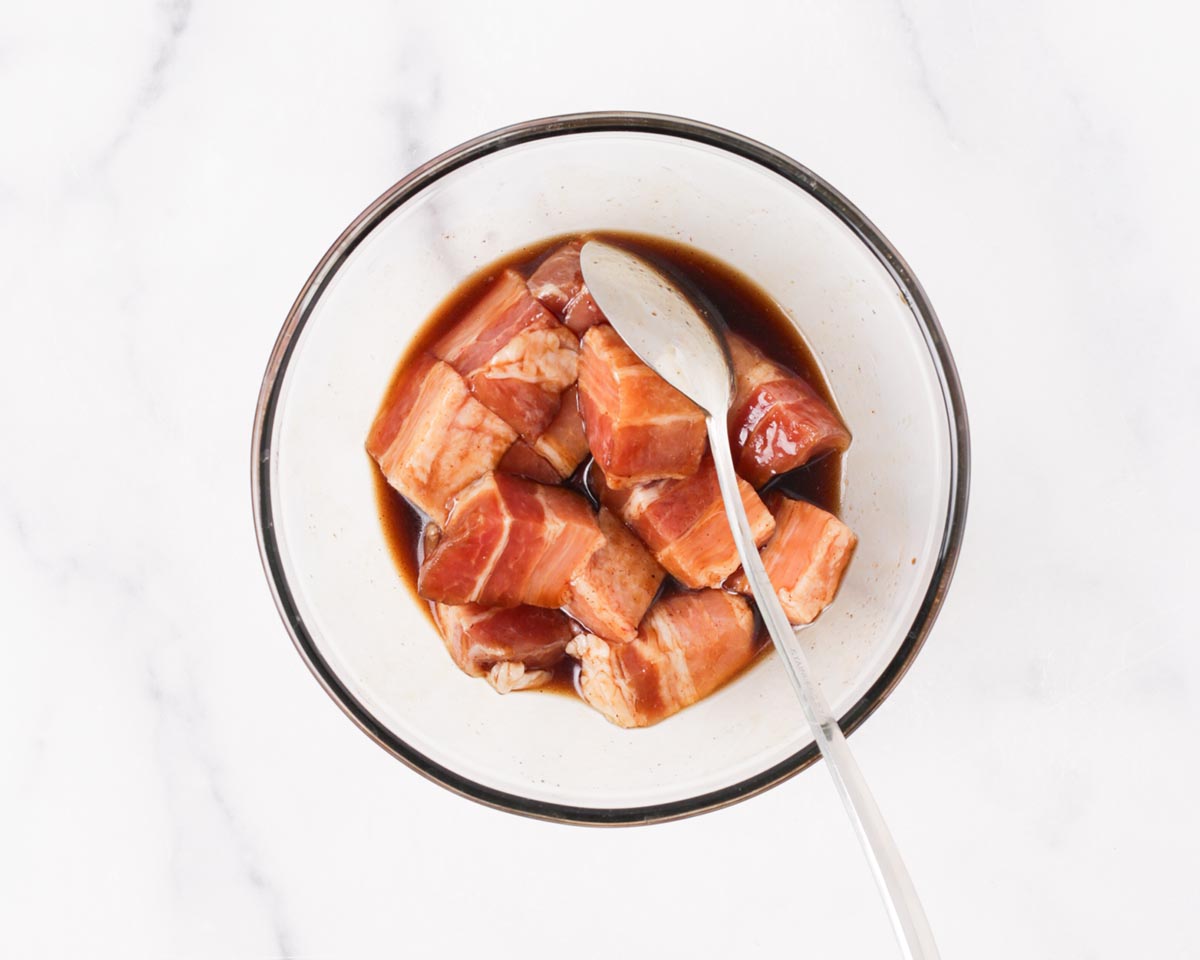
3. Marinate the pork belly. Combine all the marinating ingredients for the pork belly (oyster sauce, soy sauce, Shaoxing rice wine, sugar, and five spice) and mix until the sugar is dissolved. Add the pork belly and mix until well coated. Allow the pork to marinate for at least a few hours, best overnight in the fridge.
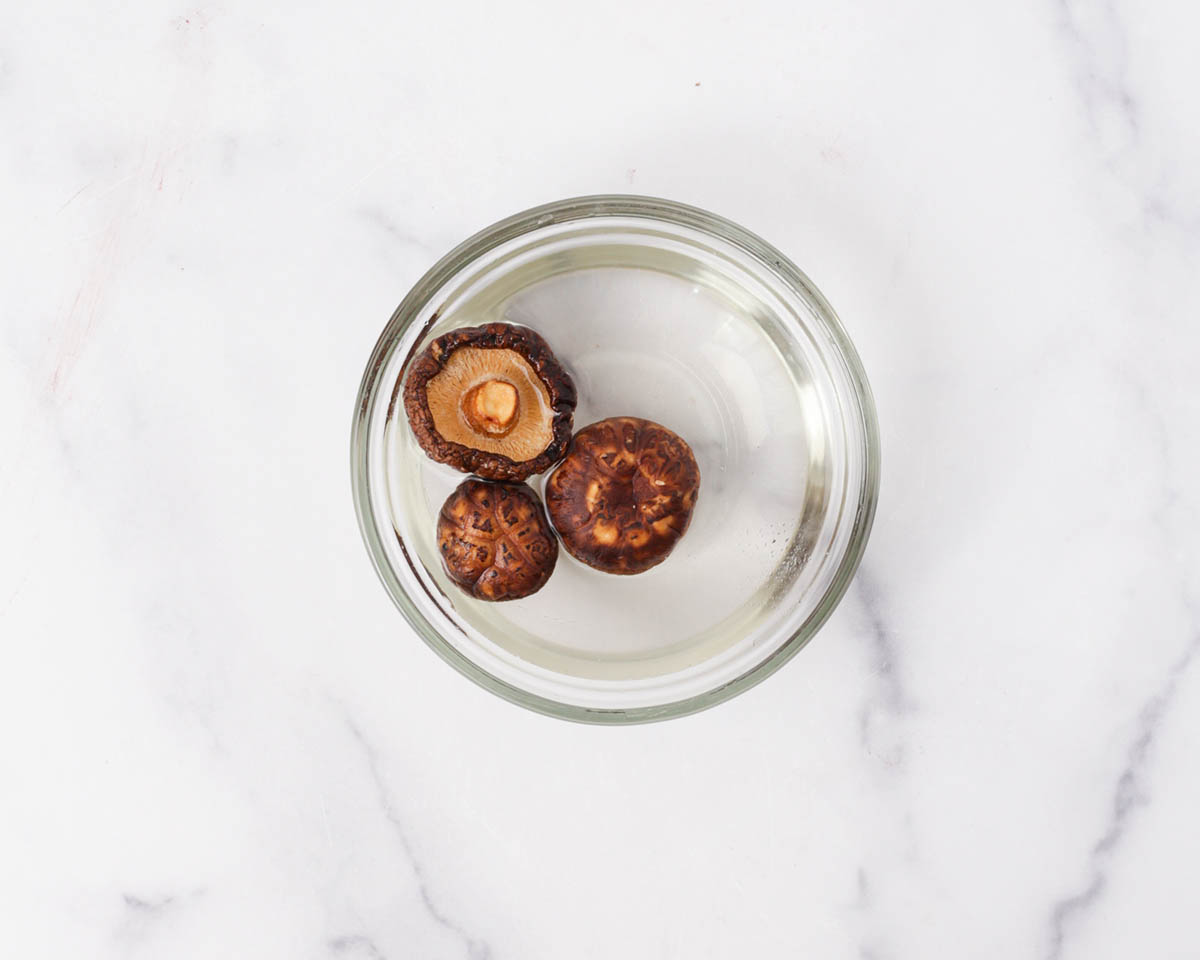
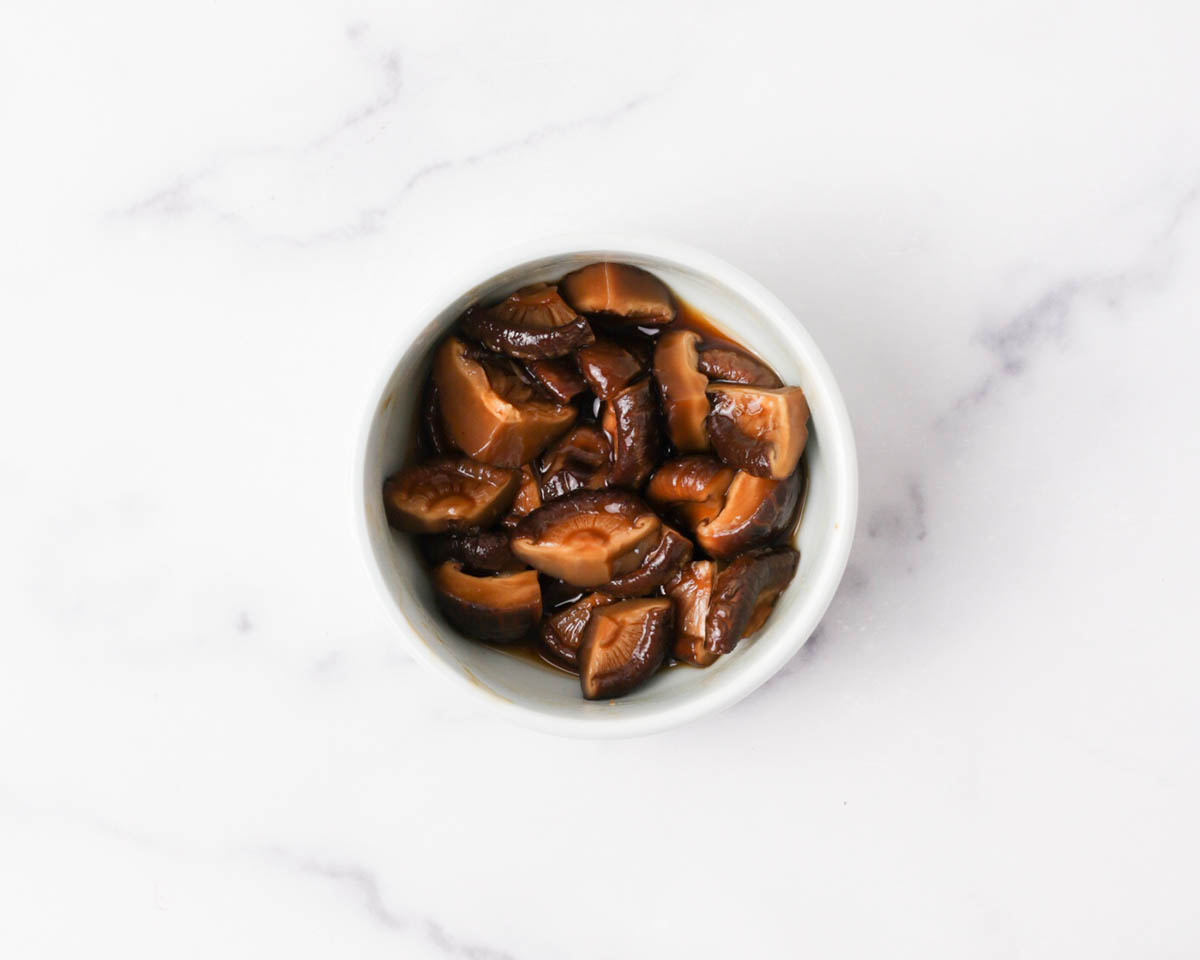
4. Prepare the shiitake mushrooms. Soak the dry shiitake mushrooms with some boiling hot water until they are rehydrated.
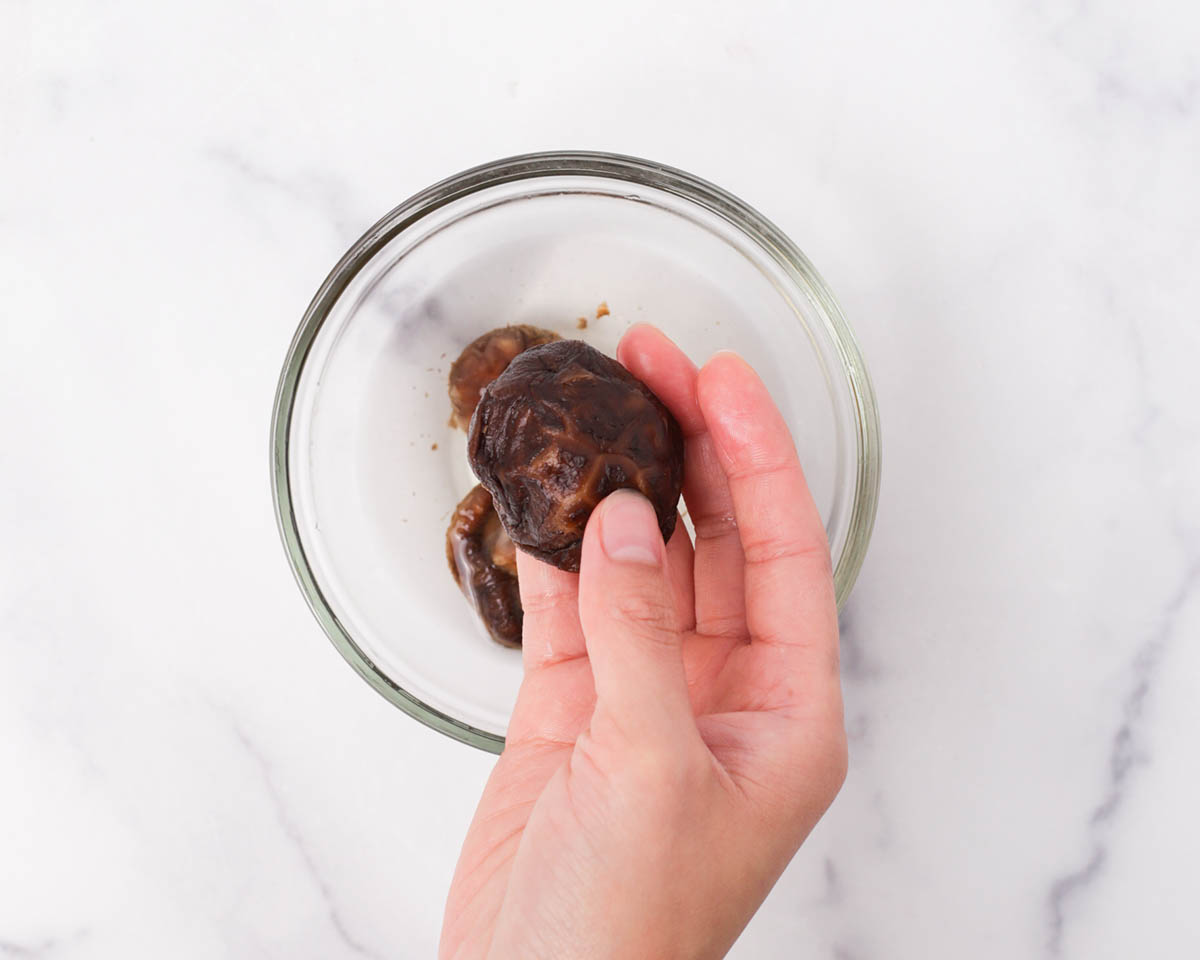
Once rehydrated, drain and squeeze out the excess water in the mushrooms. Cut off the woody stems of the shiitake mushrooms and cut the mushrooms into halves or quarters.
In a bowl, mix together all the mushroom marinade ingredients (water, oyster sauce, soy sauce, and sugar). Mix well until the sugar is dissolved. Add the shiitake mushrooms and mix well. Set aside and allow the mushrooms to soak up the marinade.
5. Soak the scallop. Cover the dry scallops with boiling hot water and allow them to soak for at least 4 to 6 hours, or overnight in the fridge. When needed, drain and set aside.

Preparation on the day of:
1. Season the soaked rice. Drain the rice well and season with salt. Mix well and set aside until needed.

🌟 Pro tip: A few hours prior to using, allow the rice to drain in a strainer to get rid of as much water as possible before seasoning. This will prevent the rice from having excess water while wrapping.
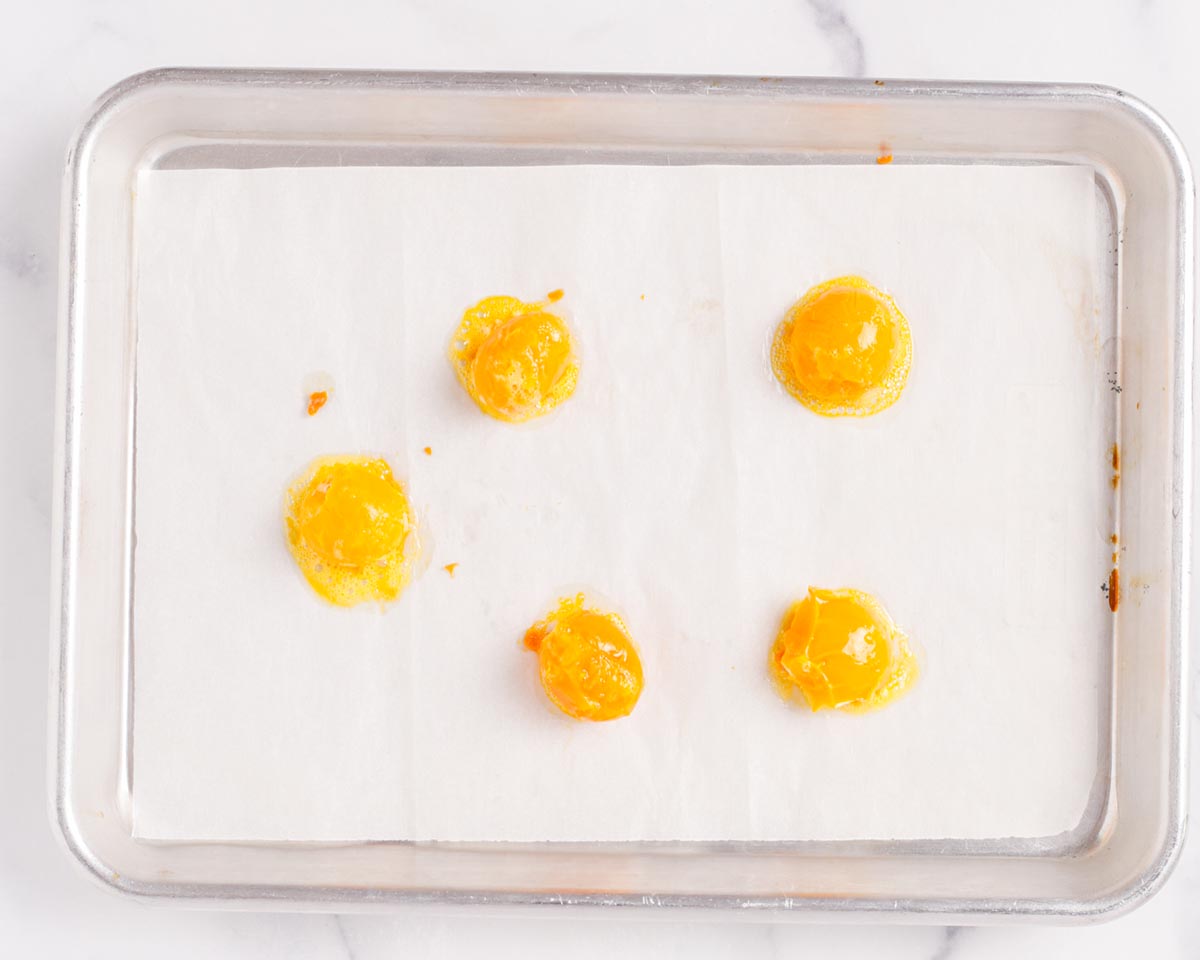
2. Prepare the salted egg yolks. Preheat the oven to 350°F. Arrange the salted yolks into a parchment lined sheet pan. Spray or dip each yolk with some clear liquor like vodka or high proof rice wine.

Bake for 5 to 10 minutes, or until they are foamy. Remove and allow the yolks to cool completely before cutting them into halves.
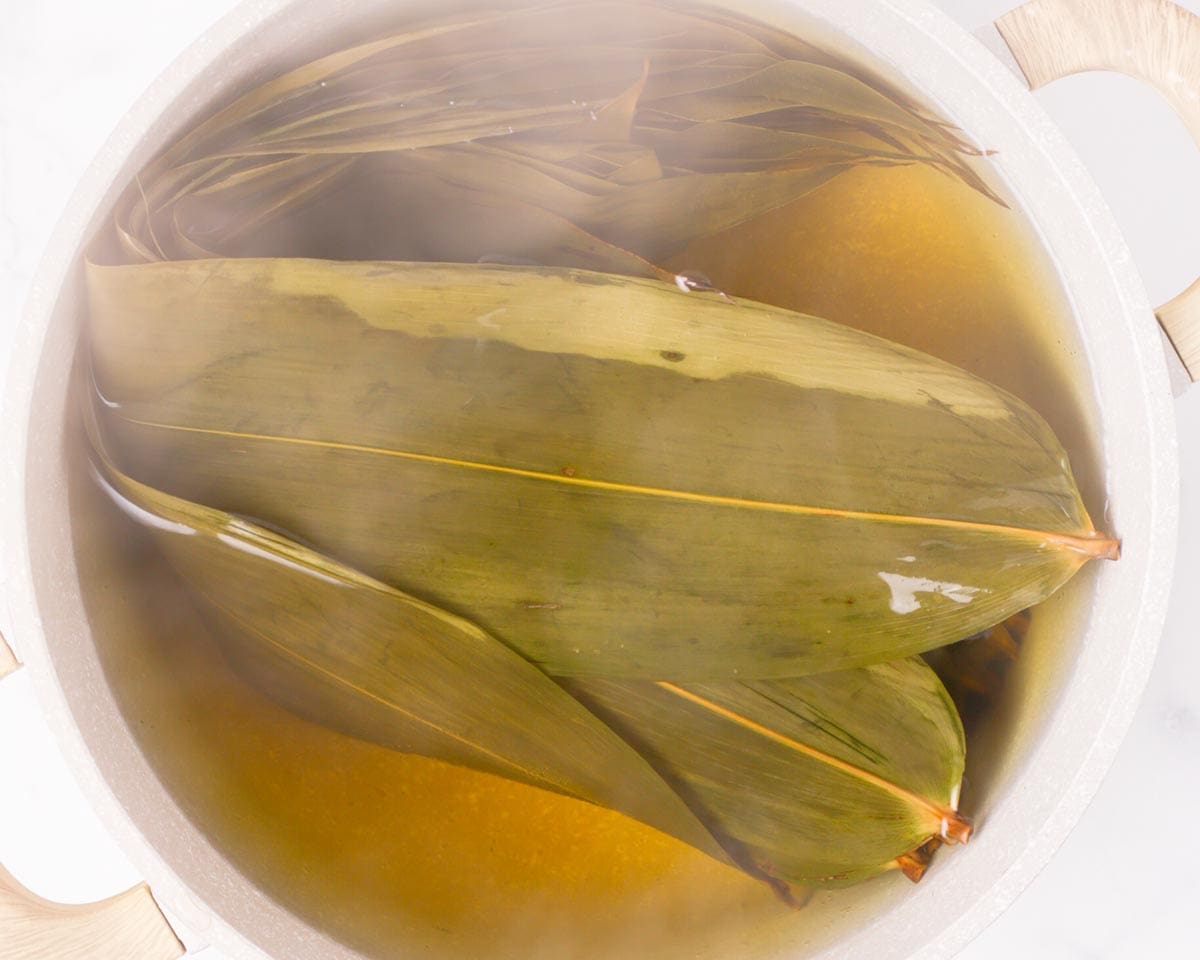
3. Clean the bamboo leaves. The day of, drain and cover the bamboo leaves with fresh water. Bring the water to a boil, then to a gentle simmer. Simmer the bamboo leaves for about 5 minutes.
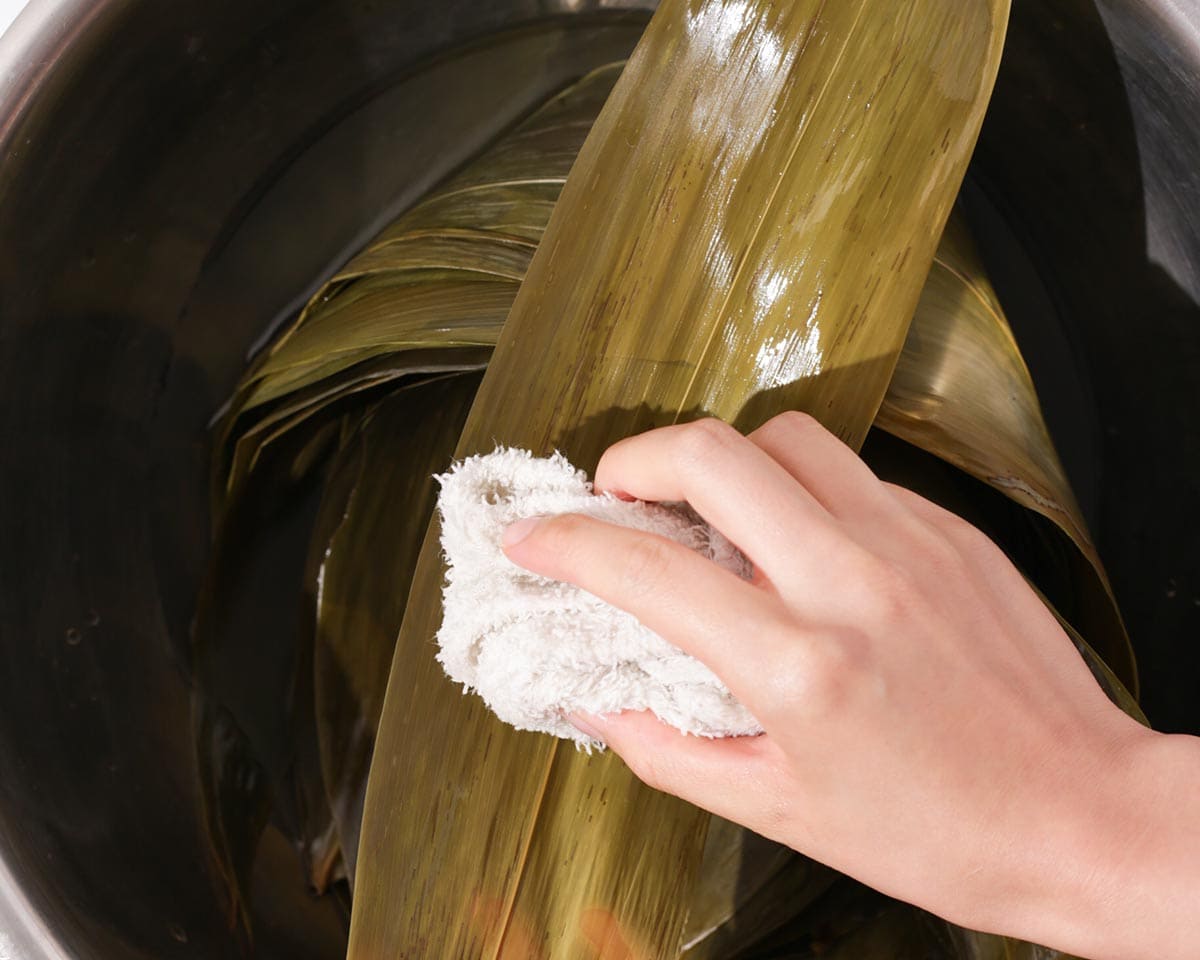
Drain and transfer the leaves to a bowl of cold water. Using a clean kitchen towel or sponge, gently wipe both sides of each leaf. Rinse and set aside. Cover with wet towel if not using immediately.
4. Chinese sausage. Cut the Chinese sausage at an angle into 8 equal pieces per link.
How to wrap zongzi
There are many ways to wrap zongzi. For this savory Cantonese-style zongzi, we will show you how to wrap the rice dumplings using the pyramid fold.
1. Place 2 bamboo leaves on top of each other in the same direction with the shiny side facing up. Offset the leaves by about ½ .

2. About ⅓ of the way form the tail end of the leaves, fold and twist the leaves to form a cone.

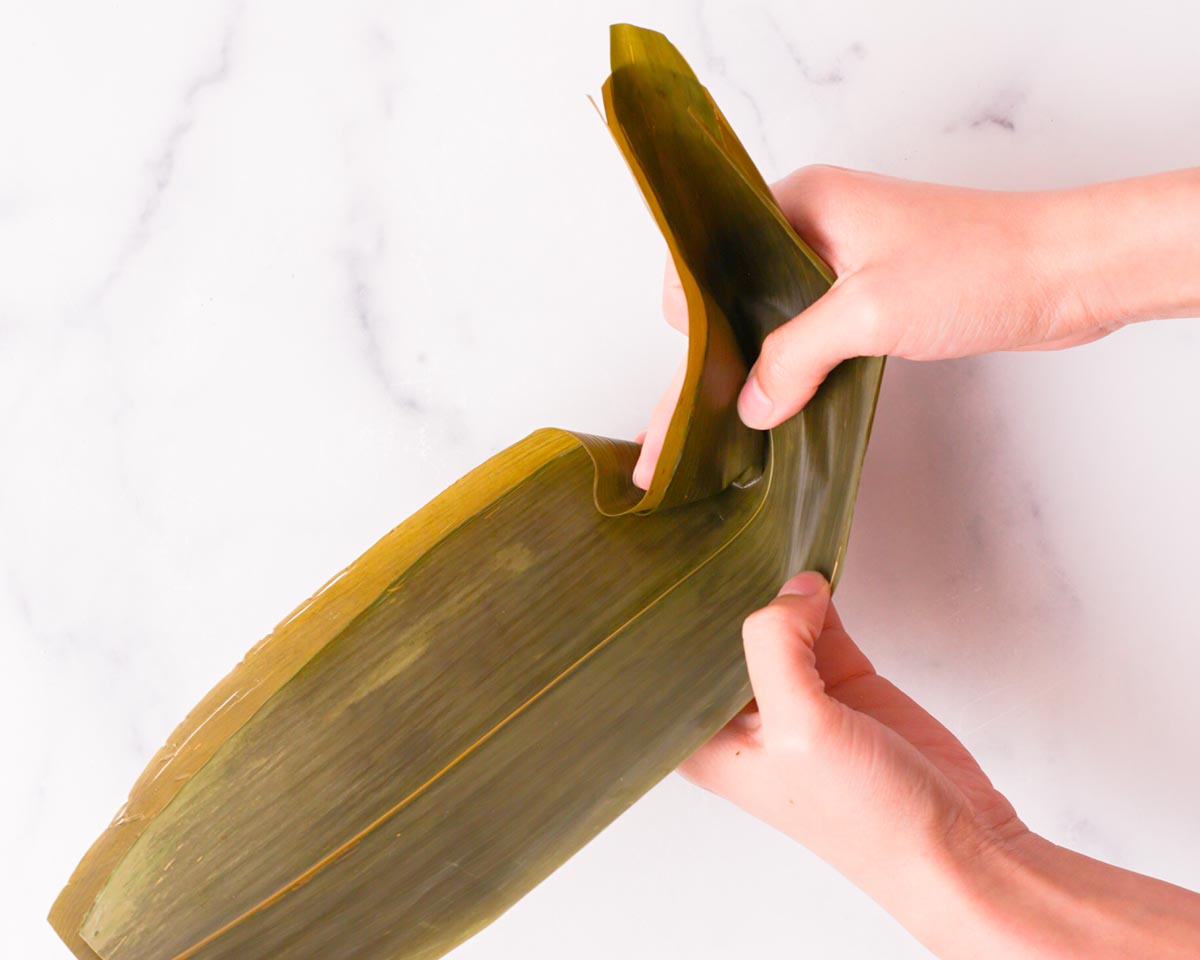
We trimmed off the tips and stems of the leaves, but you can keep them if you prefer.
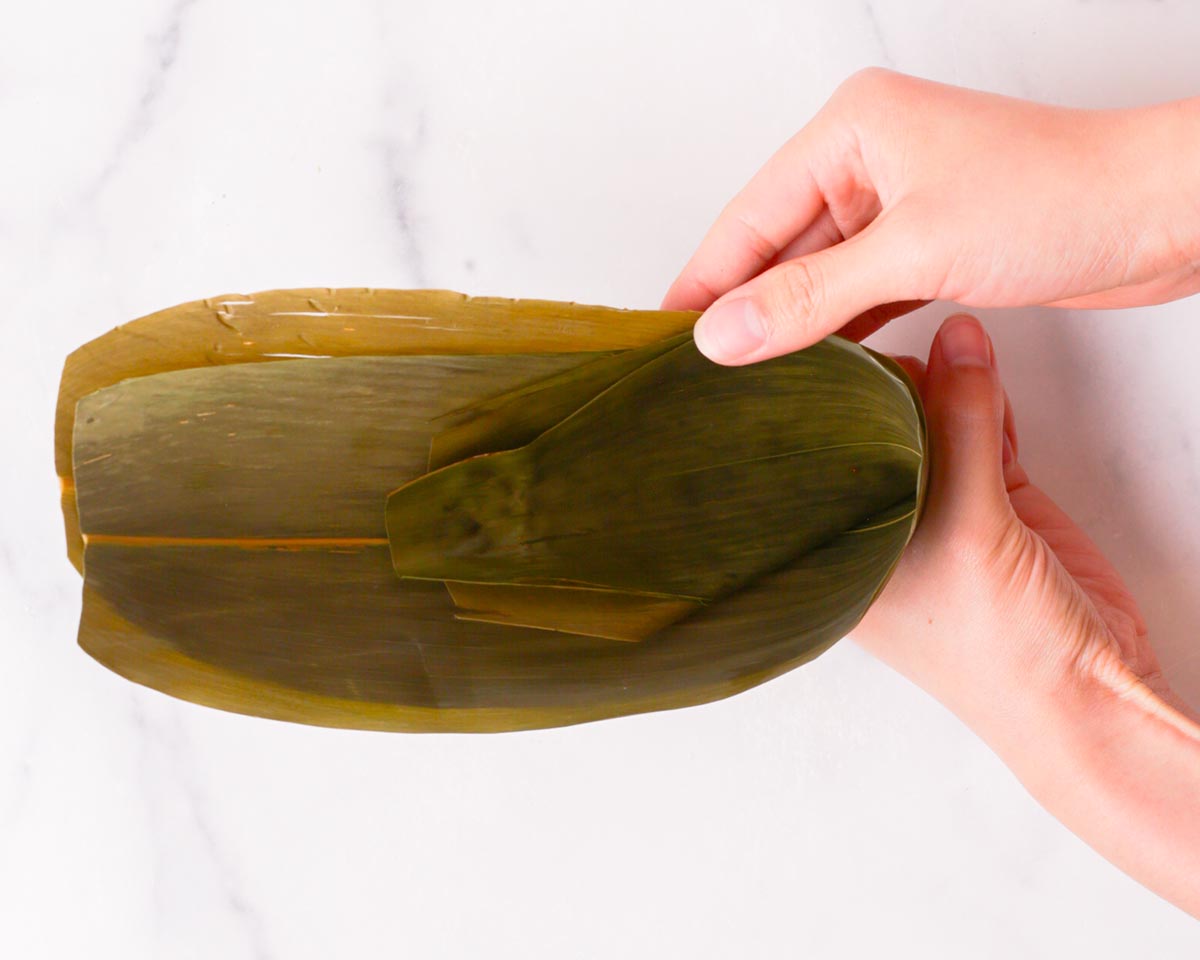
3. Fill the cone with a couple tablespoons of rice and make an indentation in the rice with the back of the spoon.
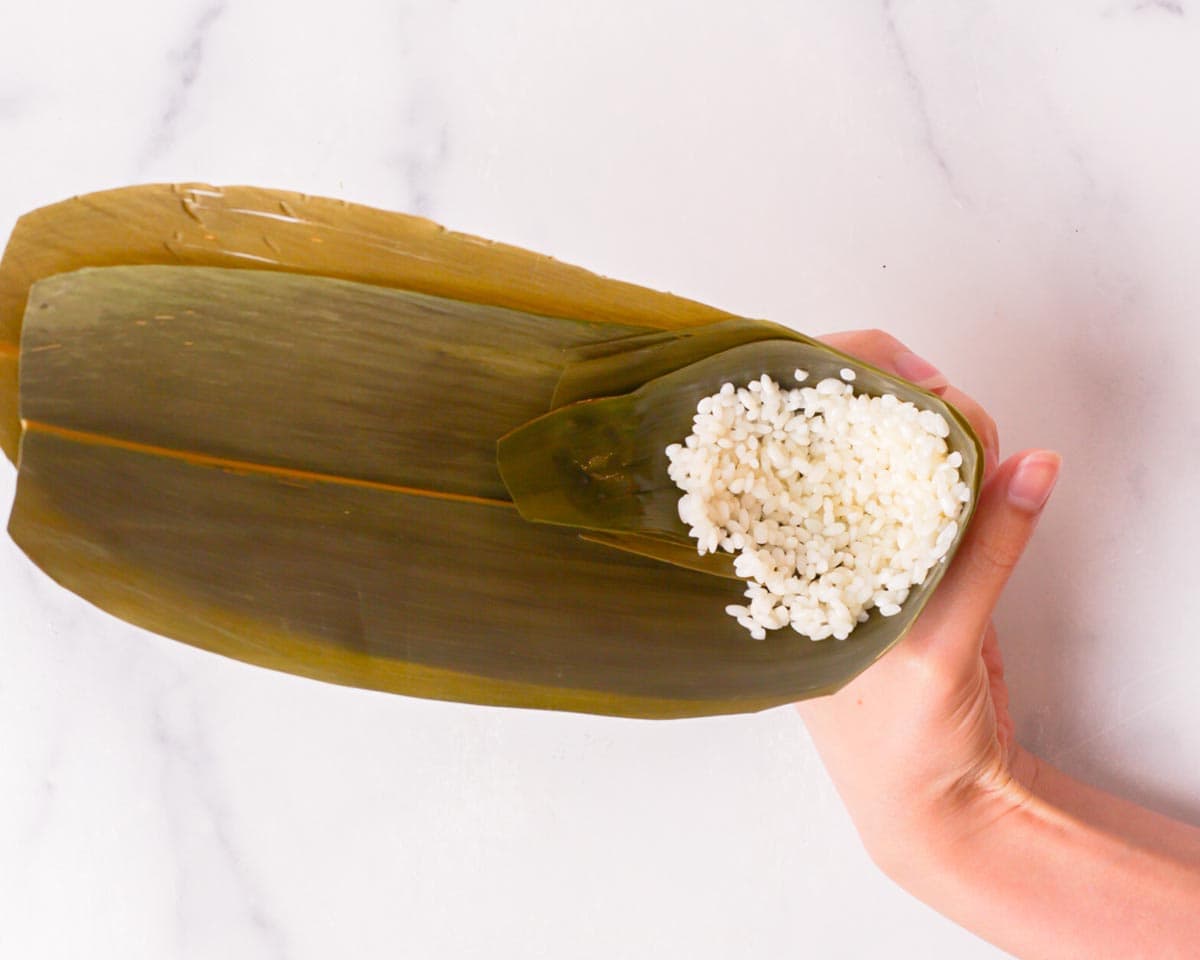
4. Add half an egg yolk, a piece of marinated pork belly, a half or two quarters of marinated shiitake, and 1 piece of Chinese sausage. Top the fillings with a couple more tablespoons of rice and firmly flatten it with the back of the spoon.
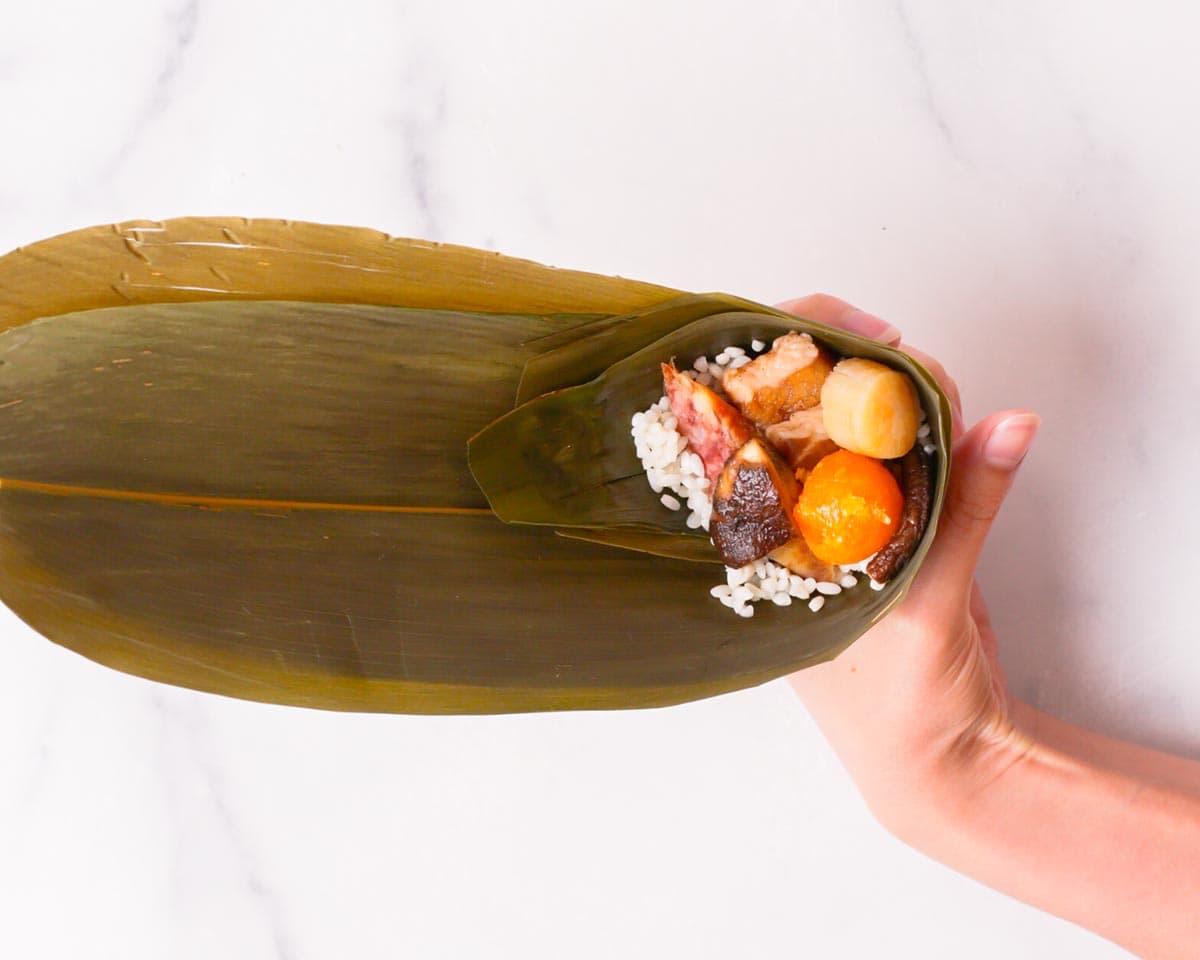
5. Next, fold the top flap of the bamboo leaves down.
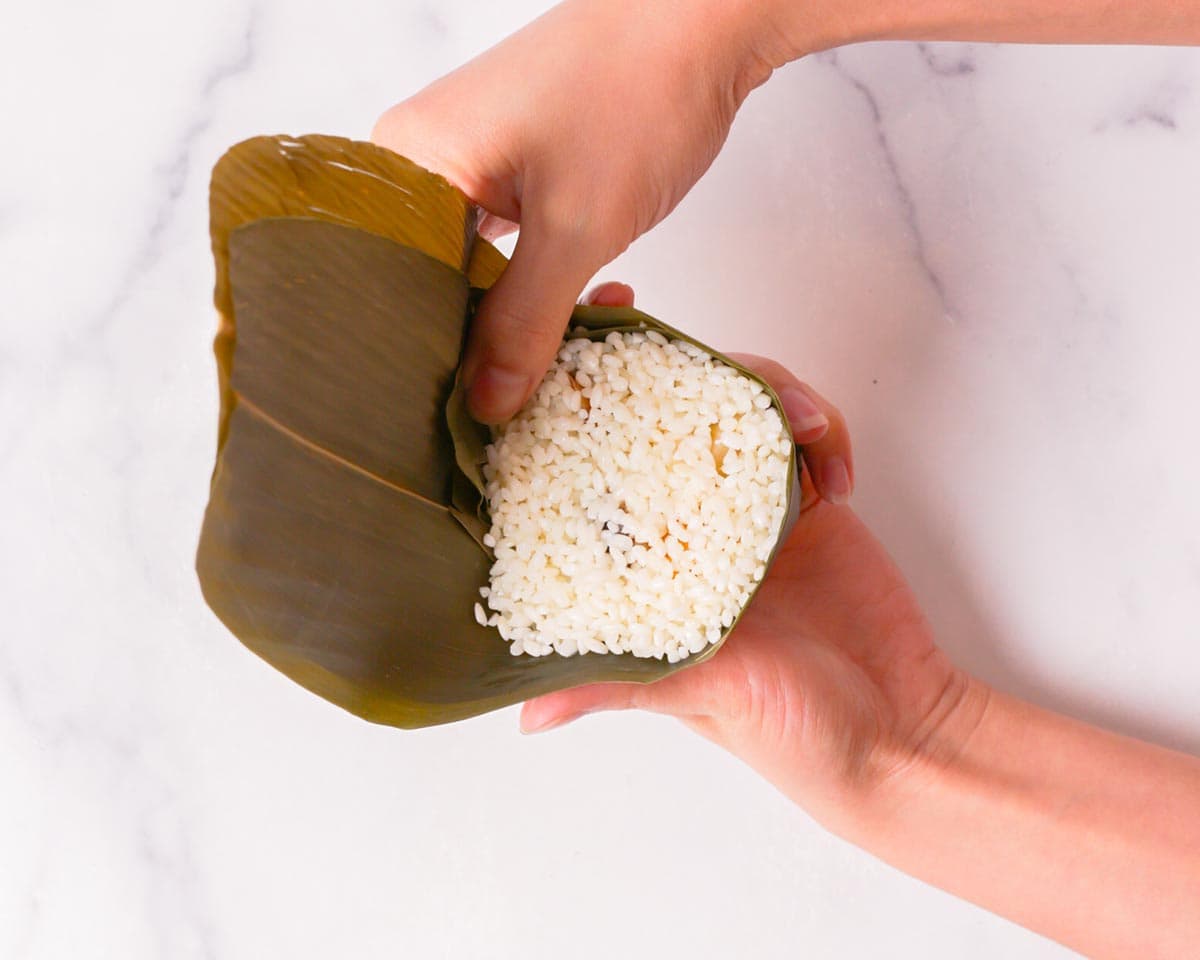

Then, fold the sides in to form a triangle on top.

Finally, fold the excess leaf to the side to seal.


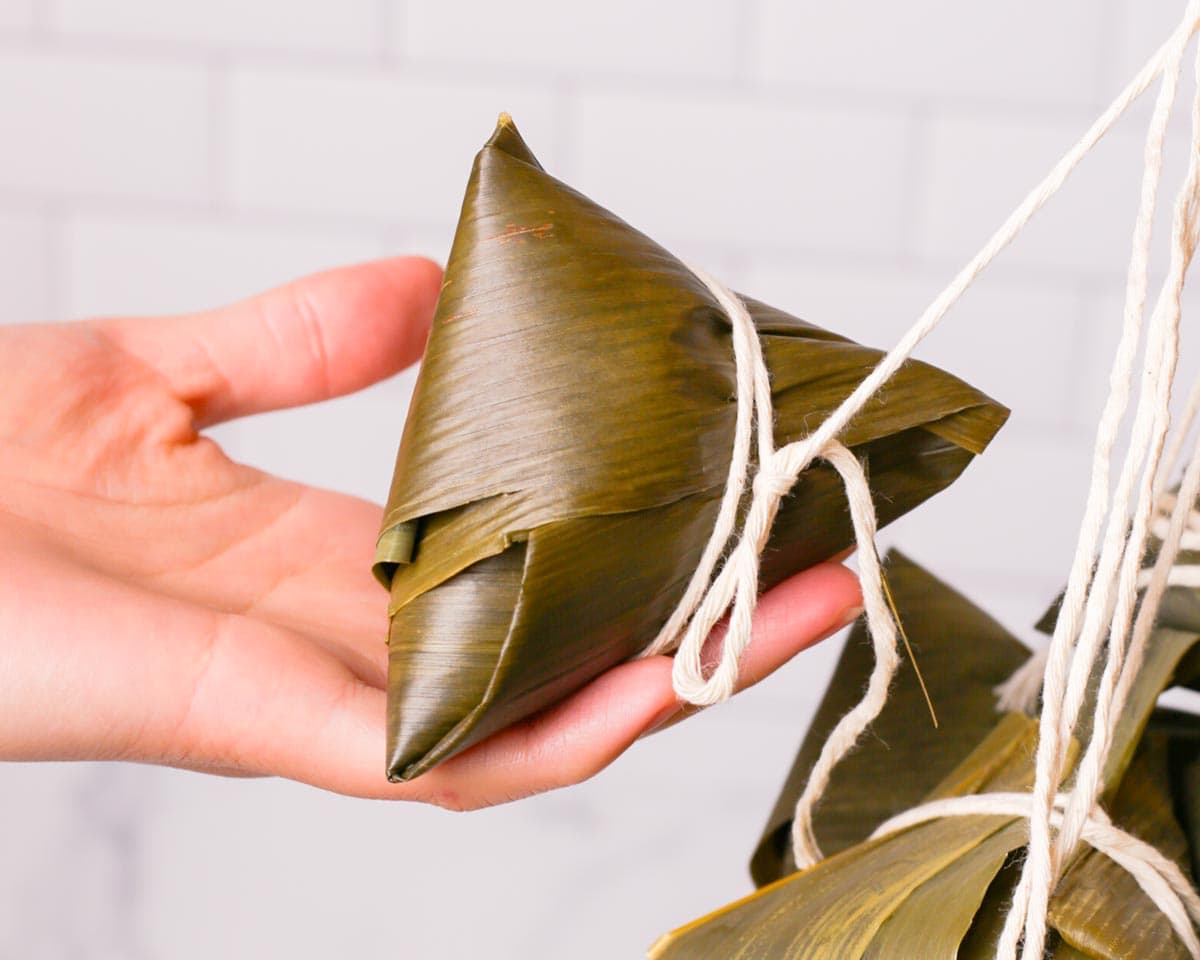
6. To finish, wrap a butcher's twine around the zongzi a couple of times and tie a secure knot.

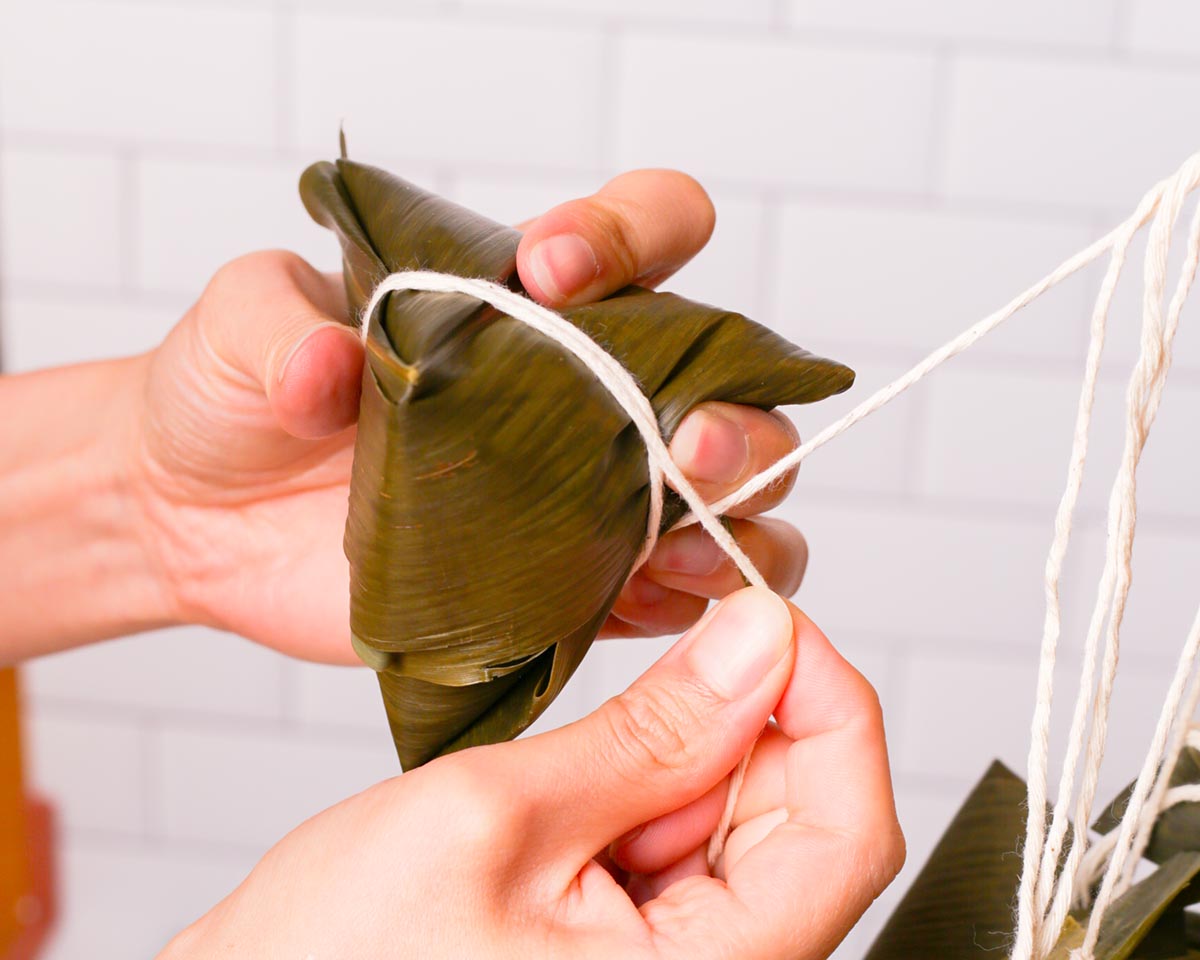
Make sure the twine wraps around the flap of the bamboo leaves! The excess leaf that sticks out can be trimmed.
Zongzi cooking methods
Stove top method:
Boiling on the stove top is the most common method for cooking zongzi because it's the most accessible choice and you can usually cook a larger amount of zongzi at a time, as long a large pot is available. The downside of this method is that takes a couple of hours.
To cook using the stove top method: place the zongzi into a large stock pot and fill it with enough water so that the dumplings are completely submerged. Bring the water to a boil, then reduce to a medium simmer. Allow the rice dumplings to cook for about 2 to 2½ hours. Replenish the water as needed to keep the rice dumplings submerged.
After the cook time, you can take out a rice dumpling to check if it's done. If the rice comes off the bamboo leaves easily but not fall apart, the rice dumplings are done.

Pressure cooker method:
The pressure cooker method can be used for regular pressure cookers or rice cookers. This method uses much less time (only 30 minutes!), however, is constrained by how many zongzi can fit in the pressure cooker.
Place the rice finished rice dumplings into the pressure cooker pot and fill it with enough water to either cover or up to the max fill line.
For pressure cookers (like Instant Pot): select the "high pressure" pressure cook setting and make sure the vent is sealed. Set the cook time to 30 minutes and manually release the steam once the time is up. Be careful the steam is HOT!
For rice cookers (like a Cuckoo rice cooker): select the "multicook" setting. set the cook time for 30 minutes. Rice cookers will auto release the steam on its own.
How to eat zongzi
Once the zongzi are cooked, remove them from the pot and allow them to cool until comfortable to handle.
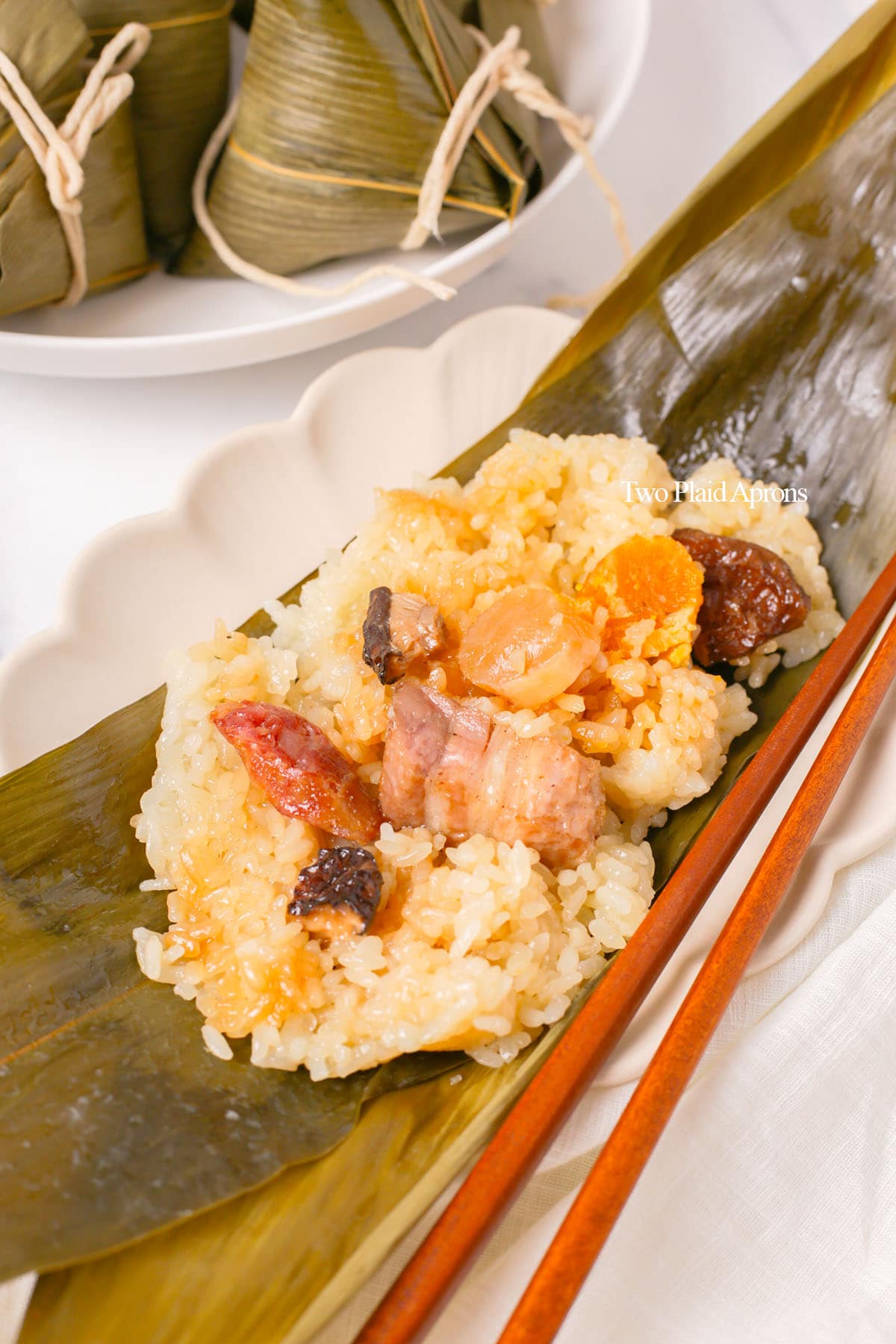
Untie the twine and unwrap the rice dumpling from the bamboo leaves. You can enjoy the zongzi as is or mash the salted egg yolk and scallop into the rice, like we do. Do enjoy them while they are hot or warm for best flavor and texture.
Also, discard the bamboo leaves. They are not edible but serves as a great eco-friendly disposable wrap.
Storage
Leftover zongzi should be kept wrapped and tied up to protect and preserve the filling. Once the rice dumplings are complete cooled, they can be stored in the fridge for up to 1 week.
To freeze, store the zongzi in a freezer bags or even clean grocery bags. They will stay good for several months (about 3 to 4 months) frozen.
Reheating
Leftover, refrigerated zongzi can be reheated either by microwaving, steaming, or simmering on the stovetop. Allow frozen rice dumplings to thaw overnight in the fridge before reheating.
Microwave method: Place the unwrapped zongzi on a microwave safe plate and cover. Microwave for about 1 minute, or until the zongzi feels hot.
Steaming method: Place the unwrapped sticky rice dumpling into a steam basket and allow it to steam for about 10 to 15 minutes, or until the rice dumpling is hot.
Simmering method: Bring a pot of water to a boil and add the sticky rice dumplings. Allow the water to come to a boil again, then reduce to a simmer. Simmer the dumplings for about 5 minutes, or until it is hot.
FAQ
Zongzi are known as sticky rice dumplings or simply as rice dumplings. Sometimes they are also called Chinese tamales.
These savory Cantonese-style sticky rice dumplings are best enjoyed warm or hot. Simply untie and unwrap the dumpling and enjoy as is or mash the salted egg yolk and scallop into the rice, like we do. Discard the bamboo leaves after.
Zongzi can be both steamed or boiled. However, steaming takes a significantly longer time and yields a much chewier rice texture. The boiled rice dumplings will still have a chewy texture but they'll be much softer.
Unfortunately, no. Sticky rice dumplings are known for their sticky, chewy texture and can only be achieved using glutinous rice. Also, the starch in the glutinous rice helps to keep the shape of the rice dumplings.
📖 Recipe
Zongzi (Cantonese-Style Rice Dumpling)
Ingredients
For the zongzi:
- 32 pieces dry bamboo leaves more may be needed*see note
- 4 cups short grain glutinous rice
- 3 teaspoon salt
- 16 pieces marinated pork belly
- 16-32 pieces marinated shiitake mushrooms
- 16 pieces dried bay scallops
- 8 whole cooked salted duck egg yolk optionally, prepare some high proof rice wine or clear liquor like vodka *see note
- 2 links Chinese sausage also known as lap cheong
For the marinated pork belly:
- 16 ounces skinless pork belly cut into 1 inch bite-size chunks
- 2 tablespoons oyster sauce
- 2 tablespoons soy sauce light sodium or regular
- 1½ tablespoons Shaoxing rice wine
- 1 tablespoon granulated sugar
- ½ teaspoon Chinese five spice powder (optional)
For the marinated shiitake mushrooms:
- 8 whole dried shiitake mushrooms
- 3 teaspoons water
- 3 teaspoons oyster sauce
- 2 teaspoons soy sauce light sodium or regular
- ½ teaspoon granulated sugar
Instructions
Prepare the ingredients:
- Soak the bamboo leaves (day before):Place the dry bamboo leaves into a pot or bowl and add enough water to cover the bamboo leaves. Allow the leaves to soak for at least 6 hours or overnight. Place weights on top of the leaves if needed to keep them from floating up.
- After soaking, drain and cover the bamboo leaves with fresh water. Bring it to a boil, then reduce to a simmer. Allow the leaves to simmer for about 5 minutes. Drain and place the leaves to into a bowl of cold water.
- Use a clean kitchen towel or sponge and gently wipe both sides of the bamboo leaves to clean off any stubborn debris. Rinse and set aside. If not using soon, make sure to cover it to keep the leaves from drying out.
- Soak the rice:Wash and rinse the rice a few times until the water runs mostly clear. Cover the rice with about 1 to 2 inches of water and allow the rice to soak for at least 6 hours or overnight in the fridge.
- The day of, drain the rice well and season with salt. Mix well and set aside until needed.
- Marinated the pork belly:Combine all the marinating ingredients for the pork belly (oyster sauce, soy sauce, Shaoxing rice wine, sugar, and five spice) and mix until the sugar is dissolved. Add the pork belly and mix until well coated. Allow the pork to marinate for at least a few hours, best overnight in the fridge.
- Marinate the shiitake mushrooms:Soak the dry shiitake mushrooms with some boiling hot water until they are rehydrated. Once rehydrated, drain and squeeze out the excess water in the mushrooms. Cut off the woody stems of the shiitake mushrooms and cut the mushrooms into halves or quarters.
- In a bowl, mix together all the mushroom marinade ingredients (water, oyster sauce, soy sauce, and sugar). Mix well until the sugar is dissolved. Add the shiitake mushrooms and mix well. Set aside allow the mushrooms to soak up the marinade.
- Soak the scallop:Cover the dry scallops with boiling hot water and allow them to soak for at least 4 to 6 hours, or overnight in the fridge. When needed, drain and set aside.
- Bake the salted egg yolks:Preheat the oven to 350°F. Arrange the salted yolks into a parchment lined sheet pan. Spray or dip each yolk with some clear liquor like vodka or high proof rice wine. Bake the salted yolks for 5 to 10 minutes, or until they are foamy. Remove and allow the yolks to cool. Cut the yolks into halves.
- For the Chinese sausage:Cut each link of Chinese sausage at an angle into 8 equal pieces (so 16 piece for 2 links). Set aside until needed.
Make the zongzi:
- Gather all the prepared ingredients for the rice dumplings, along with the bamboo leaves, and 16 strands of butcher's twine (each about 2 to 3 feet long).
- Overlap 2 bamboo leaves over each other in the same direction, shiny side up. Then at the bottom ⅓ of the leaves, fold and twist into a cone.
- Fill the cone with about 1 to 2 tablespoons of rice, making sure to make an indentation in the rice with the back of a spoon. Add a half of a salted yolk, a piece of marinated pork, 2 quarters or 1 half of a marinated shiitake, 1 scallop, and 1 piece of Chinese sausage. Top the filling with a couple tablespoons more rice to fill up the cone. Then firmly flatten it using the back of the spoon.
- Fold down the top flap of the leaves and wrap the leaves around the cone. Tie the zongzi with a strand of butcher's twine. Repeat with remaining leaves and fillings.*Please refer to the post above for step by step photos and more detailed folding instructions!*
Cook the zongzi:
- Pressure cooker method:Place the rice finished rice dumplings into the pressure cooker pot and fill it with enough water to either cover or up to the max fill line. For pressure cookers like Instant Pot, select the "high pressure" pressure cook setting and make sure the vent is sealed. Set the cook time to 30 minutes and manually release the steam once the time is up. Be careful the steam is HOT!For rice cookers, like a Cuckoo rice cooker, select the "multicook" setting. set the cook time for 30 minutes. Rice cookers will auto release the steam on its own.
- Stove top method:Place the finished rice dumplings into a large stock pot and fill it with enough water so that the dumplings are completely submerged. Bring the water to a boil, then reduce to a medium simmer. Allow the rice dumplings to cook for about 2 to 2½ hours. Replenish the water as needed to keep the rice dumplings submerged.After the cook time, you can take out a rice dumpling to check if it's done. If the rice dumpling holds it shape and peels off the bamboo leaves easily, the rice dumplings are done.
Serve:
- Once the rice dumplings are cooked, remove them from the water. Allow them to cool slightly before enjoying.
- To enjoy the zongzi, untie the twine and unwrap the rice dumplings from the bamboo leaves. Enjoy the rice dumplings while they are warm. Discard the bamboo leaves.*We like to mash and mix the salted yolk and bay scallop with the rice so that each bite is more flavorful. But how you eat it is really up to personal preference.*
Notes
- The numbers of rice dumplings made can vary depending on how big each is. If the rice dumplings are average size, this recipe will yield 16 rice dumplings. Also, do note that the larger the rice dumplings are, the longer the cook time will be.
- Bamboo leaves - You'll often find some leaves that have imperfections. As long the tears or holes are on the edges, the leaves will still be usable. You can discard it and also soak a few extra leaves for just in case.
- Vodka or high proof alcohol - The purpose of using a clear liquor for the salted egg yolks is to help get rid of some wanted eggy flavors. Any cheap vodka, high proof clear liquor, or even clear rice wine (米酒) will do. If you don't mind, then you can do without the alcohol.
Comments
No Comments