
If you ever crave something spicy but refreshing, jjamppong or Korean spicy seafood noodle soup will cure that craving! It may look red and spicy and hard to make, but it's actually a very tolerable medium and pretty easy to make at home. And don't forget to pair it with it's a bowl of jajangmyeong (black bean noodles) or a side of tangsuyuk (Korean sweet and sour pork) to complete the meal.

Ingredients needed
Please scroll down to the recipe card for the ingredient quantities!
- Seafood - Shrimp, mussels and clams, and squid and octopus are probably the most common seafood used in jjamppong because they are relatively affordable, accessible, and tastes good. You can upgrade it with other seafood like crab, scallop, abalone, and even lobster.
- Vegetables - We only used napa cabbage, carrot, onion, and green onion in our jjamppong. Onion is the only must-have for adding sweetness and flavor. You can swap the other vegetable for ones you prefer. Some popular vegetables used are green cabbage, zucchini, and mushrooms.

- Gochugaru (aka Korean red pepper) - it comes in coarse ground and fine ground. Coarse ground is usually used in marinades, like in our napa cabbage kimchi and quick cucumber kimchi, but it can be used in soups as well. Fine ground ones are usually reserved for soups only. We recommend both, but if you have to choose, get the coarse ground one. Just add an additional teaspoon of coarse ground gochugaru for every tablespoon of the fine ground one.
- Soup stock tablet - This is for convenience and to save time. You can omit it completely or make your own dashima, which is an anchovy and kelp broth.
- Garlic, salt, and MSG - Just a little MSG goes a long way and it pairs especially well with seafood.
- Korean fresh noodles - We recommend thick ones, usually labeled for udon or jajangmyeon.

How to make jjamppong
Please scroll down to the recipe card for the full recipe and instructions!
Prepare the seafood
Shrimps - You can use already peeled and deveined shrimps, but unpeeled, head-on shrimps will give your soup much more flavor.
If using head-on shrimps, don't peel the shrimps, just devein them. You can use a toothpick or the prong of a fork. Insert the toothpick between the head and body segment of the shrimp and pull up.

Then insert the toothpick between the last and second to last segment and pull up to remove the "poop line".


Mussels - Rinse and scrub the outside of the shell if needed and remove the beard (the grassy, fuzzy piece sticking out).

Clams - If using clams, rinse and scrub the clean if needed then soak them in a quart (about 1 liter) of water with 2 tablespoon (30g) of kosher salt for about 1 hour. Rinse well before use.
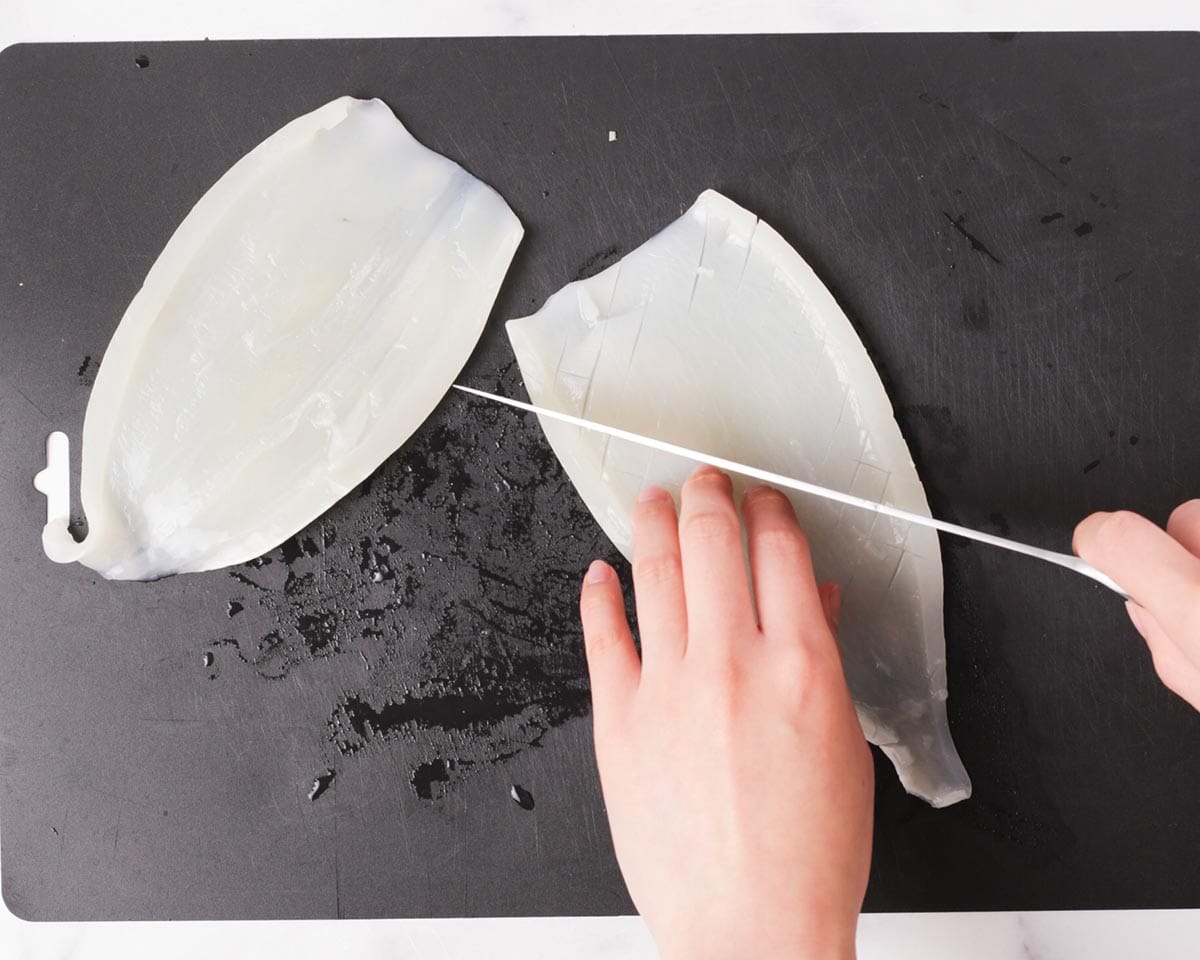
Squid - Rinse and cut the squid tube (the body) into rings. Alternatively, split the squid tube in half, lengthwise with a knife, and with the inside, soft part of the squid facing up, make shallow, diagonal cuts across the entire surface. then cut into 1 to 2 inch pieces.
Cook the noodles
Bring a pot of water to a boil while you prepare the seafood. Once the water is boiling, add the fresh noodles and give it a mix. Cook according to package instructions. When the noodles are done, strain out the noodles but keep the pot of hot water on the stove for warming up the noodles later. Rinse the noodles well with cold water. This is to keep the noodles chewy and bouncy. Set aside.

Make the jjamppong
1. In a well seasoned wok or nonstick pot over medium high heat, add the oil and heat it up until it's just starting to smoke. Add the onion, carrot, green onion, and garlic and stir fry until fragrant, about 30 seconds to 1 minute. Then add the napa cabbage and stir fry until mostly wilted, about 2 to 3 minutes.

📝 Note: It's important to have your ingredients ready and to move quickly once the cooking starts because the high heat is important for imitating the "wok hei" flavor you taste in jjamppong.

2. Once the cabbage has wilted, add both the coarse and fine ground gochugaru and stir fry for about 30 seconds or until they are evenly distributed. Make sure to stir constantly so that the peppers don't burn! Then add the water and season with the instant stock tablet, salt, and msg. Bring the soup to a boil.

3. When the soup comes to a boil, let it cook for 1 to 2 minutes to let the flavors marry. Then add all the seafood and bring it back to a boil. Stir the soup occasionally to make sure the seafood are all submerged and cooking evenly.

Let the seafood cook for about 3 to 5 minutes or until done. The mussels/clams should have all opened up and the shrimp should be bright orange and curled like tight "J". Remove the soup from the heat.

4. Dip the noodles into the pot of hot water from earlier for a few seconds to warm up the noodles. Drain well then transfer the noodles into bowls. Top the noodles with the soup and seafood. Enjoy while it's hot.

Storage and reheating
Jjamppong is definitely better freshly made but leftover can be stored in the fridge for up to 3 days. Do note that the noodles will bloat and loose it's texture as it sits in the soup.
You can reheat it in a pot on the stovetop or microwave in a microwave safe container that's loosely covered.

FAQs
Absolutely! Feel free to use more of one seafood than the other or substitute with what you prefer. Just make sure to cook it accordingly.
Unfortunately, there's no substitute for gochugaru as it's an essential ingredient for making jjamppong. However, you can substitute the fine ground gochugaru and use only the coarse ground one for this recipe. If substituting, use an additional teaspoon of coarse gochugaru for every tablespoon of fine gochugaru.
We highly recommend adding a little MSG in the soup to boost the flavor. This is the secret to making your jjamppong like it's from the restaurant, and of course some wok hei. A little MSG goes a long way and it pairs super well with seafood. If you're really reluctant, add a tablespoon of oyster sauce or fish sauce per recipe.
Thick, chewy noodles are great for jjamppong because they don't loose it's texture quickly and holds up to the soup's flavor. But instant ramen noodles are not a bad substitute at all!
This recipe as is makes medium spicy jjamppong. If you prefer it less spicy, you can reduce the amount of coarse gochugaru used. If you want it spicer, you can look for extra spicy gochugaru or add some bird's eye chili, jalapeño, or spicy Korean peppers to it.
📖 Recipe

Jjamppong
Ingredients
- 2 bundles Korean fresh noodle for udon or jajangmyeon (about 7oz/200g per bundle)
- 8 ounces large shrimps preferably head-on
- 8 ounces mussels or clams (little neck or manilla)
- 6 ounces squid tube usually 1 tube
- ½ large yellow onion sliced
- 1 medium carrot cut into matchsticks
- 3 stalks green onion cut into 2 inch pieces
- 2 tablespoons garlic rough chop
- 12 ounces napa cabbage cut into ½ inch slices (about 5 to 6 leaves)
- 5 tablespoons gochugaru (coarse)
- 2 tablespoons gochugaru (fine ground) or use more coarse ground gochugaru
- 5 cups water
- 2 Korean instant soup stock tablets crushed (optional)
- 2½ teaspoons Kosher salt
- ¼ teaspoon msg
- 3 tablespoons neutral oil for cooking
Instructions
- Clean and prepare the seafood:Shrimps - You can use already peeled and deveined shrimps, but unpeeld, head-on shrimps will give your soup much more flavor. If using head-on shrimps, devein them but keep the shells on. Give them a good rinse. If using already peeled and deveined shrimps, just rinse and drain them.Mussels - Rinse and scrub the outside of the shell if needed and remove the beard (the grassy, fuzzy piece sticking out).Clams - If using clams, rinse and scrub the clean if needed then soak them in a quart (about 1 liter) of water with 2 tablespoon (30g) of kosher salt for about 1 hour. Rinse well before use.Squid - Rinse and cut the squid tube (the body) into rings. Alternatively, split the squid tube in half, lengthwise with a knife, and with the inside, soft part of the squid facing up, make shallow, diagonal cuts across the entire surface. then cut into 1 to 2 inch pieces.
- Cook the noodles:Bring a pot of water to a boil as you prepare the seafood. Once the water is boiling, add the fresh noodles and give it a mix. Cook according to package instructions. When the noodles are done, strain out the noodles but keep the pot of hot water on the stove for warming up the noodles later. Rinse the noodles well with cold water and set aside.
- Stir fry the aromatics and veggies:In a well seasoned wok or nonstick pot over medium high heat, add the oil and heat it up until it's just starting to smoke. Add the onion, carrot, green onion, and garlic and stir fry until fragrant, about 30 seconds to 1 minute. Then add the napa cabbage and stir fry until mostly wilted, about 2 to 3 minutes.
- Make the soup:Once the cabbage has wilted, add both the coarse and fine ground gochugaru and stir fry for about 30 seconds or until they are evenly distributed. Make sure to stir constantly so that the peppers don't burn! Then add the water and season with the instant stock tablet, salt, and msg. Bring the soup to a boil.
- Finish:When the soup comes to a boil, let it cook for 1 to 2 minutes to let the flavors marry. Then add all the seafood and bring it back to a boil. Stir the soup occasionally to make sure the seafood are all submerged and cooking evenly. Let the seafood cook for about 3 to 5 minutes or until done. The mussels/clams should have all opened up and the shrimp should be bright orange and curled like tight "J". Remove the soup from the heat.
- Assemble:Dip the noodles into the pot of hot water from earlier for a few seconds to warm up the noodles. Drain well then transfer the noodles into bowls. Top the noodles with the soup and seafood. Enjoy while it's hot!
Notes
- Seafood - Feel free to substitute the listed seafood for ones you prefer or use more of one than another. For a shrimp deveining hack without cutting and peeling the shrimps, refer to our post above.
- Vegetables - Also feel free to substitute the napa cabbage and carrot for other vegetables of your choice. Some common veggies used are: green cabbage, zucchini, and mushrooms.
- Korean instant soup stock tablets - This replace the need to make dashima, which is usually an anchovy and kelp broth. It gives soups more nutrition and flavor, but can be totally omitted. We got ours at Hmart, but we've also seen it occasionally at Costco. They are also available online.
- Spiciness - This recipe as is makes medium spicy jjamppong. If you prefer it less spicy, you can reduce the amount of coarse gochugaru used. If you want it spicer, you can look for extra spicy gochugaru or add some bird's eye chili, jalapeño, or spicy Korean peppers to it.
Equipments Recommended
Nutrition

Comments
No Comments