
Mille feuille nabe, or thousand-layer hot pot, is a Japanese hot pot made of "a thousand-layers" of napa cabbage and thinly sliced pork. It's a super easy dish to make that requires only a few ingredients, which is perfect for a quick weeknight dinner or a hot pot party, especial during the cold weather. Afterwards add some instant ramen, udon noodles, or even white rice to the leftover broth for a tasty shime (aka post meal snack).

If you've made this recipe or any recipes from our blog, please tag us on Instagram using #twoplaidaprons! You can also tag us in your Instagram stories using @two_plaid_aprons. We would love to see your creations! It absolutely makes our day! 🥰
Jump to:
What is mille feuille nabe?
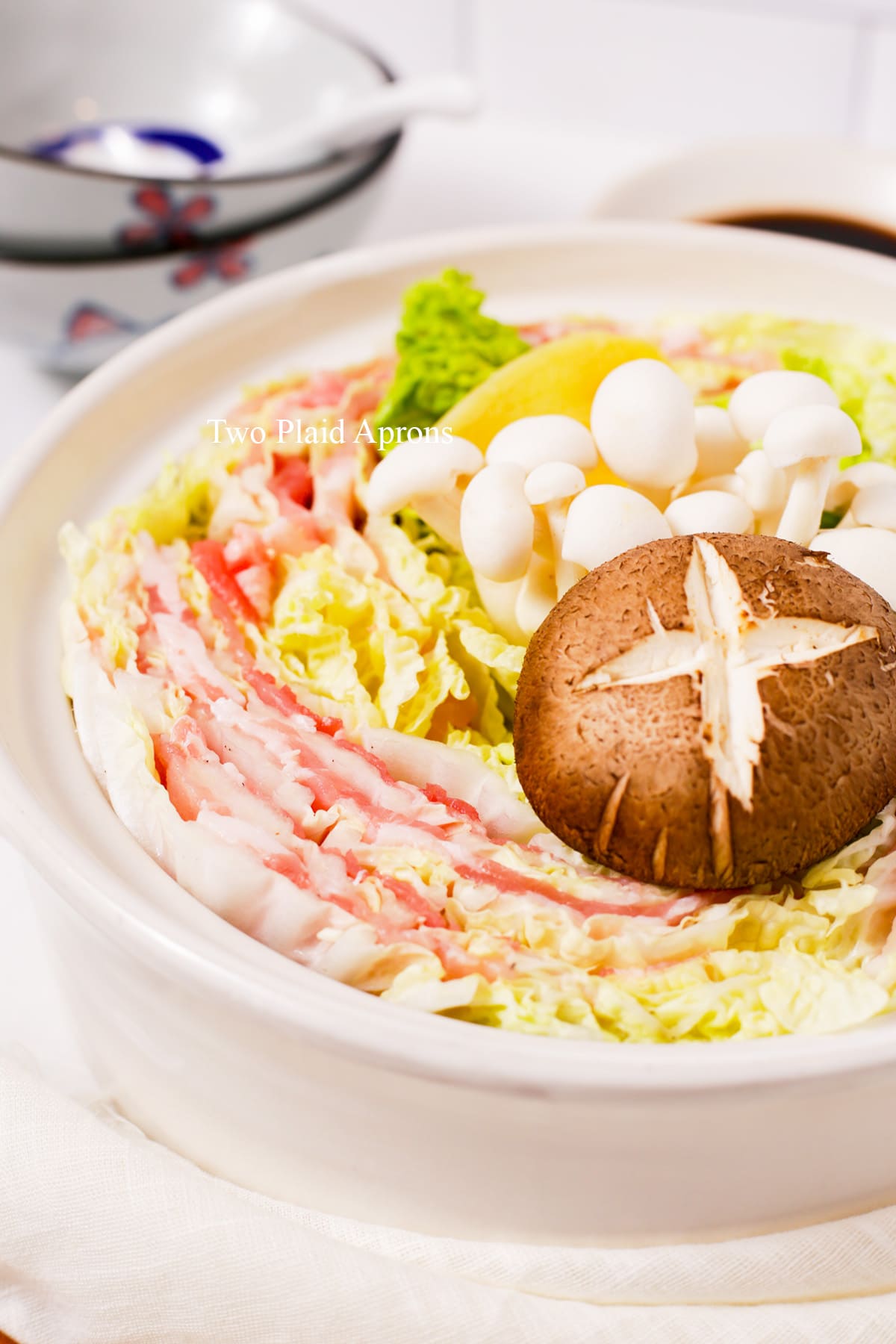
Mille Feuille nabe (ミルフィーユ鍋), also known as "thousand-layer hot pot", is a Japanese style one pot dish or hot pot made with layers of napa cabbage and thinly sliced pork cooked in a dashi based soup broth.
It's a simple hot pot that requires only a few ingredients compared to sukiyaki and shabu shabu. The flavor is simple, clean, comforting. It's a great dish for making ahead for both an easy dinner, get together hot pot, or just simply for the cold weather!

Ingredient notes
Please scroll down to the recipe card for the ingredient quantities!
For the nabe:
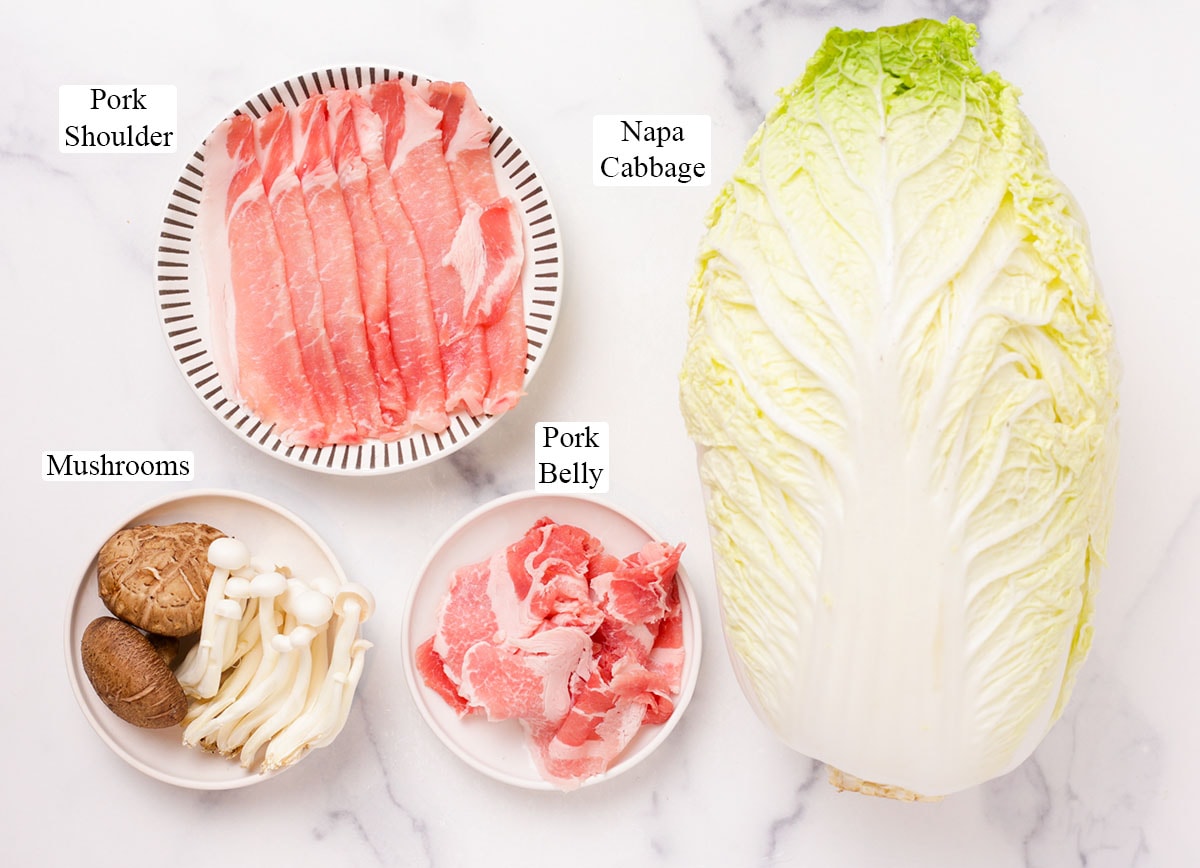
- Napa cabbage - One of the main ingredients for this hot pot. Napa cabbage can be found at most Asian markets and even at local grocery stores like Walmart and Whole Foods. It's very neutral in flavor with a mild, clean sweetness.
- Thinly sliced pork - We recommend using a pork with a good balance between fat and lean meat. Both thinly sliced pork belly or thinly sliced pork shoulder are great choices, or use a combination of both. You can find both at the Asian market in the freezer aisles where shabu shabu and hot pot meats are.
- Mushrooms (optional add-on)- A small bundle of shimenji mushrooms or enoki mushrooms is a great addition to mille feuille hot pot as both garnish and to pack the pot. To the the soup additional flavor, shiitake mushroom is always a great addition.
- Carrots (optional add-on) - This can be added for both color and texture. You can even cut it into cute shapes, like a classic flower shape carrot.
For the seasoned broth:
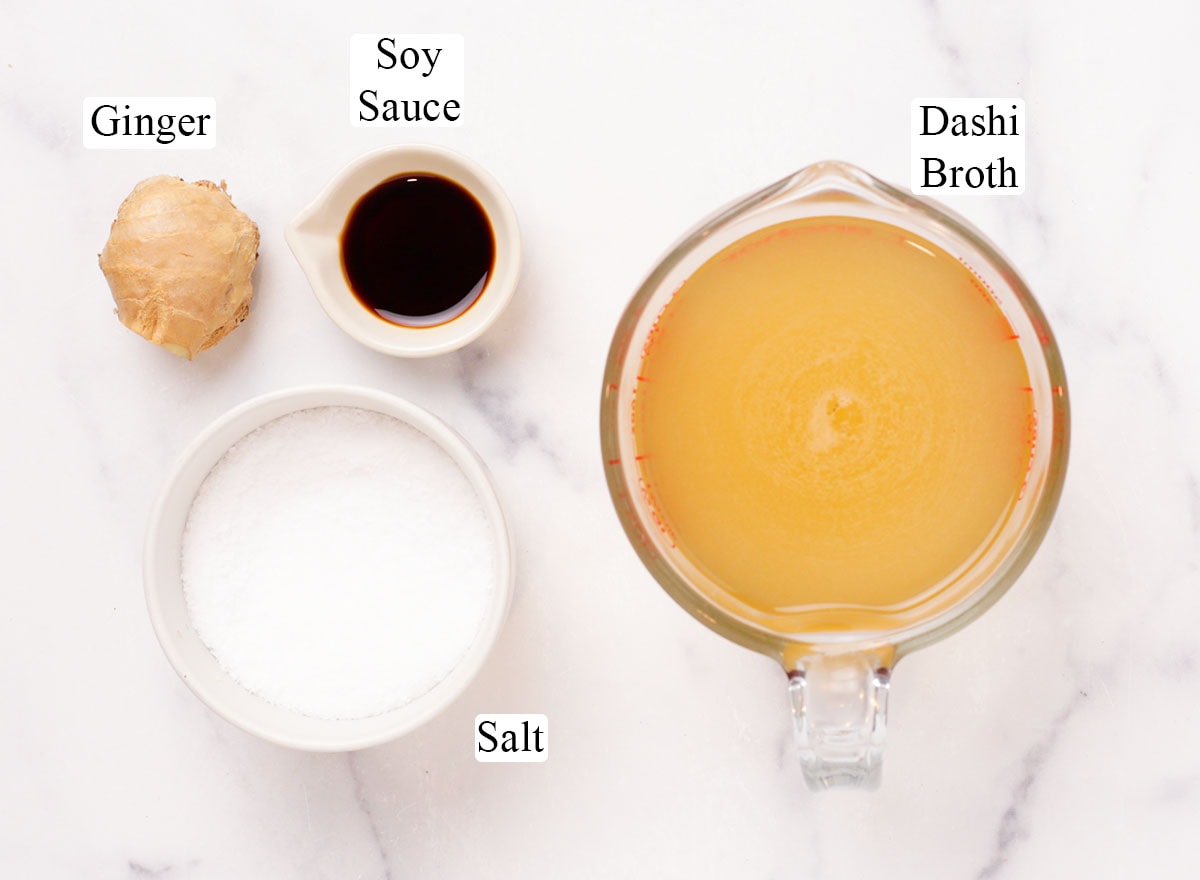
- Dashi - This is a Japanese staple and often used as a base broth for many recipes, including miso soup. Dashi broth is made with kombu and bonito, which can be purchased separately or in prepared stock bags. The alternative is using dashi powder, which tastes just as good and is an easy and convenient substitute.
- Soy sauce and salt - For seasoning the soup base and to give it some color and extra umami.
- Ginger - Just a couple of slices is needed to make the hot pot more aromatic and to get rid of any unwanted porky flavors.
- Dipping options - Some of our favorites are ponzu, soy sauce, chili oil, and togarashi. It's up to your personal preference.
Shime ingredients for post meal snack:
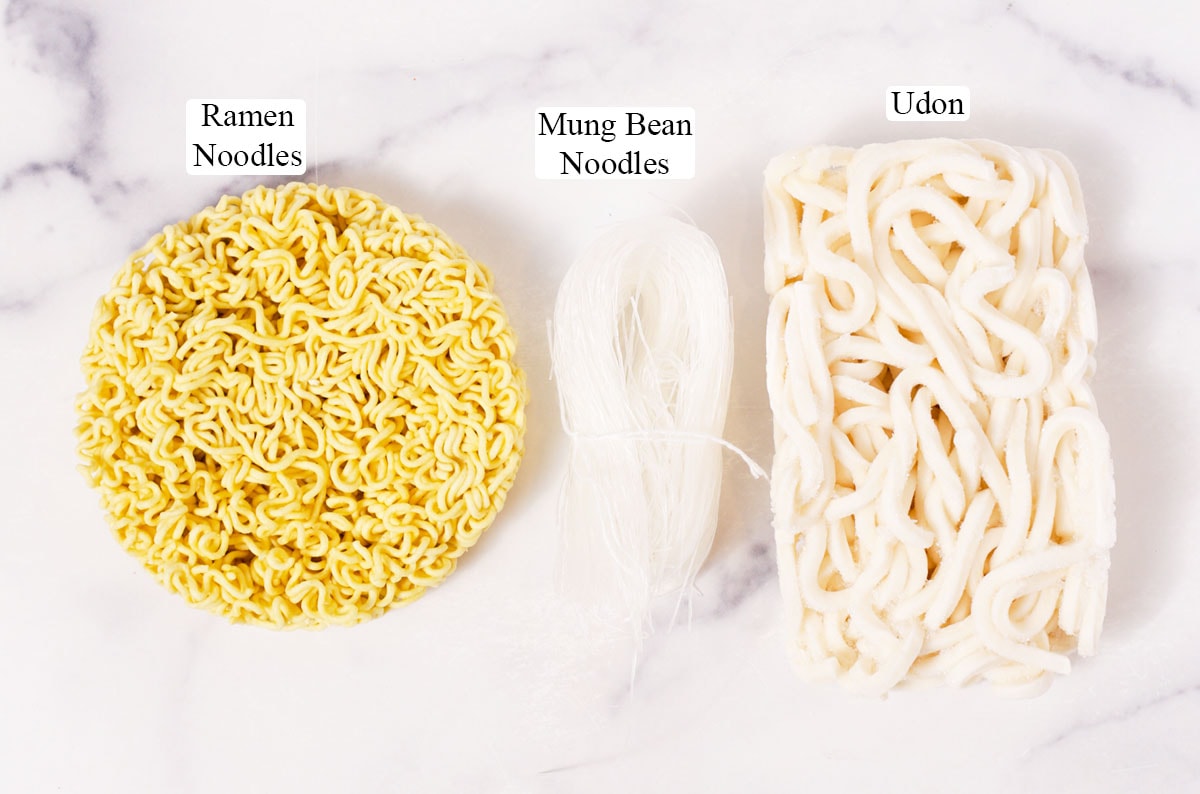
- Noodles - This is for shime, the post meal snack you can make using the leftover soup. We love finishing with udon noodles, instant ramen, and mung bean noodles.
- Rice - If you prefer, you can skip the noodles and just add some hot rice to the soup for shime.
How to make mille feuille nabe
Please scroll down to the recipe card for the full recipe and instructions!
Prepare the ingredients:
1. Make the soup base. Mix together the dashi broth, soy sauce, and salt. Set aside until needed.
2. Layer the cabbage. Trim off the ends of each napa cabbage leaf and layer each leaf with the thinly sliced pork belly. Try your best to cover the entire leaf. Repeat with all of the leaves except for one.
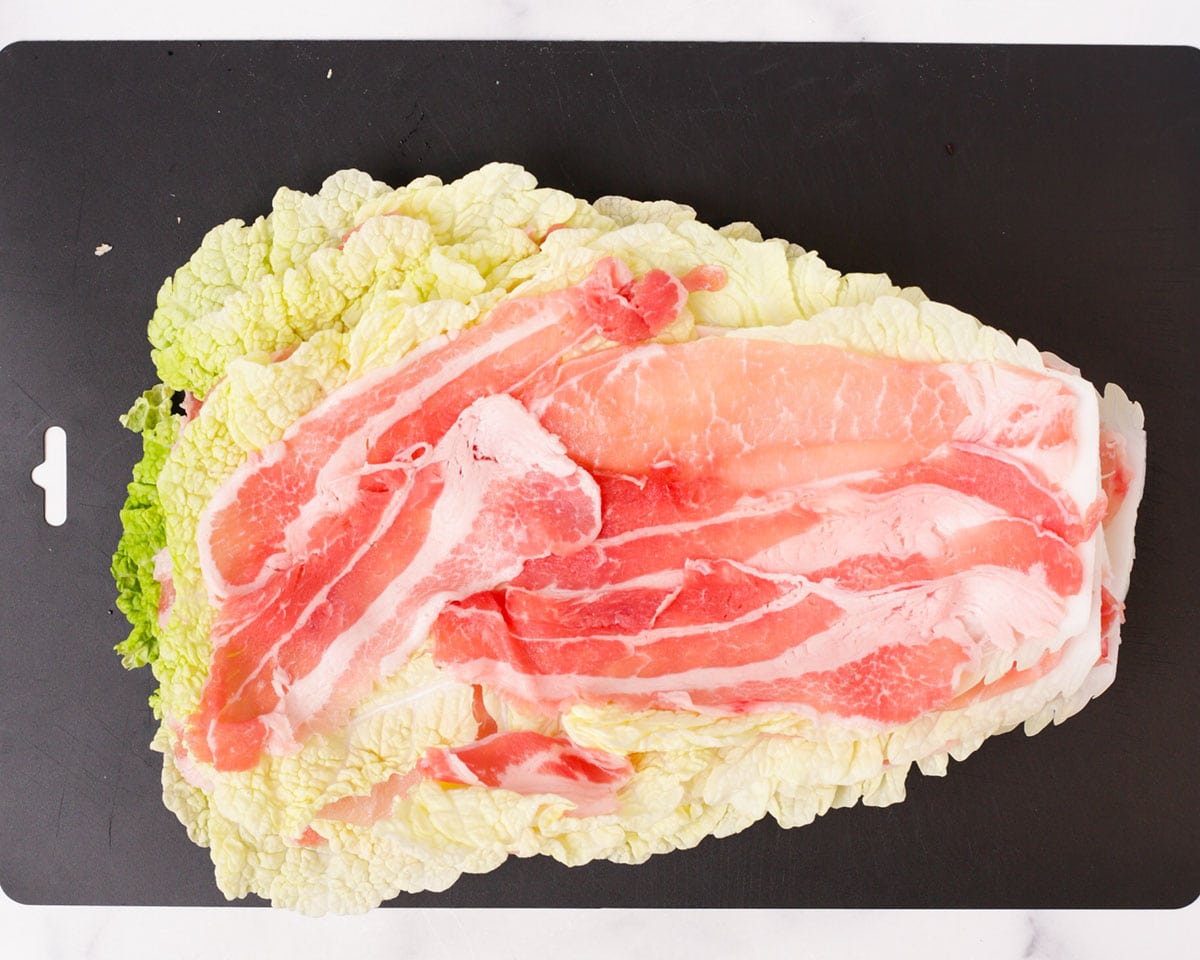
3. Cut the layered cabbage. Stack the pork belly layered napa cabbage leaves on top of each other and finish by placing the extra napa cabbage leaf that's not layered with pork on top of the stack. Then, cut the stack into 2 to 3 inch pieces.

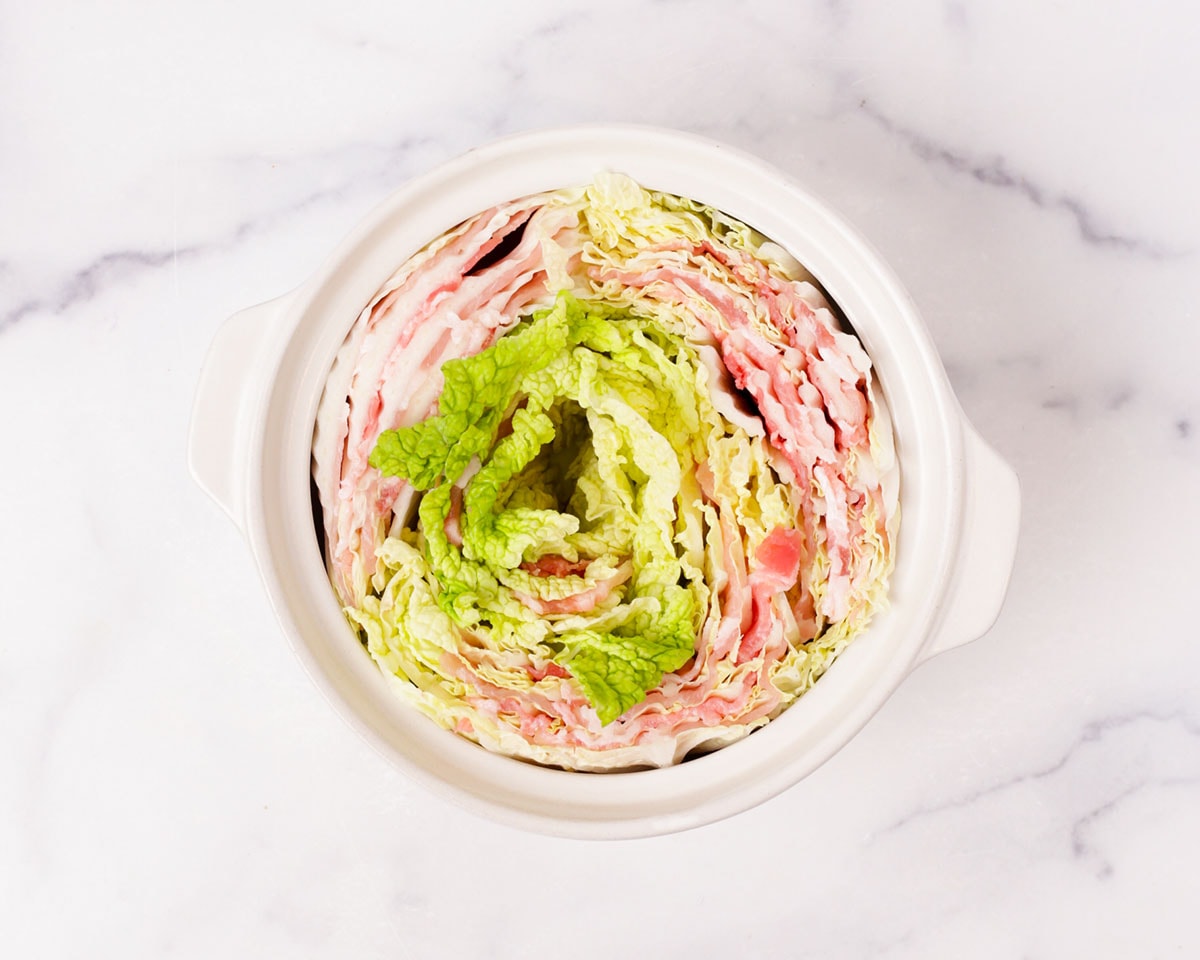
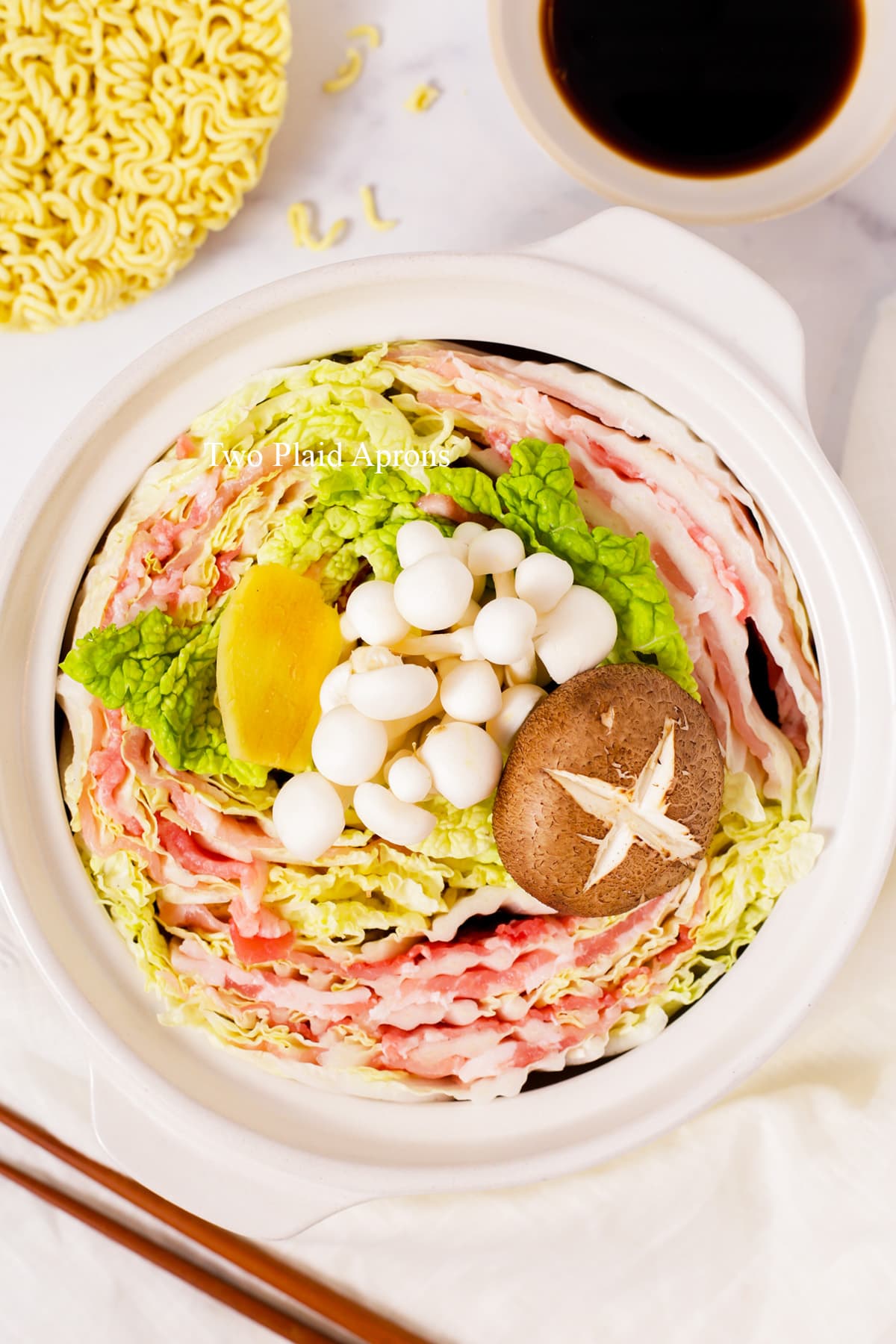
4. Assemble the hot pot. Packing the layered pork belly napa cabbage into a 5 inch donabe (clay pot) or a 3 quart saucepan. Start from the edge of the pot and work your way to the center. Try to keep everything tightly packed and keep the cut side of the cabbage up for the best aesthetics. See "Make it for a party" topic below for larger portions.
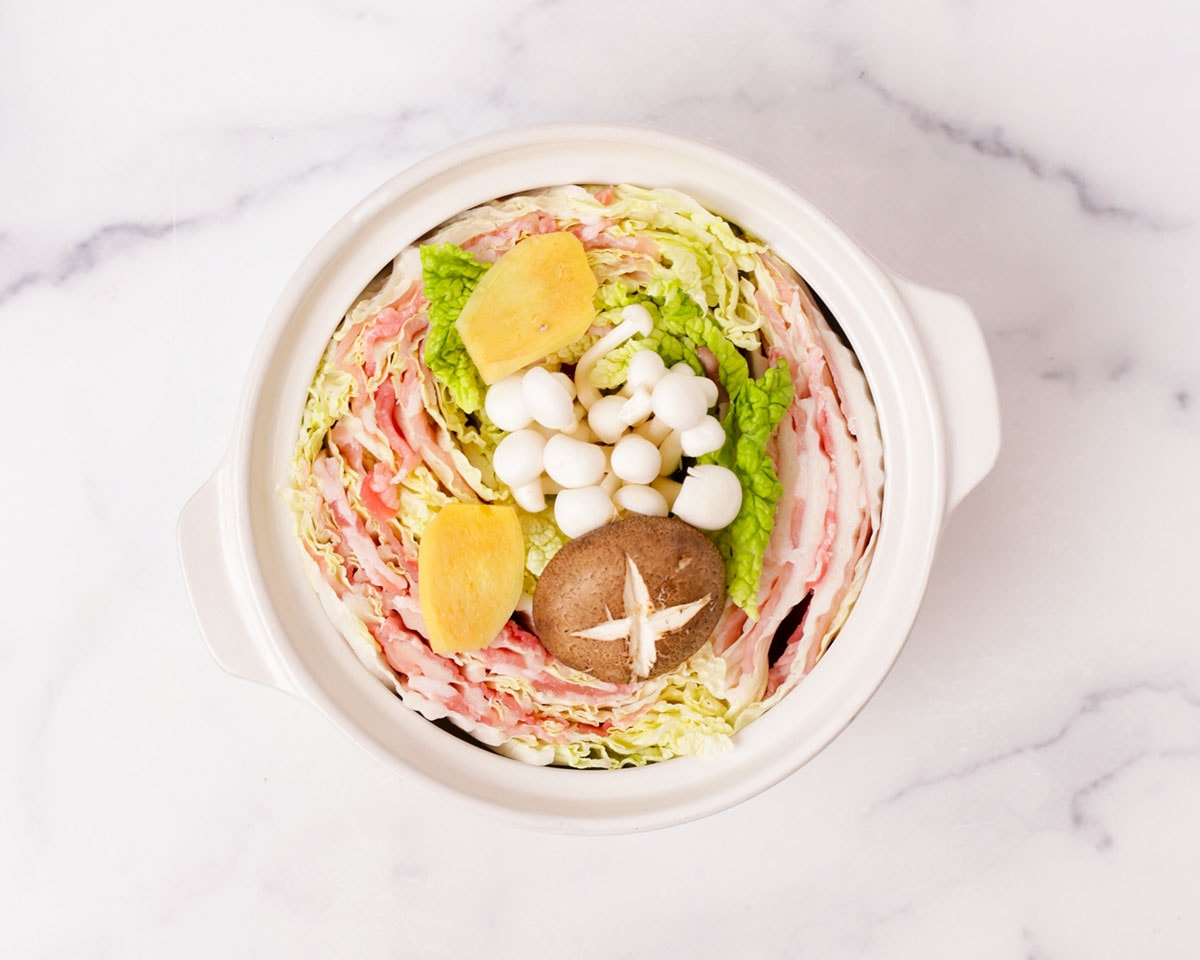
5. Add optional ingredients. After packing in all the layered napa cabbage and have a little room, stuff a bundle of shimeji and/or enoki mushrooms in the center. Also, stuff the ginger slices in between the napa cabbage leaves. Lastly, place a shiitake mushroom and/or some carrot slices on top if you want.
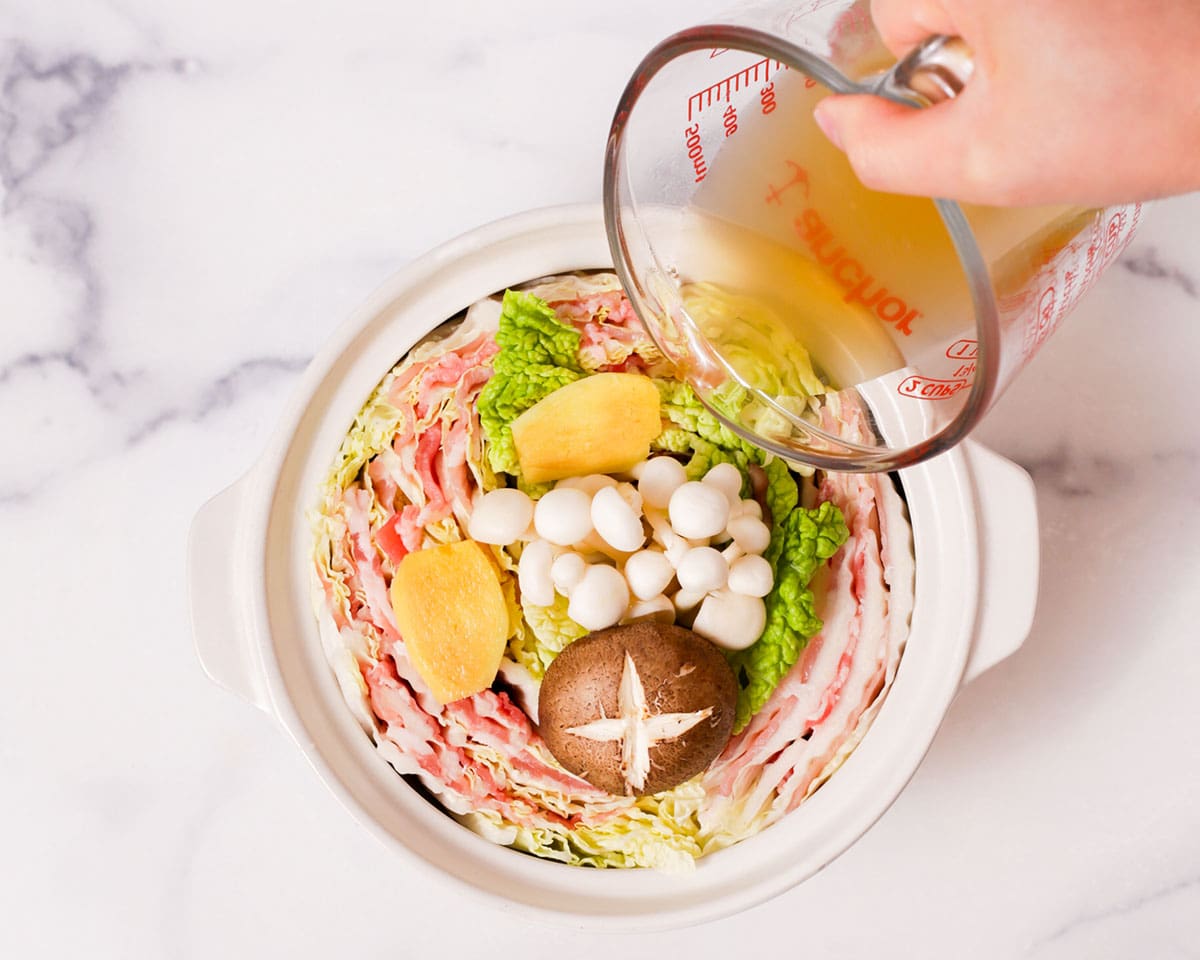
6. Add soup base. Pour the seasoned dashi stock over the assembled cabbage and pork when ready to cook and cover with lid.
Cook and serve:
1. Cook. Place the pot of prepared mille feuille nabe over medium heat and bring it to a boil. Once at a boil, reduce the heat to a simmer and skim off any scum (optional). Allow the hot pot to cook for another 5 minutes or until the veggies and pork are cooked through.

2. Prepare table. While the hot pot is cooking, prepare the serving dish/bowl and sauce.
3. Enjoy. Once the hot pot is ready, bring it to the table and serve immediately. It'll be very hot, so be careful!
4. Leftover cabbage and pork. If there are extra cabbage and pork leftover, you can add it into the leftover broth and simmer for about 5 to 10 minutes or until cooked.
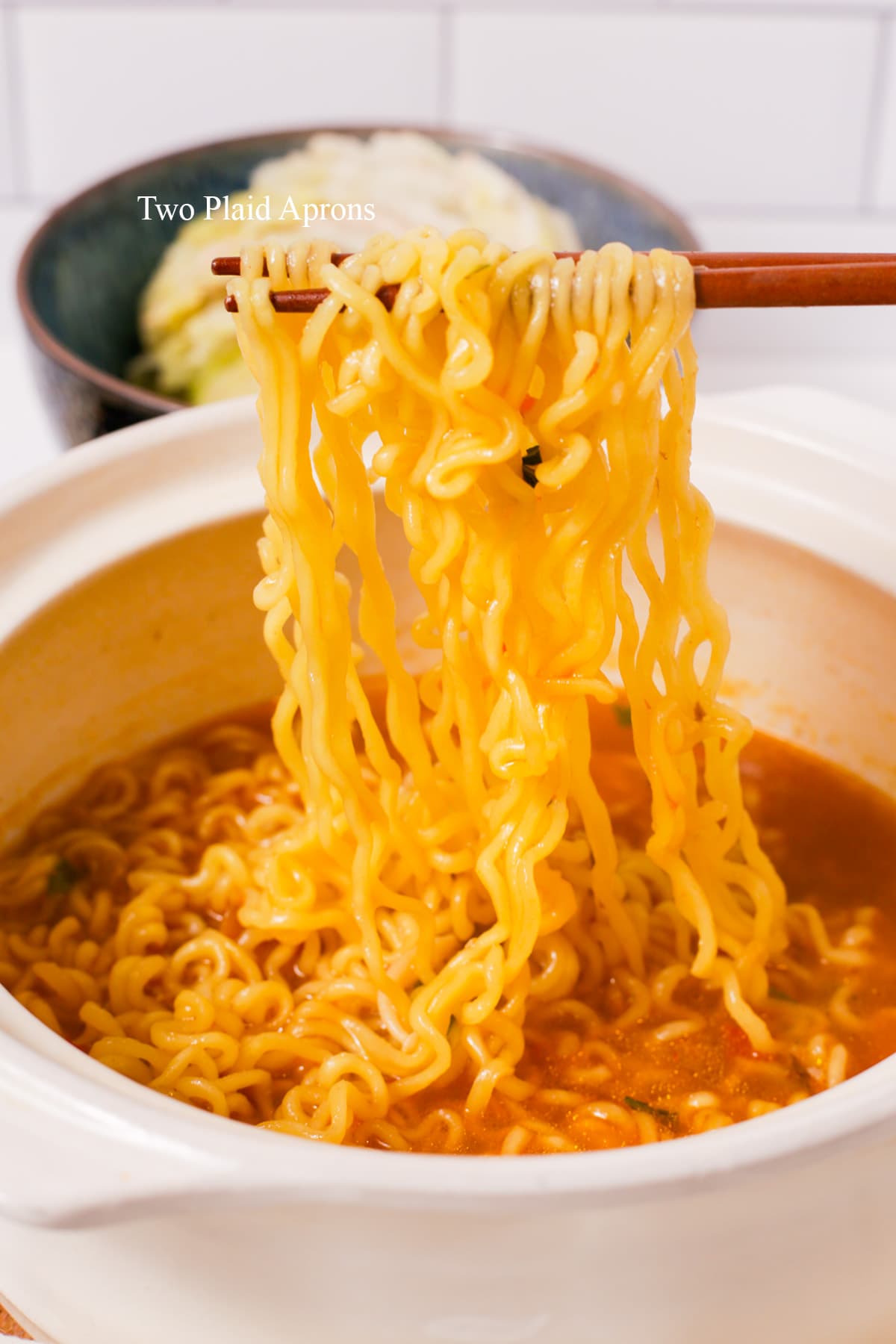
5. Shime. After all the napa cabbage and pork is finished and there's leftover broth, you can add instant ramen noodles, udon, or even plain white rice to finish the meal!
🎉 Make it a party!
Mille feuille nabe is an easy and perfect dish to cook for the whole family or a crowd. To make a larger portion, you can simply multiply the recipe. Here are a few tips:
- Use a 10 inch dutch oven for 4-5 servings.
- A 4-5 serving feuille nabe will need about ¾ head of a nabe cabbage. In this case, you can:
- cut the napa cabbage into quarters (lengthwise)
- wash and rinse between the leaves
- layer the thinly sliced meat
- then cut off the core of the cabbage before cutting the cabbage into 2 to 3 inch stacks.
- the leftover quarter of napa cabbage can be layered and added to the pot later or prepared in another smaller pot.
- Lastly, in this case, the nabe need an additional 5 to 10 minute cook time since it's a larger portion.
Recipe tips
- Use thinly sliced pork with some fat on it. This is important because fat makes veggies tastes better and also fattier cuts of pork tastes better and stays tender after cooking compared to lean pork. We highly recommend pork shoulder or pork belly or even a combo of both.
- Pack the pot tightly with as much layered cabbage as possible. This is because as the cabbage cooks, it'll wilt. So if the pot is not tightly packed, everything will start shifting around while cooking.
- Layer the thicker, stalks of the cabbage on the outside and the leafier layers in the center. Is is because the outside will start cooking before the center, which is perfect for the thicker stalk pieces because those take a little longer to cook than the tender leafy pieces.
- Cover with a lid while waiting for the hot pot to boil to help the soup boil faster.

Make ahead and storage
Mille feuille nabe is great for prepping ahead of time for dinner the next day! Simply assemble and pack the layered cabbage into the pot, cover well, and refrigerate until needed. The soup broth can also be made ahead of time and refrigerated as well.
Leftover, cooked mille feuille nabe can be stored in the fridge for up to 4 days or frozen for up to 2 months. Store with the soup base and do to allow it to cool completely before covering and storing. If freezing, make sure to store in an airtight container.
We do not recommend freezing uncooked mille feuille nabe because napa cabbage does not freeze well. However, the meat and broth can definitely be frozen for another use.

Reheating
Leftover can be easily reheated either using the microwave or on the stovetop.
Microwave method: Place the leftover (soup and al) in a loosely covered, microwave safe container and microwave until hot. Be careful when removing.
Stovetop method: Transfer the leftover (soup and all) into a saucepan or pot and reheat over medium high heat until hot. Stir occasionally.
If frozen: You can either allow it to thaw overnight or reheat from frozen. If so, it'll just a bit longer to reheat.
FAQ
Mille feuille nabe translates to "thousand layer hot pot."
We do not recommend using bacon for mille feuille nabe bacause bacon is too salty and can be too fatty as well.
Sukiyaki is a type of nabe, aka one pot meal or hot pot. The proteins and veggies are cooked in a small amount of seasoned soy based sauce instead of an abundance of soup. It is also common to enjoy sukiyaki with raw eggs.
Just like sukiuaki, shabu shabu is another form of nabe, but shabu shabu is what we would more likely think of as hot pot. A soup base is heated it up and proteins and veggies are added to cook. It's a very family style, self-served hot pot wehre one cook their meats and veggies. The name "shabu shabu" refers to the way meat sounds as it's dipped and cooked in hot pot.
To make our mille feuille nabe gluten free, you can either substitute the soy sauce for tamari or use more salt.
📖 Recipe
Mille Feuille Nabe
Ingredients
For the hot pot:
- 5-6 leaves napa cabbage cleaned and rinsed
- 8 ounces thinly sliced pork belly or thinly sliced pork shoulder
- 2 cups dashi broth *see notes
- ½ tablespoon soy sauce
- ½ teaspoon salt
- 2 slices ginger
Optional ingredients:
- Shimeji mushrooms bottom roots removed
- Enoki mushrooms bottom roots removed
- Shiitake mushrooms stem trimmed
- Carrot peeled and cut into slices
- Noodles udon, ramen, or any noodles of your choice
Dipping options:
Instructions
Prepare the ingredients.
- Make the soup base:Mix together the dashi, soy sauce, and salt. Set aside until needed.
- Assemble the napa cabbage and pork:Trim off the ends of each napa cabbage leaf and layer each leaf with the thinly sliced pork belly. Try your best to cover the entire leaf. Repeat with all of the leaves except for one.
- Stack the pork belly layered napa cabbage leaves on top of each other and finish by placing the extra napa cabbage leaf that's not layered with pork on top of the stack. Then, cut the stack into 2 inch pieces.
- Packing the layered pork belly napa cabbage into a 5 inch donabe (clay pot) or a 3 quart saucepan. Start from the edge of the pot and work your way to the center. Try to keep everything tightly packed and keep the cut side of the cabbage up for the best aesthetics.*See notes for multiplied/larger serving recipes!*
- After packing in all the layered napa cabbage and have a little room, stuff a bundle of shimeji and/or enoki mushrooms in the center. Also, stuff the ginger slices in between the napa cabbage leaves. Lastly, place a shiitake mushroom and/or some carrot slices on top if you want.
- Pour the seasoned dashi stock over the assembled cabbage and pork when ready to cook and cover with lid.
Cook and serve:
- Place the pot of prepared mille feuille nabe over medium heat and bring it to a boil. Once at a boil, reduce the heat to a simmer and skim off any scum (optional). Allow the hot pot to cook for another 5 minutes or until the veggies and pork are cooked through.
- While the hot pot is cooking, prepare the serving dish/bowl and sauce.
- Once the hot pot is ready, bring it to the table and serve immediately. It'll be very hot, so be careful!*You can also cook the mille fueille nabe at the table on a butane burner, like you would regular hot pot.*
Post hot pot meal (shime):
- If there's broth leftover after finishing the mille feuille nabe, you can enjoy the now umami packed broth by simply adding some white rice or cook some udon noodles or even instant ramen in the broth. It's super flavorful!
Notes
- Recipe size - One recipe of this mille feuille nabe can be a very filling meal for 1 person without shime afterwards or a a comfortable meal for 2 people, especially if enjoying some additional noodles, etc for shime.
- Dashi - You can make homemade dashi broth or simply use dashi powder as a easy, quick alternative. If using dashi powder, simply combine 1 teaspoon of dashi powder per 2 cups of water.
- Multiplied recipe - Mille feuille nabe is an easy and perfect dish to cook for the whole family or a crowd. To make a larger portion, you can simply multiply the recipe. Here are a few tips:
- Use a 10 inch dutch oven for 4-5 servings.
- A 4-5 serving feuille nabe will need about ¾ head of a nabe cabbage. In this case, you can:
- cut the napa cabbage into quarters (lengthwise)
- wash and rinse between the leaves
- layer the thinly sliced meat
- then cut off the core of the cabbage before cutting the cabbage into 2 to 3 inch stacks.
- the leftover quarter of napa cabbage can be layered and added to the pot later or prepared in another smaller pot.
- Lastly, in this case, the nabe need an additiona 5 to 10 minute cook time since it's a larger portion.
Equipments Recommended
- Donabe


Lynne says
Thank you for the recipe! It’s perfect for days when you don’t want fuss over a greasy kitchen after stir frying.
I’m trying to clear my freezer before a holiday and don’t have enough shabu shabu pork. Can I use minced pork instead?
Mei says
Hi Lynne! We love mille feuille nabe for the same reason! Using minced pork will yield a different texture. That will be the main difference. So if you don't mind that, it'll be totally fine. Also, the assembly process will be a little different. We recommend spreading the pork thinly and press it into the napa cabbage so it doesn't fall off easily. Hope this helps! =)
Mei ❤️
Linda says
Hi - I was just getting ready to make your recipe, but... is that 2 cups of dashi stock, or two cups of dashi powder? Thanks!
Mei says
Hi Linda! I'm so sorry for the confusion and thank you so much for bringing this to our attention! I've fixed it on the recipe. It is supposed to be 2 cups of dashi broth, which can be made with 2 cups of water mixed with 1 teaspoon of hondashi powder. Hope you enjoy it when you try it!
Mei ❤️
Linda says
It was oiishides!!! My first meal was the nabe with a ponzu/green onion dipping sauce. I added udon + flavor packet to the leftovers/broth the next day and it was even better!
Mei says
So glad you enjoyed it, Linda! Now we're craving some nabe too 😆
Marina Betancourt says
Is it possible to substitute ginger in this recipe for someone who is allergic to it?
Mei says
Hi Marina! If you are allergic to ginger, you can simply omit it. The flavor won't be altered too much. If you want something to make the broth more fragrant and to help neutralize any "porkiness" you can add a couple teaspoons of shaoxing rice wine or sake.
Mei ❤️
Morgan Dehan says
Do you have to use a Donabe pot or can you use something else?
Mei says
Hi Morgan! If you don't have a donabe, you can use a large saucepan or a dutch oven.
Mei ❤️
L. says
Under your section called "Dashi" it says that Dashi is a Japanese stable... I think you meant staple?
Mei ❤️
Mei says
Thanks for catching that! Just fixed it =)