
Everyone should know how to make perfect, fluffy white rice. So here's how to cook white rice using 3 different methods: rice cooker, stovetop, and microwave. Each method have their own pros and cons and may be more suitable than others for your kitchen. We've also provided detailed explanations the basics such as difference between rice types, how to wash rice, and troubleshooting tips so that you can become a master of making rice!
📝 Note: This recipe is meant for cooking regular white rice such as long grain, medium grain, and short grain white rice. It is NOT suitable for jasmine, glutinous, brown, or basmati rice.

If you've made this recipe or any recipes from our blog, please tag us on Instagram using #twoplaidaprons! You can also tag us in your Instagram stories using @two_plaid_aprons. We would love to see your creations! It absolutely makes our day! 🥰
Jump to:
- Ingredient notes
- What is the difference between the rice types?
- How to wash rice
- How to cook white rice (3 different methods!)
- How to cook rice with a rice cooker
- How to cook rice on the stove top
- How to cook rice using the microwave
- Recipe tips
- Troubleshooting
- Storage
- Reheating
- FAQ
- What to eat with white rice
- 📖 Recipe
- 💬 Feedback
Ingredient notes
Please scroll down to the recipe card for the ingredient quantities!
- White rice - This recipe and the water ratio is meant for regular long grain rice, medium grain, and short grain white rice.
- This recipe is not suitable for brown rice, wild rice, black rice, jasmine, or basmati rice.
- Water - Typically, you'd want to start with room temperature water. However, if you want to follow our guide to cooking rice using the microwave method without soaking the rice, you'll need boiling hot water.

What is the difference between the rice types?
Amongst the 3 basic white rice, long, medium, and short grain white rice, the main differences are in their texture and stickiness. The longer the rice grains, the less starch the rice contains, which means the rice will be fluffier and less sticky.
For example basmati rice is the longest grain, so it yields the fluffiest rice that's practically not sticky at all. This is most often used in Indian cuisine.
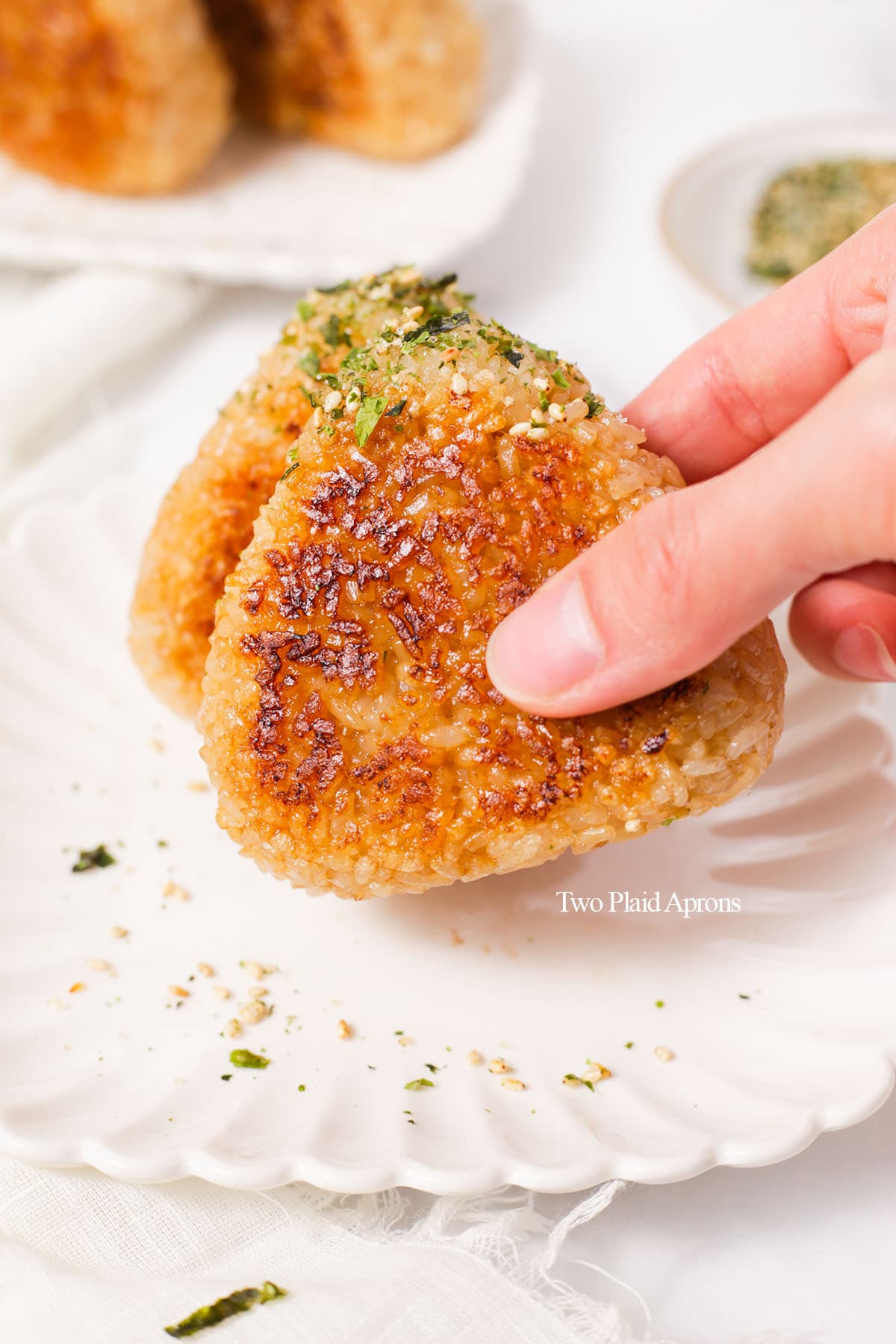
The shorter the rice grains, the more starch the rice contains, which makes the rice sticker, making the rice great for molding (a must for yaki onigiri) and easy for eating with chopsticks! But sticky rice does not mean it is mushy or soggy.
How to wash rice
Although it is not 100 percent necessary to wash and rinse your rice, we've always been taught by our moms and grandmas to always wash and rinse. It helps to remove excess starch and helps to make white rice less sticky and prevent unwanted gloopy-ness.
For any of our cooking methods, you can wash and rinse the white rice like so:
1. Place the rice into a bowl and cover with a generous amount of water.
2. Gently rub the rice between your fingers and hands to remove excess starch.

3. Drain and repeat this process a few times with fresh water until the water is mostly clear. Some cloudiness is okay.

How to cook white rice (3 different methods!)
Please scroll down to the recipe card for the full recipe and instructions!
For any of these cooking methods, we recommend washing the rice. And with these 3 cooking methods, you can make perfect white rice for any occasions:
- Rice cooker (30-40 min, depending on brand) - The most convenient and easy cooking method, although a good rice cooker can be an expensive but very good investment. We love our 10 Cup Cuckoo rice cooker (if you're looking for a recommendation!).

- Stovetop (20 min, plus 10 min for steaming)- All you need is a pot with a lid or plate. This method gives really good result but may take a couple rounds of practice to get use to your stovetop and master heat control.
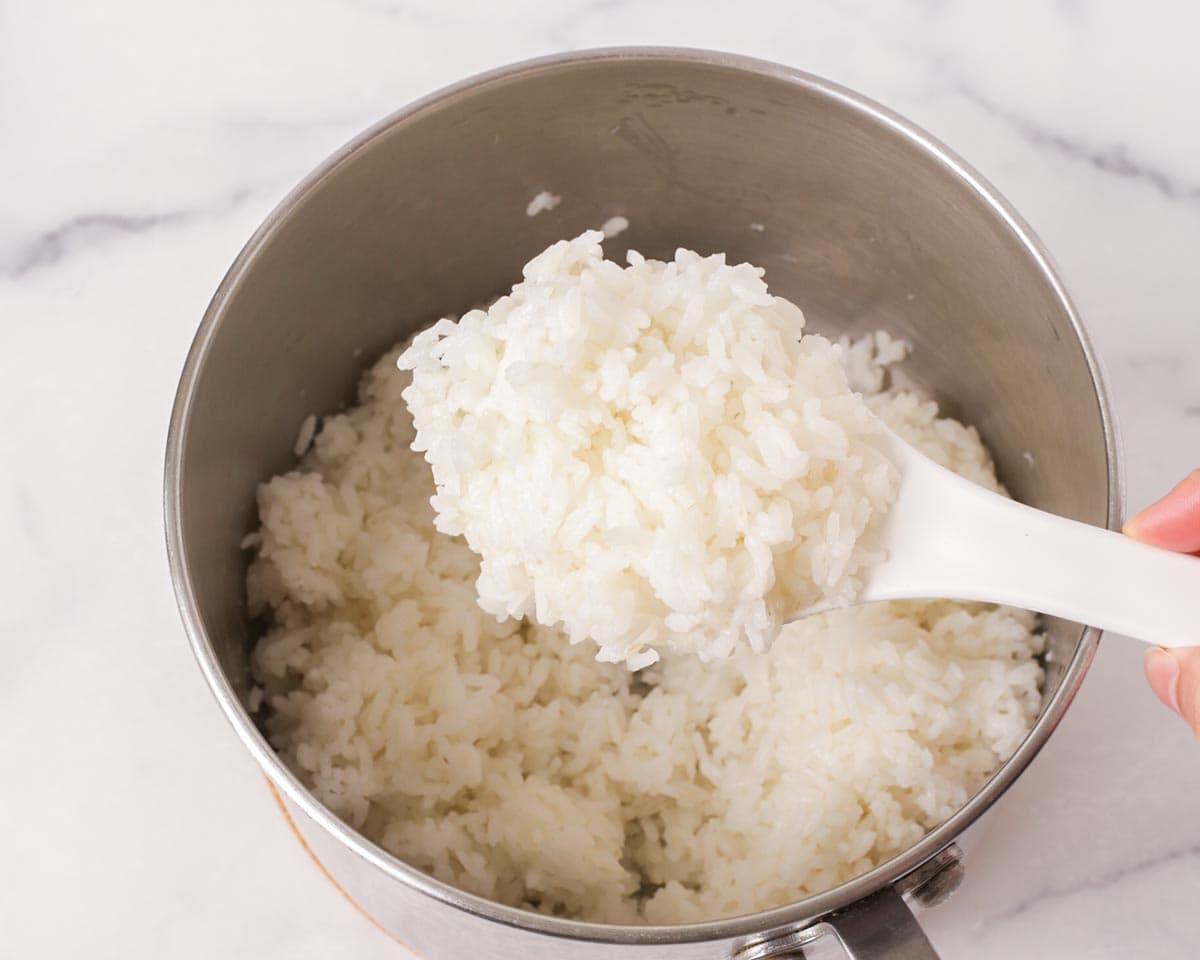
- Microwave - This is a great cooking method that's fast and a life saver for when you don't have a rice cooker or the stovetop. The only downside is that this method is best for making small amounts of rice, about 1 cup of uncooked rice at a time.

How to cook rice with a rice cooker
1. Place the washed rice into the rice cooker pot along with the appropriate amount of water. Shake gently to level out the rice.

📝 Note: The hand (above) and finger (below) measuring methods are not the most reliable but can be very convenient once you've found your perfect rice to water ratio for different rice amounts.
For the hand measuring method (above): Add the rice and water to the pot and gently shake until the rice is as leveled out as possible. Then gently place your hand flat on top of the rice. For my hand, I usually like to go up to the second knuckle of my middle finger. But everyone's measurement can be a little different depending on your hand size.
For the finger measuring method (below): There are many Asian jokes and many serious rice critiques that will tell you to make sure the water level is up to your first joint, but that really depends on your pot size and how much rice you're making. Personally, with this method, I like to level out my rice, then insert my pointing finger in the middle all the way down until I touch the bottom of the pot. The water level should be double the rice level. However, this method is best for cooking 2 cups or less rice and becomes more inaccurate the more rice you're cooking.

2. Lock/seal the pressure vent and select the "white rice" option.
3. When the time is up, most rice cookers will have automatically steam/pressure released. Fluff the rice with a rice paddle and enjoy.


How to cook rice on the stove top
1. Place the wash rice and appropriate amount of water into a saucepan or pot and bring it to a boil.


2. Once it comes to a boil, immediately reduce to the lowest heat setting and cover with a lid. The rice will be just simmering.
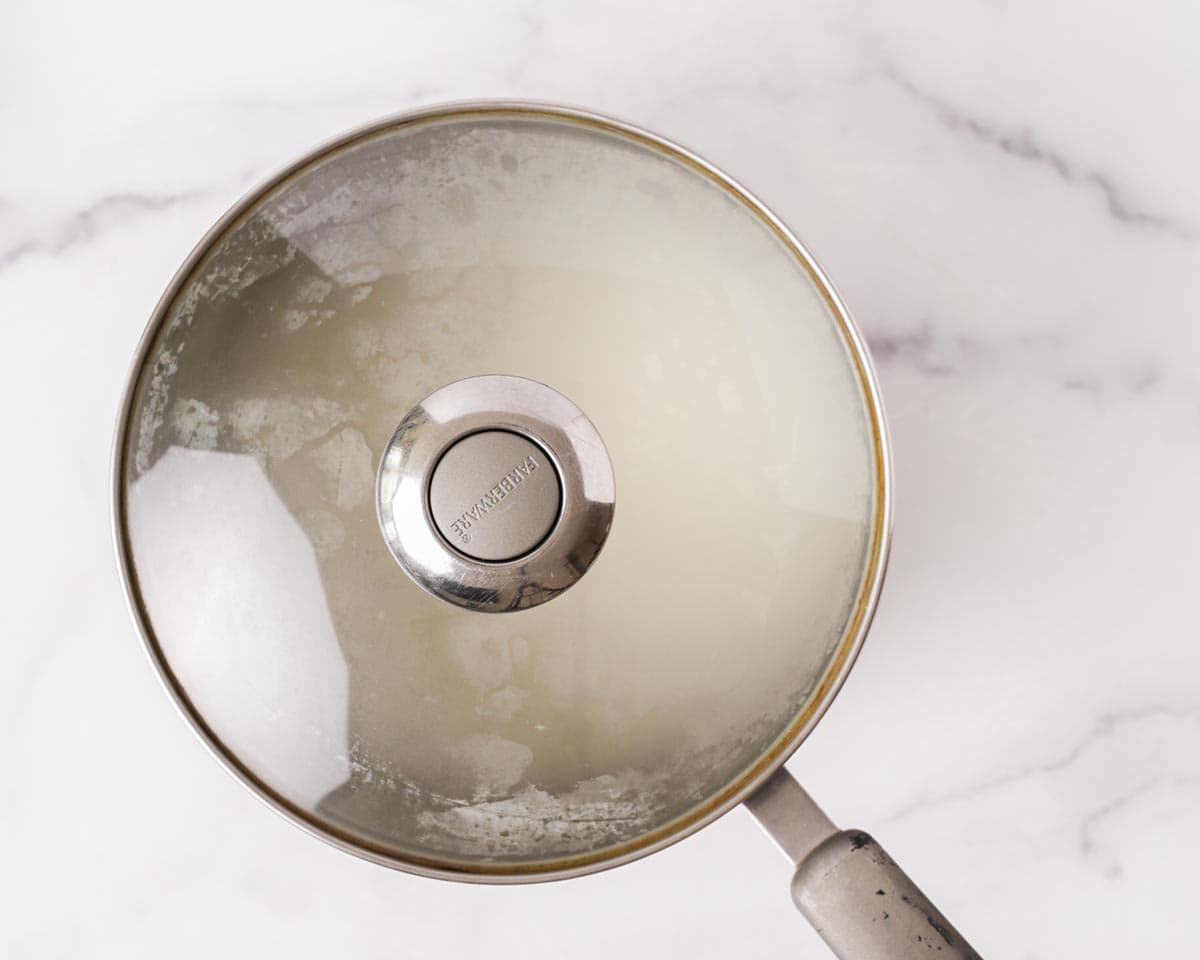
📝 Note: Personally, if we're using a stainless steel pot, I like to stir the rice then shake to level out before covering. This helps the rice from sticking less to the bottom of the pot.
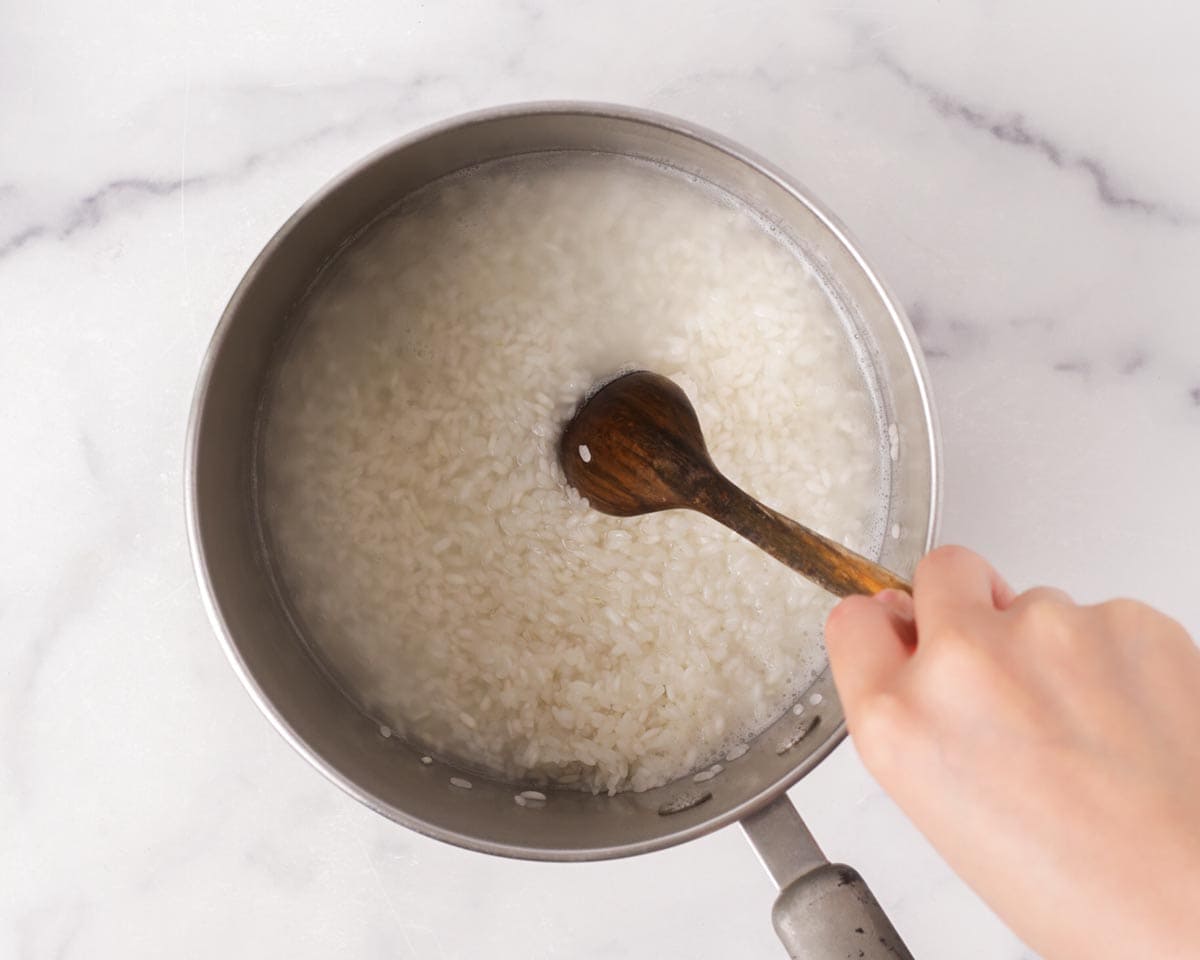
3. Let the rice simmer for about 20 minutes until no more water remains at the bottom of the pot. Take it off the heat and allow the rice to steam (with the lid on) for about 10 minutes.

4. After 10 minutes, uncover and fluff with a rice paddle or fork.

How to cook rice using the microwave
1. Cover the washed rice with water and let the rice soak for about 30 minutes.

🌟 Microwave without soaking rice: The texture of microwaved rice is best when the rice is soaked. However, if you're ever short on time, you can try using hot water to skip the soaking. The texture won't have a super noticeable difference and will still be fluffy.
Simply place the washed and rinsed rice into the bowl and add the appropriate amount of boiling hot water. Then follow the instruction below starting at step 3.


We found this mug from Daiso (a Japanese home and decor store) and it's made for cooking rice in the microwave. Look how cute!
2. After soaking, drain the rice well and place the rice and an appropriate amount of water into a microwave safe bowl. Make sure the bowl has at least 2 to 3 inches of clearance above the water.
3. Put a plate under the bowl and cover the bowl with a lid or plate. Make sure everything is microwave safe! Place the whole setup into the microwave.

4. Microwave on 100% power (or high power) for 5 minutes.
5. Carefully remove the whole setup from the microwave. Be careful! It will be VERY HOT! Pour any liquid on the bottom plate back into the rice and give it a good stir to reincorporate the liquid.
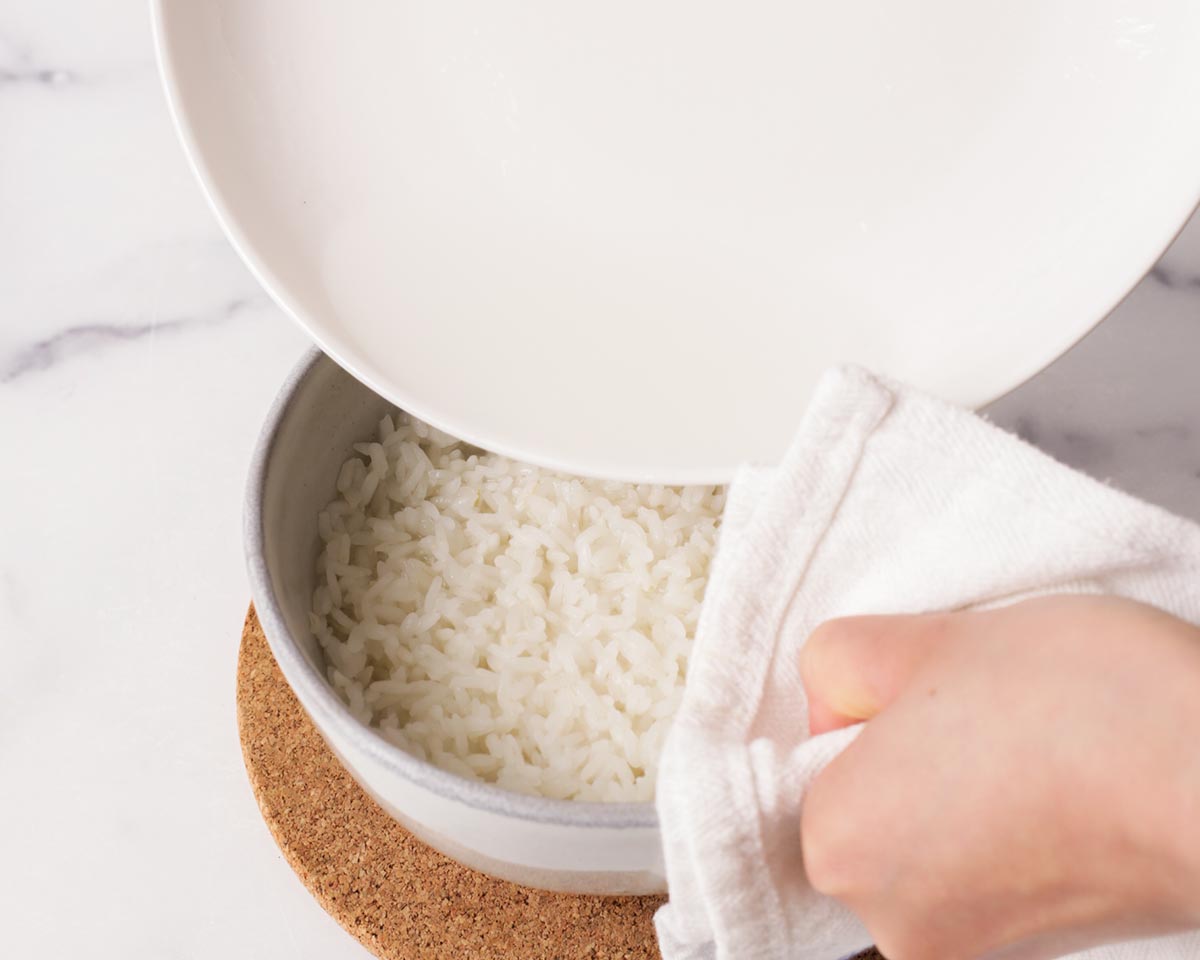
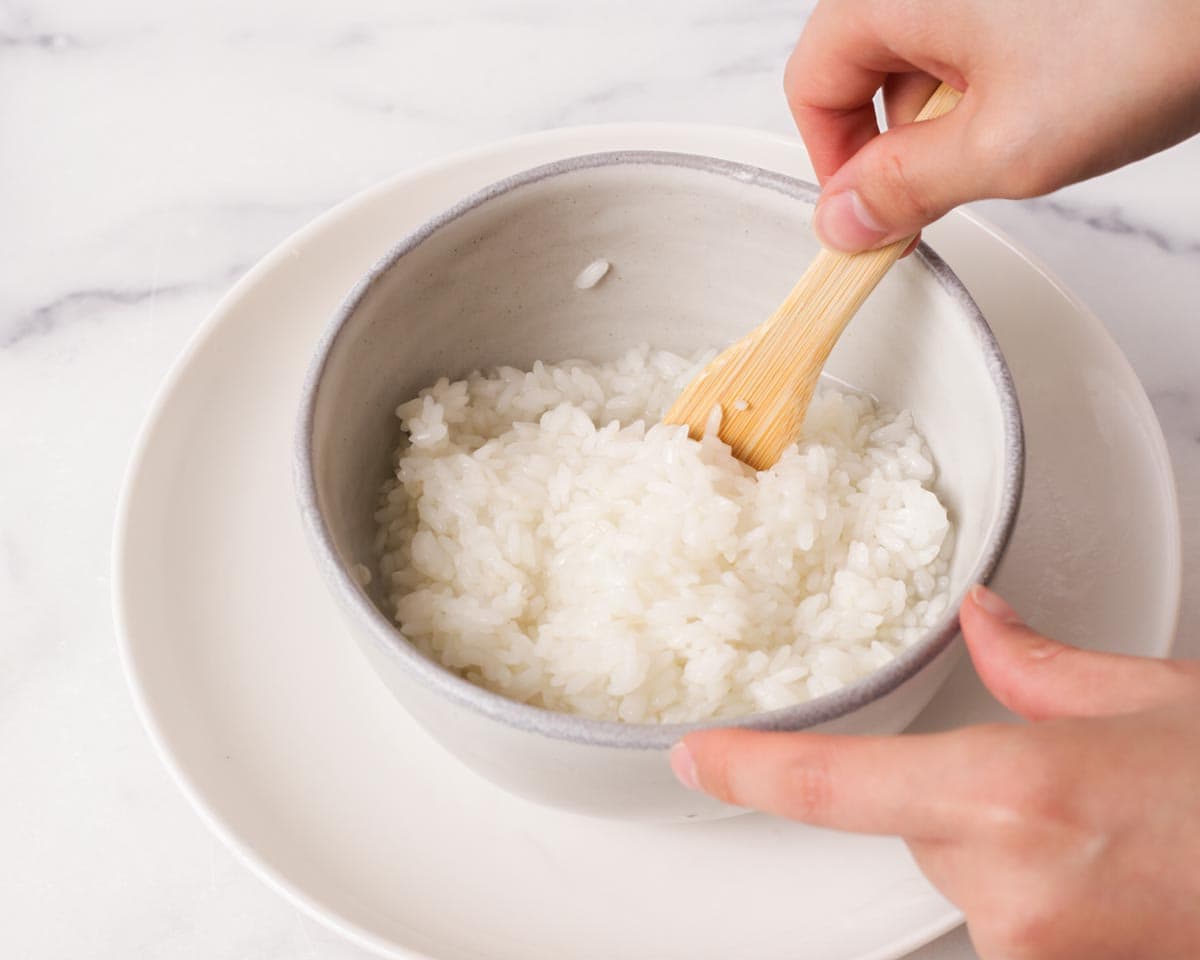
6. Roughly level out the rice and place the lid back on. Place the whole setup in the microwave again and microwave on the same power level for another 5 minutes.
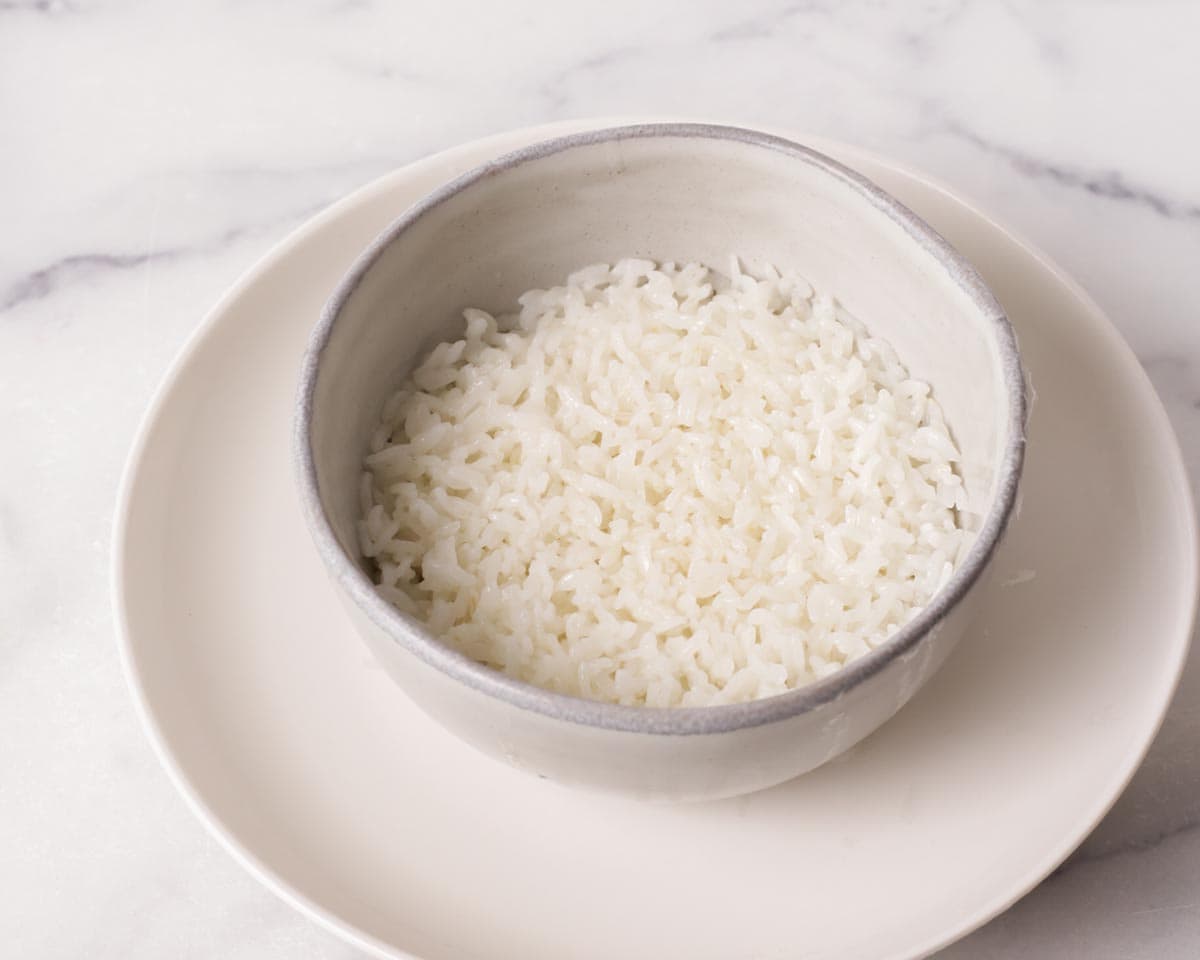
Top: The microwaved white rice using soaked rice and regular bowl.
Bottom: Microwaved white rice using unsoaked rice, hot boiling water, and a mug.

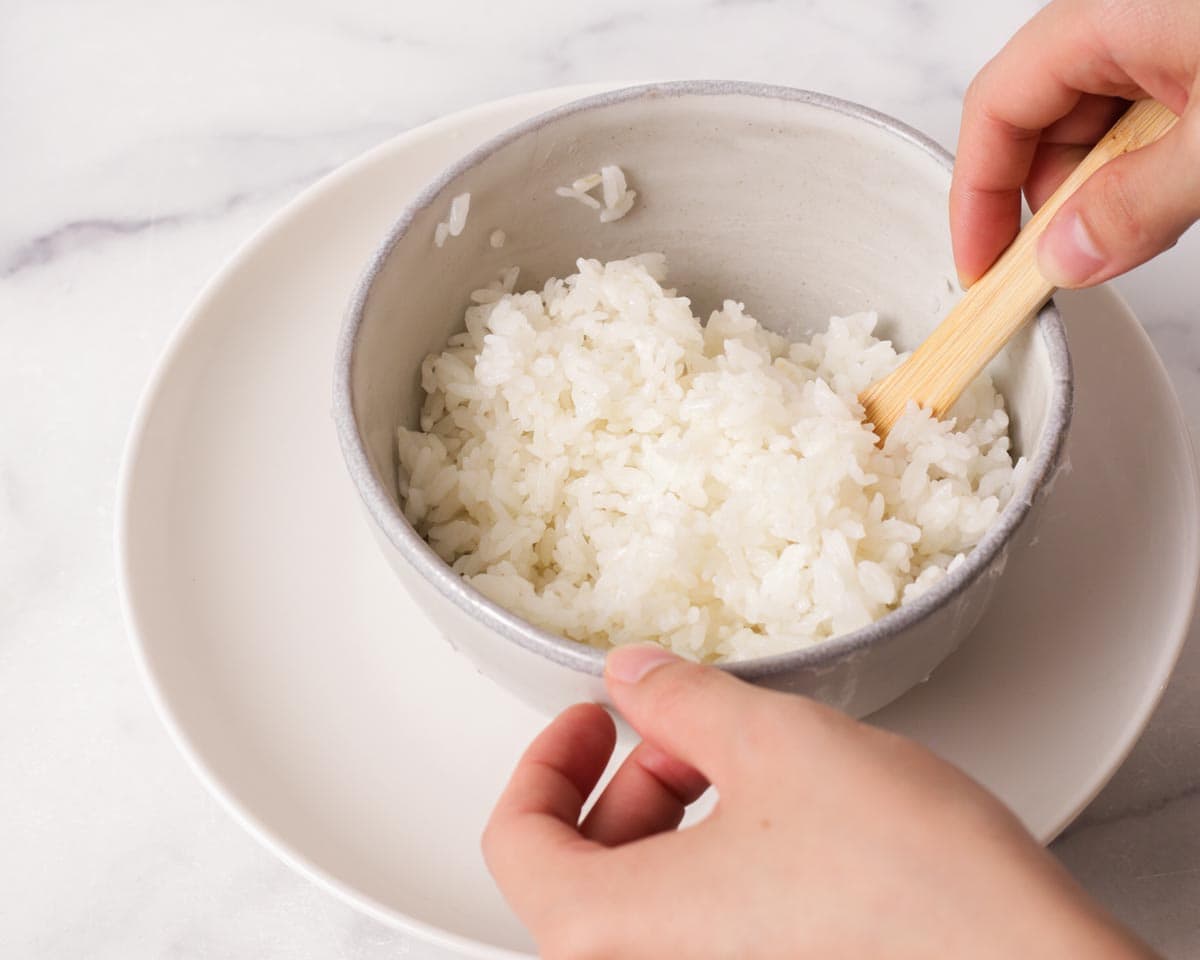
7. Remove the rice from the oven and let it steam (with the lid on) for about 5 minutes. Fluff with a fork.
Recipe tips
- Use this recipe for cooking regular long grain, medium grain, and short grain rice. This is not suitable for brown rice, jasmine, or basmati.
- Don't simply follow the 2 to 1 ratio of water to rice. Generally, the perfect rice to water ratio for white rice 1 to 1.25. However, depending on the the cooking method, less or more water may be better.
- Wash the rice. Although it is not 100 percent necessary to wash rice, we highly recommend it for the best tasting white rice.
- Drain the rice well. It is very important that the rice is drained very well after washing and soaking. This prevents accidentally using too much water, which will result in gummy, mushy rice.

Troubleshooting
Below are some common issues along with ways to fix them:
Rice is gummy/mushy
This is generally because the rice is cooked with too much water.
- Make sure to measure the amount of water properly with a liquid measuring cup
- Be sure to drain the rice well after washing
Also, do note that pressure cook rice cookers require less water than regular rice cooker to make the perfect white rice. If you have
Rice is undercooked
- Not enough water - Make sure to measurement the water properly with a liquid measurement cup and the rice with a dry measuring cup
- Heat is too low - This mostly pertains to the stovetop and microwave method.
- Stovetop - Although the heat needs to be on the lowest setting, you should still see a constant, thin stream of steam escaping from the lid.
- Microwave - Make sure the power level is on high/100 percent.
- Don't open the lid while the rice is cooking - This is most important for the stovetop method. Opening the lid would let the built up steam escape, which may be all that's needed to perfectly cook the rice.
- Don't skip the steaming step - This steps helps to fully cook the white rice and absorb all the extra moisture.
- Pot was too large for the amount of rice - It is important to use an appropriate size pot for the amount of rice you're cooking. Too large of a pot can encourage the water to evaporate quicker than the rice is cooked. We recommend no larger than a 4 to 6 quart saucepan for up to 1 cups of uncooked rice.
Rice is too firm or too soft
Everyone has a preference on their rice texture. Personally, we like our rice on the softer side, but this recipe is meant to cook the rice to a perfect, just tender texture.
- For firmer rice - Use no more than ¼ cup less water for the pressure cook rice cooker and no more than 2 tablespoons less for the stovetop method. We do not recommend any less water for the microwave method.
- For softer rice - Use our recipe as a base guide and add 2 extra tablespoons of water to the rice (for any methods) and see if you like the softness. If your desired tenderness is still not achieved, continue adding an extra tablespoon more water in the next batches until the rice is to your preferred softness.
The bottom is scorched
- Not enough water - Make sure to measure the water properly. Not having enough water in the pot before the time is up will definitely scorch the bottom of the pot.
- Heat is too high - Make sure the heat is turn to the lowest setting. Having too high heat will evaporate the water quicker than how long it takes the rice to cook will scorch the pot.
- If cooking on an electric stovetop - We find that heat is a bit trickier to control on an electric stovetop. It tends to heat up slower and also cool down slower. So if needed, take the pot off the heat after bring the rice and water to a boil so that the burner can cool a bit. This way the rice will actually be just simmering instead of rapidly simmering.
- Pot was too large - Using an appropriate size pot is important. This is so the water doesn't evaporate too fast.
Rice is wet
After the cooking time, there should be no more extra liquid at the bottom of the bowl, pot, or saucepan, no matter which cooking method you used.
- Too much water - Make sure to measure the water properly using a liquid measuring cup.
- Heat is too low - This is especially important for the stovetop method because every stovetop burner is different and you have to control the heat. The heat should be low enough where the rice is just simmering but there should still be a thin, continuous steam of steam escaping.
- Not cooked for long enough - Make sure to set a timer!
- Don't skip the steaming step - This steps helps to fully cook the white rice and absorb all the extra moisture.
Rice boiled over
This is mostly an issue that may occur when using the stovetop method and should be corrected. The microwave method will inevitably overflow, but it's part of the process.
- Use a larger pot - As it is important to use a small enough pot so that the water doesn't evaporate too quickly, it is also important to use a big enough pot so that the rice has enough room to expand and the bubble enough room to rise. We recommend using a saucepan/pot with a 3 to 4 inch clearance above the water.
- Heat is too high - Make sure to reduce the heat to the lowest setting once it comes to a boil.
- If cooking on an electric stovetop - We find that heat is a bit trickier to control on an electric stovetop. It tends to heat up slower and also cool down slower. So if needed, take the pot off the heat after bring the rice and water to a boil so that the burner can cool a bit. This way the rice will actually be just simmering instead of rapidly simmering.
Storage
Transfer the leftover rice into heatproof, air tight containers while the rice are still hot/warm. Cover half over the rice and allow it to cool completely before cover and refrigerating or freezing.
White rice will be good refrigerated for up to 3 to 4 days or frozen for up to 1 to 2 months. Also, leftover, refrigerated white rice is great for making fried rice!
We also recommend separating the rice into smaller portions so that you can thaw and reheat only as much as you need.
Reheating
The easiest way to reheat leftover white rice is by microwaving.
To reheat refrigerated white rice, keep the rice covered but cracked open and microwave in 30 second increments until the rice is hot and soft again. Make to use a microwave safe container. Frozen white rice can be microwaved without thawing.
We never have issues reheating rice straight like this. But if you find your reheated rice too dry, try drizzling a couple teaspoons of water per cup of rice you're heating up.
FAQ
Contrary to the most commonly known rice to water ratio of 1 to 2 (ie. 1 cup rice to 2 cups water), the best rice to water ratio is actually 1 to 1.25 (ie. 1 cup rice to 1.25 cups water. However, different cooking methods may require a little less or a little more water to make the perfect, fluffy white rice. Also, when making a larger amount of rice will require less water than when cooking a smaller amount of rice.
Depending on the cooking method used to cook white rice, the typical cook time range between 15 to 35 minutes. The rice cooker method usually takes 35 minutes, stovetop method is about 30 minutes, and the microwave method takes around 15 minutes.
The most important factor in making fluffy rice is to use the right amount of water. Too much water and the rice will be soggy and mushy, and too little water will yield undercooked rice. However, do note that there is a difference between sticky and gummy. Properly cooked white rice is supposed to be sticky. Depending on the grain (long, medium, or short grain rice), white rice can range from a little sticky (long grain) to very sticky (short grain).
Mushy white rice is usually caused by using too much water to cook rice. Make sure to measure the water properly and drain washed rice well. Please refer to our "troubleshooting" topic above for more details.
Yes! White rice is naturally gluten free.
What to eat with white rice
White rice is so versatile and is practically good with everything and anything! Below are some of our favorite dishes to eat with white rice and make with leftover white rice:
- Char siu or char siu chicken (if you prefer chicken over pork)

- Chinese takeouts - chicken with mixed veggies, Mongolian beef, and black pepper chicken are some of our favorites!
- Egg side dishes - mayak eggs (totally addictive!), Chinese steamed eggs, and Korean volcano eggs or Korean rolled omelette (gyeran mari)
- Veggies - Chinese garlic green beans, garlic bok choy, and Chinese broccoli stir fry - all three are so good and easy to make!
- Fried rice - Leftover refrigerated white rice (especially long grain white rice) is perfect for making fried rice
- Bibimbap - Aka Korean mixed rice bowl, perfect with medium grain rice.
📖 Recipe
How to Cook White Rice
Ingredients
Rice cooker method:
- 2 cups white rice long, medium, or short grain
- 2 cups water
Stovetop method:
- 2 cups white rice long, medium, or short grain
- 2½ cups water
Microwave method (must soak):
- ½ cup white rice long, medium, or short grain
- 1 cup water
Microwave method (no soaking):
- ½ cup white rice long, medium, or short grain
- 1¼ cup boiling hot water
Instructions
- Wash the rice:For any of these cooking methods, wash and rinse the rice a few times until the water runs mostly clear. Then make sure to drain the rice well to get rid of as much water as possible.
Rice cooker method:
- Place the rice and water into the rice cooker pot. Seal the pressure and select the "white rice" cooking function. Most rice cooker will also have an automatic depressurizing function as well.
- Once the rice is done cooking, fluff the rice with a rice paddle and serve.
Stovetop method:
- Place the rice and water into a large saucepan and bring to a boil.*Make sure to use a saucepan or pot with at least 4 to 5 inch clearance to avoid boiling over.*
- Once it comes to a boil, immediately reduce to the lowest heat and cover with a lid. The water should be just simmering.*A gas stove is the easiest for controlling the heat. If using an electric stovetop, you may need to wait for the burner to cool down before placing the pot back on the heat.*
- Let the rice simmer for about 20 minutes, then take the pot off the heat. Allow the rice to steam (with the lid on) for about 10 minutes, then uncover and fluff with a rice paddle or fork.
Microwave method (with soaking):
- After the rice is washed, cover it with water again and let the rice soak for 30 minutes.
- Then drain the rice really well and place it into a microwave safe bowl or mug along with the water. Shake to level out the rice. Cover the bowl with a lid or plate and also place a plate under the bowl. Make sure everything is microwave safe!
- Place the whole plate and bowl set up in the microwave and microwave for 5 minutes on 100% power (high power).
- Carefully remove whole setup from the microwave an pour any liquid on the bottom plate back into the bowl. Be careful! It'll be super hot. Give the rice a good stir to reincorporate the liquid and roughly even out the rice.
- Cover the bowl again with the lid/plate and place the whole set up back in the microwave. Microwave on the same power for another 5 minutes, then remove from the microwave.
- Allow the rice to steam (with the lid on) for about 5 minutes and fluff with a fork.
Microwave method (without soaking):
- Place the washed and well drained rice into a microwave safe bowl, and place the bowl on a plate.
- Pour the boiling hot water over the rice and shake gently to even out the rice. Cover the bowl with a lid or plate and place the whole setup into the microwave.*Make sure everything is microwave safe!*
- Microwave the rice for 5 minutes on 100% power (high power). Then carefully remove from the microwave and pour any liquid on the bottom plate back into the bowl.
- Stir the rice to reincorporate the liquid and cover again with the lid/plate. Place the whole setup back into the microwave and microwave on the same power level for another 5 minutes.
- Remove from the microwave and let the rice steam with the lid on for about 5 minutes. Fluff with a fork.
Notes
- Rice - This recipe and water ratio is meant for regular long grain, medium grain, and short grain white rice. It is not suitable for brown, jasmine, or basmati rice.
- Drain the rice well - Washed rice can collect a lot of water in the rice. So make sure to drain the rice well after wash so that the rice is not cooked with too much water.
- Rice texture - Our rice and water ratio yields just tender, fluffy white rice. If you prefer softer or drier (firmer) rice, you can experiment and reduce or use a little more water.
- Water ratio to cook larger amounts of rice - The ratio for this recipe is best for making 3 cups or less uncooked rice. If making a larger amount of rice, you may need to use less water.

Comments
No Comments